Your digging level

For this genre
0/8
🏆
Sign in, then listen to this genre to level up

Description

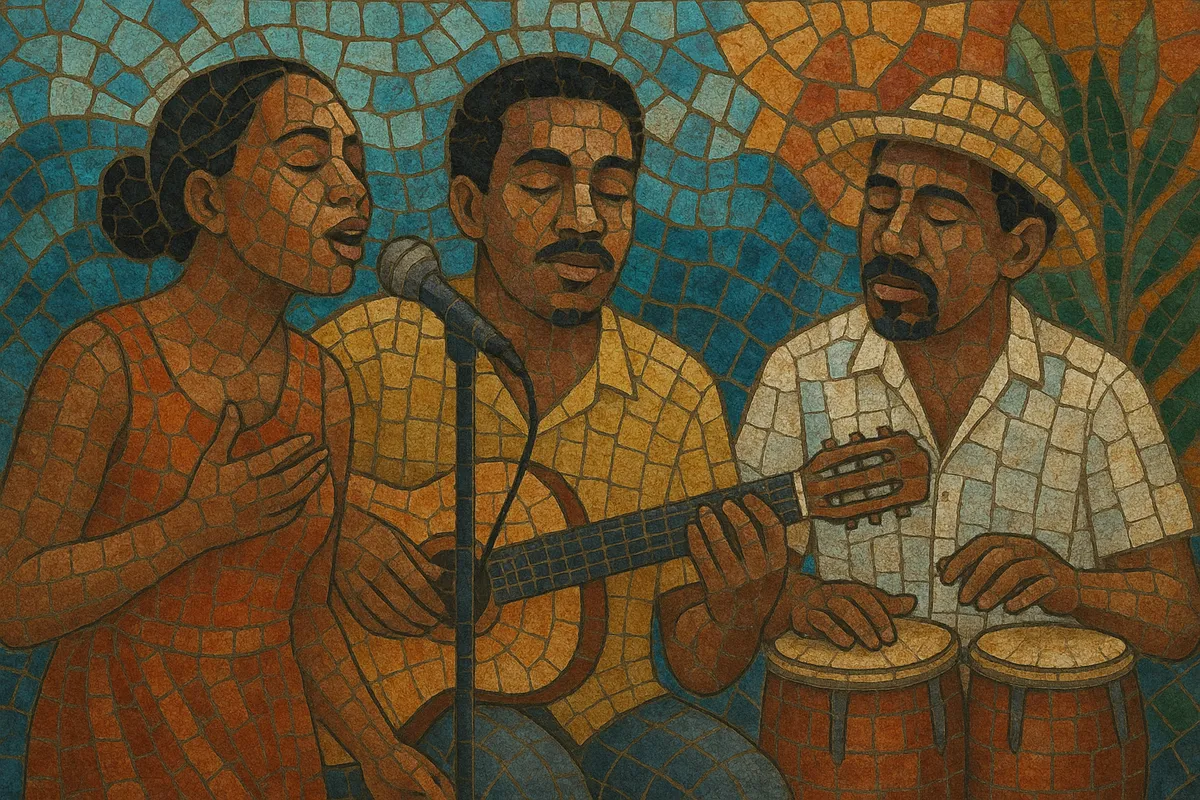
Música cabo-verdiana is the rich, hybrid musical tradition of Cape Verde that blends West African rhythms with Portuguese and Brazilian song forms. Rooted in seafaring, migration, and creole culture, it spans intimate, lyrical styles such as morna and lively, social dance forms like coladeira, funaná, and batuque.

Across its styles, the music features expressive vocals in Cape Verdean Kriolu, melodic guitar work, and dance-inducing grooves. Themes of love, longing (sodade), everyday life, and the diaspora are central, giving the repertoire both a cosmopolitan and profoundly local character.


Sources: Spotify, Wikipedia, Discogs, Rate Your Music, MusicBrainz, and other online sources

History

Roots and Formation (18th–19th centuries)

Cape Verde’s music emerged from the encounter of West African rhythmic practices with Iberian and Brazilian song forms brought by sailors and settlers. Early communal practices like batuque (handclapping polyrhythms and responsorial singing) coexisted with imported European dances such as the mazurka and contredanse. By the 1800s, sentimental, lyrical styles began to crystallize, influenced by Portuguese fado, Brazilian modinha, and lundu.

The Rise of Morna and Urban Song (late 19th–early 20th centuries)

Morna consolidated as a signature Cape Verdean song form in the late 19th century, particularly on Boa Vista, São Vicente, and Brava. Poet-composers like Eugénio Tavares and, later, B. Leza expanded its harmonic language and poetic depth. In parallel, coladeira developed as a lighter, faster counterpart to morna—satirical, social, and danceable—reflecting urban life in Mindelo and Praia.

Popularization, Diaspora, and New Dance Forms (mid–late 20th century)

Through maritime routes and migration, Cape Verdean music spread to Lisbon, Rotterdam, Paris, and the US, where bands modernized instrumentation and recording practices. Funaná (accordion-driven 2/4 with the ferrinho scraper) and batuque saw renewed visibility after independence (1975), while coladeira diversified its grooves. Artists and arrangers professionalized the scene, setting the stage for global recognition.

Global Breakthrough and Contemporary Hybrids (1990s–present)

Cesária Évora’s international success popularized morna and the Cape Verdean songbook worldwide, inspiring new generations. Contemporary artists incorporate jazz, pop, and pan-Lusophone currents while preserving core creole aesthetics. The tradition also influenced Lusophone dance genres (notably kizomba) and Caribbean-adjacent zouk variants (zouk love, cabo zouk), underscoring the archipelago’s role in Afro-Atlantic musical exchange.

How to make a track in this genre

Core Aesthetics
•   Language and themes: Write lyrics in Cape Verdean Kriolu (or incorporate it alongside Portuguese), focusing on love, saudade (sodade), migration, island life, and social commentary. •   Vocal delivery: Use warm, expressive phrasing with subtle ornamentation (appoggiaturas, slides), clear diction, and conversational storytelling.
Style-by-Style Rhythms and Tempi
•   Morna: Slow, swaying 3/4 or 4/4 (often 60–80 BPM), gently accented on beat 1 with a walking or arpeggiated bass. Keep dynamics intimate and lyrical. •   Coladeira: Upbeat 2/4 (around 90–120 BPM) with syncopated guitar (or cavaquinho) patterns and a light, danceable groove. Humor and social topics fit well. •   Funaná: Fast 2/4 (often 130–160 BPM), led by accordion (gaita) and ferrinho (scraped metal rod) driving a propulsive, offbeat feel. Vocals are energetic and direct. •   Batuque: Handclapped polyrhythms in call-and-response; build groove from interlocking patterns and percussive vocals.
Harmony and Melody
•   Harmony: Combine tonal songcraft (I–IV–V, ii–V–I) with modinha/fado color—secondary dominants, borrowed bVII or bVI, and occasional modal mixture. Morna often toggles between minor and its relative major. •   Melody: Favor singable, lyrical lines with stepwise motion and expressive leaps at cadences. Use parallel thirds/sixths in backing vocals for warmth.
Instrumentation and Arrangement
•   Acoustic core: Nylon- or steel-string guitar(s), cavaquinho, acoustic bass, light percussion (pandeiro, congas, shaker), and handclaps. •   Morna colors: Add violin/clarinet, subtle strings, or piano; keep textures transparent to foreground the voice. •   Funaná engine: Accordion + ferrinho at the center; support with bass and minimal drum kit or hand percussion. •   Arranging: Alternate verse–refrain forms; include short instrumental interludes (guitar/cavaquinho or accordion). Keep arrangements spacious—groove-led but voice-centric.
Production Tips
•   Use close, warm vocal miking and gentle plate/spring-style reverbs to evoke intimacy. •   Preserve transient detail in percussion (especially ferrinho/handclaps). Avoid over-quantizing; slight push-pull enhances swing and feel.

Top tracks

Locked
Share your favorite track to unlock other users’ top tracks
Influenced by
Has influenced
Challenges
Digger Battle
Let's see who can find the best track in this genre
© 2026 Melodigging
Melodding was created as a tribute to Every Noise at Once, which inspired us to help curious minds keep digging into music's ever-evolving genres.
Buy me a coffee for Melodigging