Your digging level
Description
Baguala is a slow, solemn folk song form from Northwest Argentina (Salta, Jujuy, Catamarca, and Tucumán) with Indigenous Andean roots, especially among the Diaguita-Calchaquí peoples.
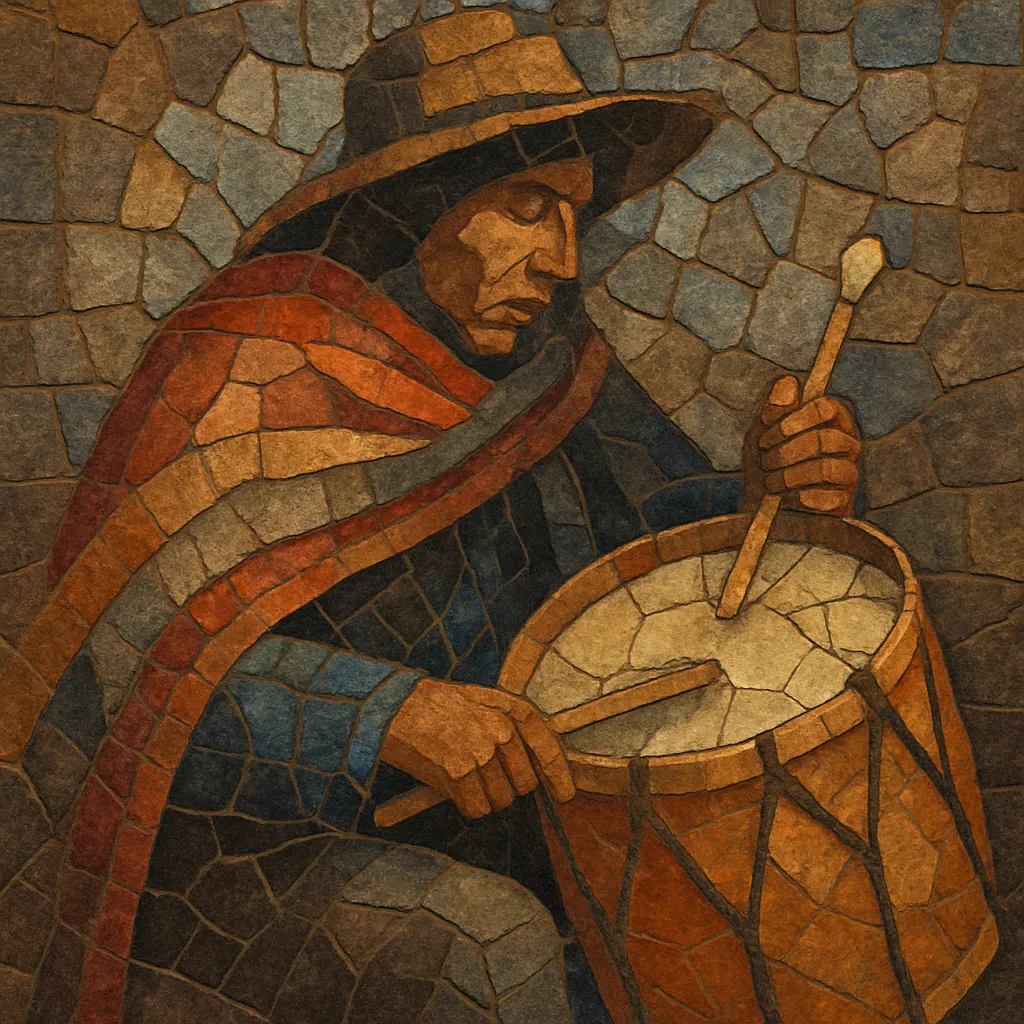
It is typically sung a cappella or accompanied only by the caja coplera (a small hand drum), in a steady triple meter that emphasizes spacious phrasing and free, declamatory vocal delivery. Melodies tend to be modal (often pentatonic or minor), with narrow ambitus and long notes that evoke the vast, highland landscape. Texts are strophic and poetic—short coplas that meditate on love, solitude, memory, and the rural Andean way of life.
Unlike dance-oriented Andean forms, baguala is primarily a song of contemplation and communal expression, performed at home gatherings, in carnival rites, or as part of seasonal ceremonies. Its austere sound, sparse percussion, and unadorned vocal line make it one of the most intimate voices of Argentina’s Andean heritage.
History
Baguala descends from Indigenous Andean vocal traditions, especially those of the Diaguita-Calchaquí communities of present-day Northwest Argentina. Its core features—unison or solo chant-like singing, limited pitch materials, and the caja coplera—reflect pre-Columbian aesthetics adapted to local ritual and social contexts.
During the Spanish colonial period, baguala persisted in rural and mountainous areas, maintaining Indigenous poetic forms (coplas) and ritual functions while absorbing limited Hispanic elements (e.g., Spanish-language texts, strophic formats). It remained primarily a song for reflection rather than for dancing, associated with seasonal festivities (including Carnival) and community rites.
In the mid–20th century, folklorists and musician-collectors such as Leda Valladares recorded and championed "canto con caja" (singing with caja), bringing baguala from remote valleys to national and international audiences. Artists in Argentina’s folk resurgence and later the Nueva Canción movement drew on baguala’s poetics and timbre, integrating its caja pulse, modal inflections, and copla structure into concert repertoires.
Today, baguala lives in two parallel spheres: as an ongoing community practice in NOA (Northwest Argentina), and as a staged folk idiom in festivals and recordings. Contemporary performers maintain its intimate core—voice and caja—while sometimes introducing subtle harmonies, ensemble colors, or studio atmospheres that preserve the genre’s meditative character.