Your digging level

For this genre
0/8
🏆
Sign in, then listen to this genre to level up

Description

Folclore santiagueño refers to the rich folk traditions from Santiago del Estero, Argentina, a province widely regarded as a cradle of Argentine folklore.

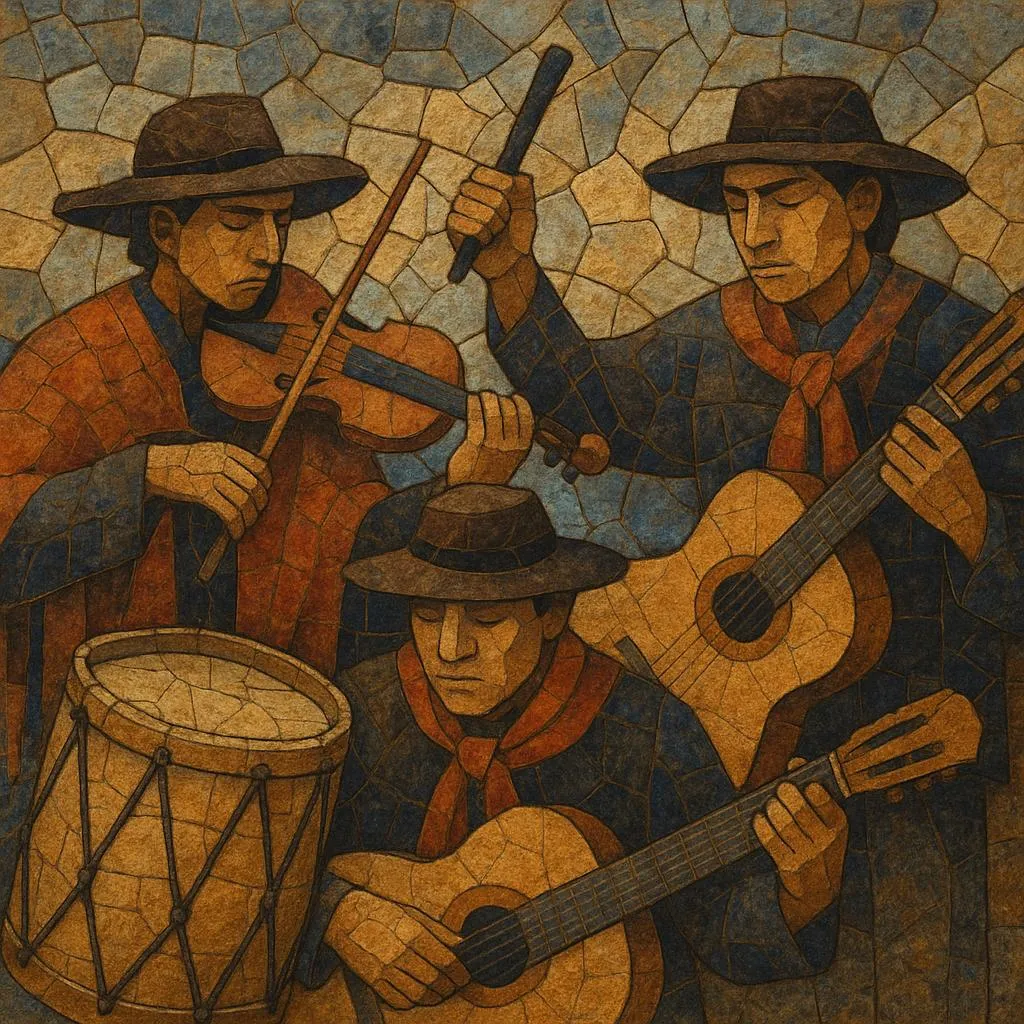
It gathers song and dance forms such as chacarera, zamba, vidala and baguala, and is distinguished by the bombo legüero drum, criolla guitar rasgueos, lead violin lines, and copla-based poetry (often with octosyllabic quatrains). The use of regional Santiago Quechua (Quichua Santiagueño) vocabulary and themes of rural life, love, memory, and landscape are hallmarks.

Stylistically, the music pivots between lively, hemiola-rich 6/8 grooves suited for communal dancing (especially the chacarera) and slow, lyrical, and often nostalgic or contemplative airs (zamba, vidala), creating a compelling balance of festivity and introspection.


Sources: Spotify, Wikipedia, Discogs, RYM, MB, user feedback and other online sources

History

Early Roots

Santiago del Estero’s folk culture emerged from deep interactions between Indigenous peoples (notably Quechua-speaking communities), Spanish colonial musical traditions, and criollo rural life. By the late 19th and early 20th centuries, local dances and sung coplas like chacarera, zamba, vidala, and baguala were entrenched in peasant festivities, religious calendars, and domestic music-making.

1930s–1950s: Codification and First Mass Diffusion

The 1930s–40s saw a gradual codification of forms and performance practice. The bombo legüero (goatskin drum) became a sonic emblem, alongside violin and guitar. Radio and early recordings helped project the style nationally. Los Hermanos Ábalos professionalized ensemble performance of santiagueño repertory and standard bearers such as Sixto Palavecino preserved Quechua song and violin traditions.

1960s–1980s: National Reference and New Voices

During Argentina’s folk revival and the rise of peñas (folk clubs), Santiago del Estero was repeatedly affirmed as a foundational source of “folklore argentino.” Family dynasties like Los Carabajal popularized chacareras and zambas nationwide. In parallel, singer–songwriters and ensembles adapted local repertoires for new audiences, influencing the broader Nueva Canción and folk-rock currents across the Southern Cone.

1990s–Present: Festivals, Innovation, and Continuity

Major festivals in the province (e.g., the Fiesta Nacional de la Chacarera and La Salamanca in La Banda) cemented the genre’s role in contemporary cultural life. Artists such as Peteco Carabajal, Horacio Banegas, Raly Barrionuevo, and Dúo Coplanacu revitalized and expanded the repertory with modern arrangements while maintaining the characteristic rhythms, dances, and poetic imagery. Today, folclore santiagueño remains a living tradition—taught, danced, and reimagined—while continuing to inform Argentine popular and roots music.

How to make a track in this genre

Core Instrumentation and Texture
•   Rhythm section: bombo legüero (the heartbeat of the style) plus palmas (handclaps) in dance pieces. •   Harmony/melody: 1–2 guitars (rasgueado, apagados, and arpeggios), lead violin carrying tunes and interludes; occasional charango or bass for modern arrangements. •   Voice: solo or duet, often with call-and-response strophes; coplas in octosyllabic quatrains are common, with refrains (estribillos).
Rhythmic Foundations
•   Chacarera: typically felt in 6/8 with prominent hemiola (alternation between 6/8 and 3/4 feel). The bombo accents create a lilting, forward motion suitable for partner dance; aim for a moderate–fast tempo (approx. 115–130 BPM felt in 3 dotted quarters per bar). Use offbeat rasgueos to emphasize hemiola. •   Zamba: slower 6/8 (approx. 70–90 BPM), tender and lyrical; guitar arpeggios and soft bombo strokes support a vocal melody that invites pañuelo (handkerchief) choreography. •   Vidala/Baguala: slower, often freer in phrasing, sometimes with open fifths or drones; bombo can be sparse, and vocal delivery is declamatory and emotive.
Harmony and Melody
•   Functional harmonies are direct: I–IV–V in major or minor; modal colors (Dorian/Aeolian) are common, especially in rustic airs. •   Melodies are singable, dance-led lines with characteristic turns and appoggiaturas; violin doubles or answers the voice between phrases.
Lyrics and Language
•   Themes: rural life, love, longing, memory, nature, fiestas, and community. •   Style: concise imagery in coplas; consider sprinkling in regional toponyms and Santiago Quechua (Quichua Santiagueño) words for authenticity.
Form and Arrangement Tips
•   Alternate verses (coplas) and short violin interludes; conclude with a stronger cadential turnaround for dance numbers. •   Keep arrangements transparent: let bombo + guitar define groove; place violin and voice slightly forward. Modern productions may add bass or subtle percussion without masking the bombo.
Dance Awareness
•   Compose with choreography in mind. Chacarera’s figures (vuelta, coronación, zapateo) favor clear 8- or 16-bar sections; zamba’s pañuelo figures benefit from breathable phrases and a lyrical arc.

Top tracks

Locked
Share your favorite track to unlock other users’ top tracks

Upcoming concerts

in this genre
Influenced by
Has influenced

Download our mobile app

Get the Melodigging app and start digging for new genres on the go
© 2026 Melodigging
Melodding was created as a tribute to Every Noise at Once, which inspired us to help curious minds keep digging into music's ever-evolving genres.
Buy me a coffee for Melodigging