Your digging level

For this genre
0/8
🏆
Sign in, then listen to this genre to level up

Description

Folclore salteño is the regional folk music of Salta Province, in Argentina’s Northwest, where Andean and criollo traditions meet.

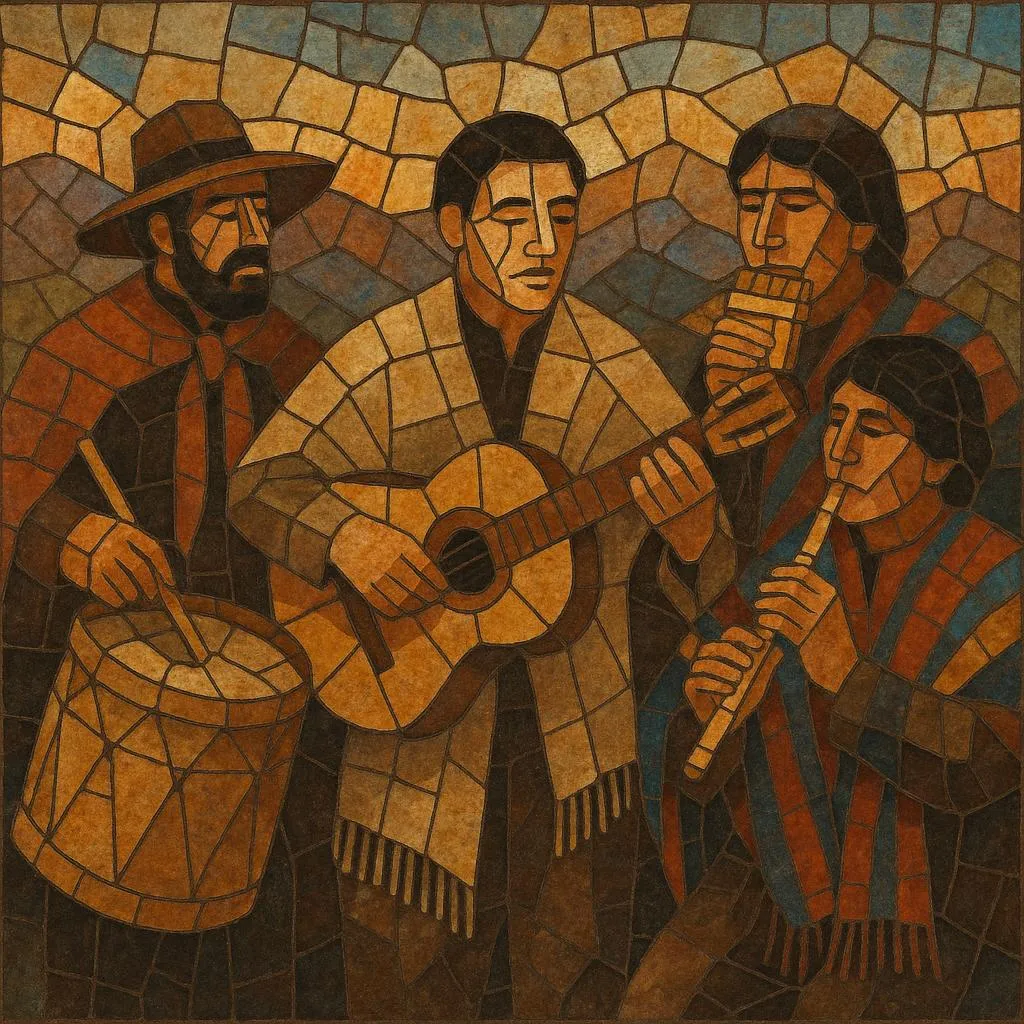
It blends local poetic forms (coplas, vidalas, bagualas) and dance rhythms (zamba, chacarera, bailecito, cueca norteña, carnavalito, huayno) with guitar-centered accompaniment, bombo legüero and caja coplera drums, and Andean aerophones such as quena and siku. Salteño ensembles are renowned for rich vocal harmony (often three–four male voices), refined guitar work, and lyrical imagery of valleys, mountains, rivers, and carnival rituals.

While its roots are rural and predate recording, the style coalesced publicly in the mid‑20th century through polished vocal groups and composer–poet collaborations from Salta that defined the "estilo salteño" heard across Argentina.


Sources: Spotify, Wikipedia, Discogs, RYM, MB, user feedback and other online sources

History

Origins

Salteño folk practices—coplas with caja, bagualas and vidalas sung in call‑and‑response on hilltops or during Carnival—are centuries old, reflecting Andean Indigenous traditions fused with colonial Spanish verse and guitar.

Mid‑century consolidation (1940s–1960s)

The modern public face of folclore salteño emerged with polished vocal quartets from Salta (notably beginning in 1948), radio exposure, and the nationwide folk boom that culminated in festivals like Cosquín (founded 1961). Composer–poet partnerships from Salta (e.g., Cuchi Leguizamón with Manuel J. Castilla) crafted definitive zambas, chacareras, and vidalas that set the area’s harmonic and poetic signature. Guitarist‑composers from Salta expanded the idiom’s harmonic palette while keeping dance rhythms and copla metrics at the core.

Stylistic features

The "estilo salteño" emphasizes multipart vocal harmonies, bright yet warm guitar timbres, bombo legüero for hemiola‑rich 6/8↔3/4 grooves (zamba, chacarera), caja coplera for freer, modal chant (baguala/vidala), and frequent use of Andean flutes and charango. Lyrics often evoke landscape, memory, carnival, love, and community.

Contemporary currents

From the 1970s onward, the style continued through peñas (folk venues), recordings, and touring ensembles. In the 1990s–2000s, pop‑folk groups from Salta brought the sound to younger audiences, while copleras and traditionalists safeguarded caja‑and‑voice practices. Today, folclore salteño coexists with fusion projects (folk‑rock, andino‑pop) and remains a cornerstone of Argentina’s folk identity.

How to make a track in this genre

Core instrumentation
•   Guitars (often multiple), bombo legüero (bass drum), caja coplera (frame drum for coplas/vidalas), hand percussion (chaschas), and Andean instruments (charango, quena, siku). Violin may double or decorate melodies.
Rhythm and groove
•   Zamba and chacarera rely on hemiola interplay between 6/8 and 3/4; strum patterns accent 1–a (in 6/8) against bombo back‑beats. Aim for a lilting, circular feel. •   Bailecito and carnavalito are brisk and danceable; keep a buoyant, even subdivision and use siku/charango riffs for lift. •   Baguala/vidala are slower, modal, and chant‑like: voice + caja in open meters (often ternary pulses with flexible phrasing).
Melody and harmony
•   Melodies are singable, often pentatonic or Dorian/minor, with Andean turns (appoggiaturas, narrow ambitus in coplas; wider arcs in zambas). •   Harmonies are tonal but can include modal color (bVII, bIII) and secondary dominants; guitar voicings favor open strings and parallel 3rds/6ths to support vocal harmony.
Vocal writing
•   Arrange for 3–4 voices: a clear lead with close inner harmonies and a bass/baritone grounding line. Blend is essential; avoid excessive vibrato. •   For coplas/bagualas, prioritize declamation and text rhythm over strict meter; call‑and‑response enhances ritual feel.
Lyrics and themes
•   Use octosyllabic copla quatrains or strophic verses. Topics: landscape (valleys, cerros, rivers), carnival, memory and longing, love, and community life. Spanish with regional lexicon strengthens authenticity.
Form and arrangement
•   Common shapes: instrumental intro (charango/quena motif), two stanzas + estribillo, short interlude, final reprise; or alternating copla–caja sections. •   Record with natural room ambiance; keep percussion earthy and guitars forward to spotlight vocal blend.

Top tracks

Locked
Share your favorite track to unlock other users’ top tracks

Upcoming concerts

in this genre
Influenced by
Has influenced

Download our mobile app

Get the Melodigging app and start digging for new genres on the go
© 2026 Melodigging
Melodding was created as a tribute to Every Noise at Once, which inspired us to help curious minds keep digging into music's ever-evolving genres.
Buy me a coffee for Melodigging