Your digging level

For this genre
0/8
🏆
Sign in, then listen to this genre to level up

Description

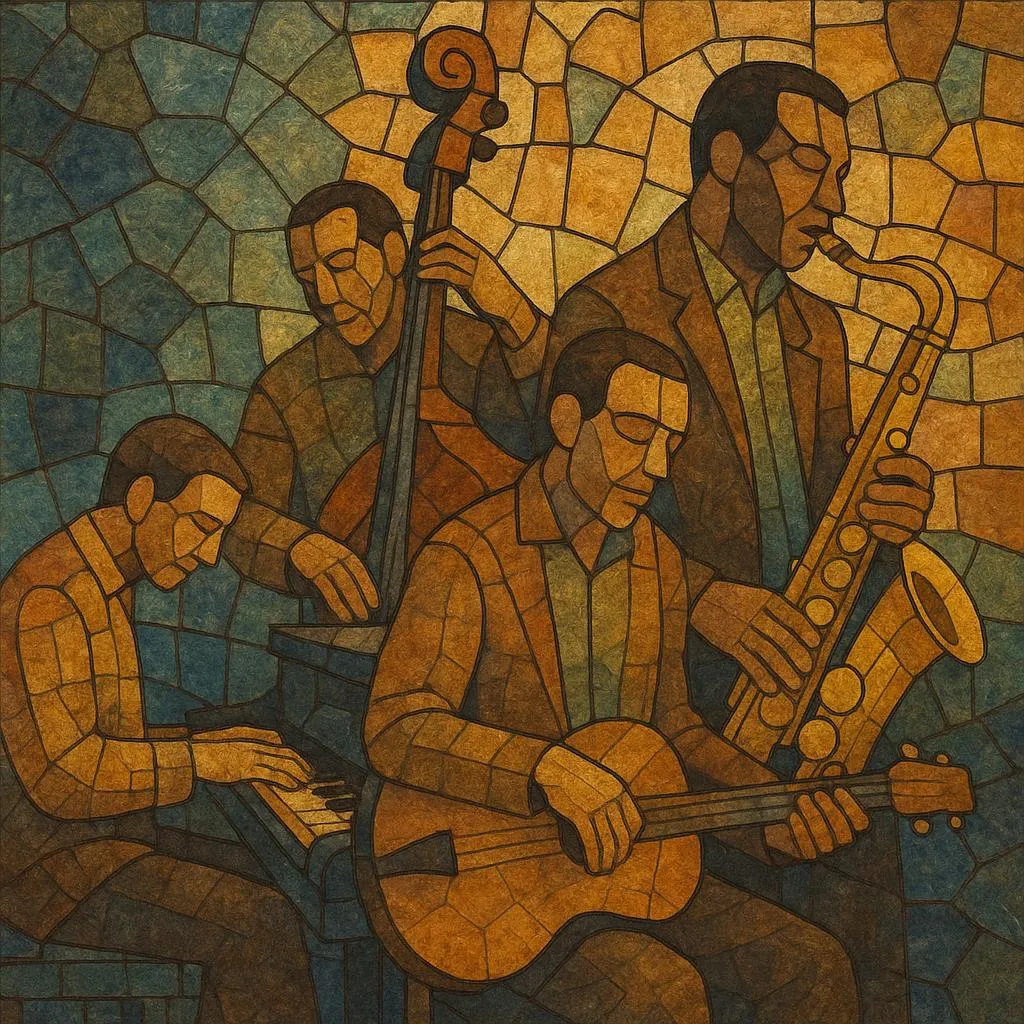
Background jazz is a mellow, unobtrusive strain of jazz designed to sit comfortably behind conversation, dining, or focused tasks. It emphasizes warmth of tone, relaxed tempos, and tasteful, economical improvisation over virtuosic display.

Typically performed by small combos (piano or guitar trio, or a light saxophone-led quartet), it draws on the jazz standards repertoire, cool-jazz phrasing, and bossa nova or soft swing grooves. The production aesthetic favors intimate room ambience, brushed drums, rounded double-bass, and gentle harmonic color—creating an inviting, sophisticated atmosphere that is as listenable as it is functional.


Sources: Spotify, Wikipedia, Discogs, RYM, MB, user feedback and other online sources

History

Origins (1950s)

Background jazz coalesced in mid‑century American lounges, hotel bars, and supper clubs, where proprietors wanted live music that conveyed sophistication without overpowering conversation. Musicians adapted the understated phrasings of cool jazz, the elegance of swing ballads, and the new, gently syncopated feel of bossa nova to craft sets that were spacious, melodic, and dynamically restrained.

Mid‑Century Codification (1960s–1970s)

As post‑bop and free jazz pushed jazz into the foreground for concert audiences, a parallel current persisted in restaurants and cocktail rooms. Pianists, guitarists, and small combos emphasized standards, light swing, and brushed drum textures. Record labels and libraries also issued "music to dine by" and "jazz for late night" compilations—codifying a functional, hospitality‑friendly sound.

From Muzak to Playlists (1980s–2000s)

With the rise of commercial background systems (from muzak to boutique licensing), venues increasingly programmed soft jazz to shape atmosphere. Smooth jazz’s production sheen informed some settings, but many establishments favored acoustic small‑group recordings echoing the elegance of earlier decades.

Contemporary Usage (2010s–present)

Streaming platforms popularized curated tags like "background jazz," "dinner jazz," and "study jazz." The style now spans classic recordings and new studio projects tailored for hospitality, co‑working spaces, and concentration. Its influence is audible in lo‑fi beats and chillhop, which borrow jazz harmony and intimate textures for modern, non‑intrusive listening.


How to make a track in this genre

Instrumentation and Tone
•   Favor small acoustic ensembles: piano trio (piano, double bass, brushed drums), guitar trio, or soft‑toned saxophone with rhythm section. •   Aim for warm, rounded timbres: ride cymbal and brushes instead of heavy backbeats; upright bass with minimal articulation noise; close‑miked piano or hollow‑body guitar with a clean, mellow tone.
Harmony and Form
•   Use jazz standards forms (AABA, ABAC, 12‑bar blues) and light reharmonization. •   Emphasize guide tones and rootless voicings (e.g., 3–7–9–13) to keep harmony colorful yet uncluttered. •   Voice‑lead smoothly; avoid dense polychords or rapid substitutions that distract from ambience.
Rhythm and Groove
•   Tempos: mostly 60–140 BPM; soft swing, jazz waltz, and gentle bossa/samba are staples. •   Keep the time feel steady and relaxed; use brushes and a light ride pattern to create motion without volume.
Melody and Improvisation
•   Play lyrical, singable heads. Improvise with concise motifs, clear phrasing, and dynamic control. •   Prioritize space and melody over speed and intensity; let lines breathe.
Arranging and Repertoire
•   Alternate feels (swing, bossa, ballad) to maintain variety while preserving a consistent mood. •   Mix well‑known standards with tasteful originals built on ii–V–I movement or simple modal vamps.
Recording and Mixing
•   Use natural room ambience or short, warm reverb. Avoid hyped high‑end or aggressive compression. •   Balance for conversation: keep mids warm, cymbals silky, and bass supportive but not boomy.
Performance Practice
•   Maintain conversational dynamics; the music should enhance the space rather than command it. •   Shape sets with gentle arcs—start spacious, build subtly, and return to calm closers.

Top tracks

Locked
Share your favorite track to unlock other users’ top tracks

Upcoming concerts

in this genre
Influenced by
Has influenced

Download our mobile app

Get the Melodigging app and start digging for new genres on the go
© 2026 Melodigging
Melodding was created as a tribute to Every Noise at Once, which inspired us to help curious minds keep digging into music's ever-evolving genres.
Buy me a coffee for Melodigging