Your digging level

For this genre
0/8
🏆
Sign in, then listen to this genre to level up

Description

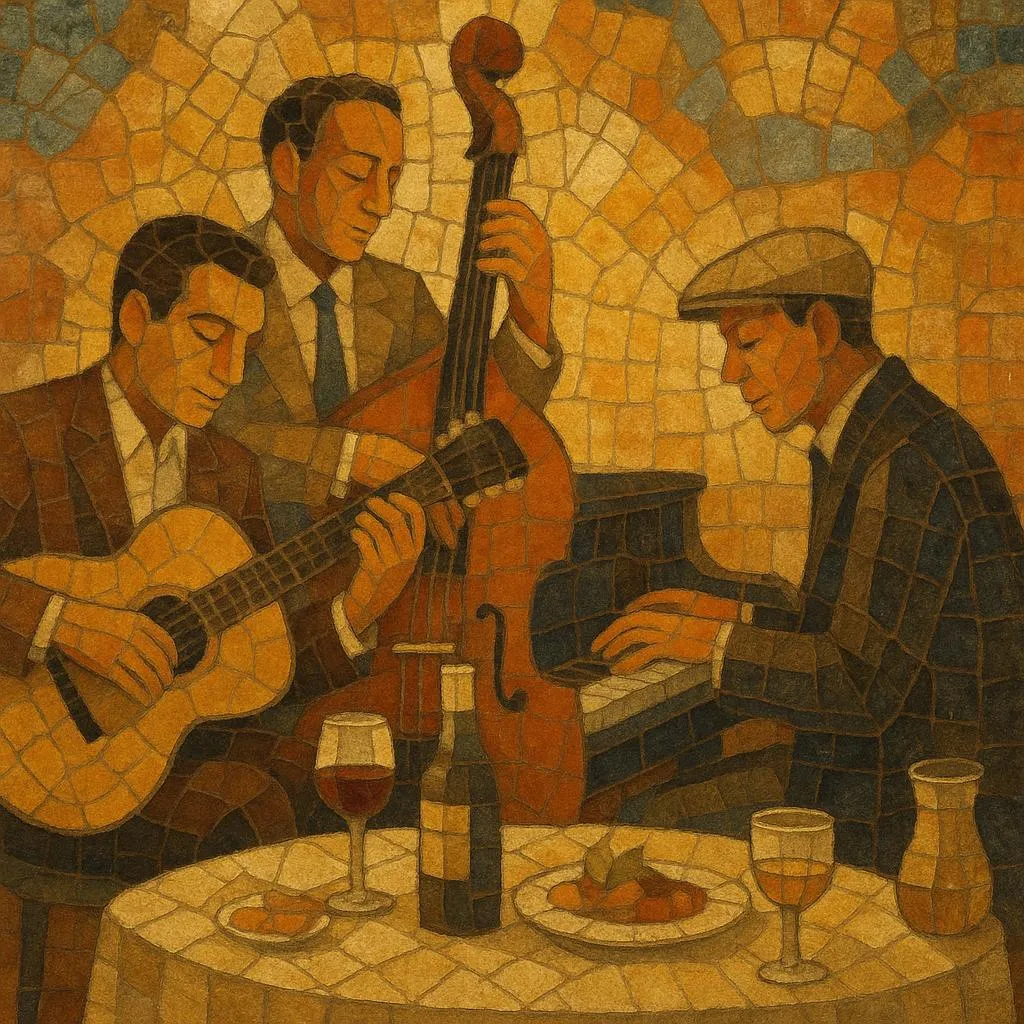
Dinner jazz is a mellow, unobtrusive strand of jazz designed to complement dining and conversation rather than dominate the room. It favors warm timbres, lyrical melodies, and relaxed grooves that create a sophisticated ambience.

The style typically draws on small-ensemble jazz traditions—piano trios, guitar-led combos, and light horn features—playing standards, bossa nova classics, tasteful ballads, and mid‑tempo swing or sambas. Compared with club‑oriented jazz, dinner jazz keeps dynamics moderate, favors brushed drums and upright bass, and prizes tunefulness and space over virtuosic display.


Sources: Spotify, Wikipedia, Discogs, RYM, MB, user feedback and other online sources

History

Postwar roots: supper clubs and cocktail culture

Dinner jazz coalesced in the 1950s United States around hotel lounges, supper clubs, and restaurant residencies where musicians provided refined background music. Pianists and small combos distilled the intimacy of cool jazz (quiet dynamics, lyrical phrasing) and the elegance of swing standards into sets that supported conversation, with repertoire drawn from Tin Pan Alley and the Great American Songbook.

Bossa nova and international refinement

In the early 1960s, bossa nova’s gentle syncopations and airy harmonies (popularized internationally by collaborations around Antônio Carlos Jobim and Stan Getz) became staples of dinner‑hour sets. The bossa feel, alongside light samba and rumba inflections, broadened the palette while preserving the relaxed, urbane atmosphere.

From hotel lounges to smooth textures

By the 1970s–80s, the rising prominence of smooth jazz and sophisticated pop‑jazz guitar (e.g., Wes Montgomery’s influence leading to George Benson’s crossover sound) informed dinner jazz programming. Ensembles kept the acoustic core (piano, upright bass, brushed kit, guitar) but occasionally integrated electric piano or soft reed pads, further smoothing the edges without losing the intimate feel.

Playlist era and hospitality programming

In the 2000s–present, dinner jazz thrives as a curatorial category across hotels, restaurants, and streaming platforms. It blends classic piano trios, cool‑toned horn ballads, and bossa favorites with contemporary, audiophile‑friendly recordings. The defining traits—moderate tempo, warm production, and lyrical understatement—remain consistent, even as the repertoire keeps evolving.

How to make a track in this genre

Core ensemble and sound
•   Start with a piano trio (piano, upright bass, brushed drum kit) or a guitar‑led quartet with light horn (tenor or flugelhorn). •   Aim for warm, intimate timbres: close‑miked piano, round acoustic bass, soft brushes/rods, mellow guitar tone (archtop or semi‑hollow), and breathy horn articulation.
Tempo, feel, and rhythm
•   Favor mid‑slow to mid‑tempo (≈ 60–120 BPM). Alternate between light swing, straight‑8ths ballads, and gentle bossa/samba cadences. •   Use brushed ride patterns or subtle cross‑stick on 2 and 4 for swing; for bossa nova, employ classic bass‑syncopation with ghosted snare and soft hi‑hat patterns.
Harmony and melody
•   Build progressions from jazz standards vocabulary: ii–V–I cycles, secondary dominants, tritone subs, and modal color. •   Voice with tasteful extensions (9ths/13ths, occasional #11 over major chords), keeping voicings open and mid‑register to avoid harshness. •   Melodies should be singable and lyrical; leave space between phrases. Prioritize motifs over dense lines.
Forms and repertoire
•   AABA, ABAC, and 32‑bar standards work well; interleave ballads with mid‑tempo swing or bossa to vary pacing. •   Mix familiar standards (“body‑and‑soul” ballad archetypes), bossa nova tunes, and elegant originals built on simple song‑forms.
Arranging, dynamics, and solos
•   Keep dynamics at conversational level; let solos be concise and melodic rather than virtuosic. •   Trade 4s or 8s lightly; avoid drum solos that break the ambience. Use background horn pads or comping riffs to support solos subtly.
Production and presentation
•   Record with minimal room reverb and warm EQ; prioritize clarity of bass and cymbals at low playback volumes. •   In live settings, maintain consistent volume and avoid piercing registers; program sets to gently rise and fall without abrupt energy spikes.

Top tracks

Locked
Share your favorite track to unlock other users’ top tracks

Upcoming concerts

in this genre
Influenced by
Has influenced

Download our mobile app

Get the Melodigging app and start digging for new genres on the go
© 2026 Melodigging
Melodding was created as a tribute to Every Noise at Once, which inspired us to help curious minds keep digging into music's ever-evolving genres.
Buy me a coffee for Melodigging