Your digging level
Description
Arab alternative is an independent, non-mainstream movement from the Arab world that blends Western alternative and indie aesthetics with Arabic melodic modes (maqam), rhythms (iqa'at), and vernacular lyrics. It favors a DIY ethos, hybrid instrumentation, and intimate or socially aware storytelling over glossy commercial pop formulas.
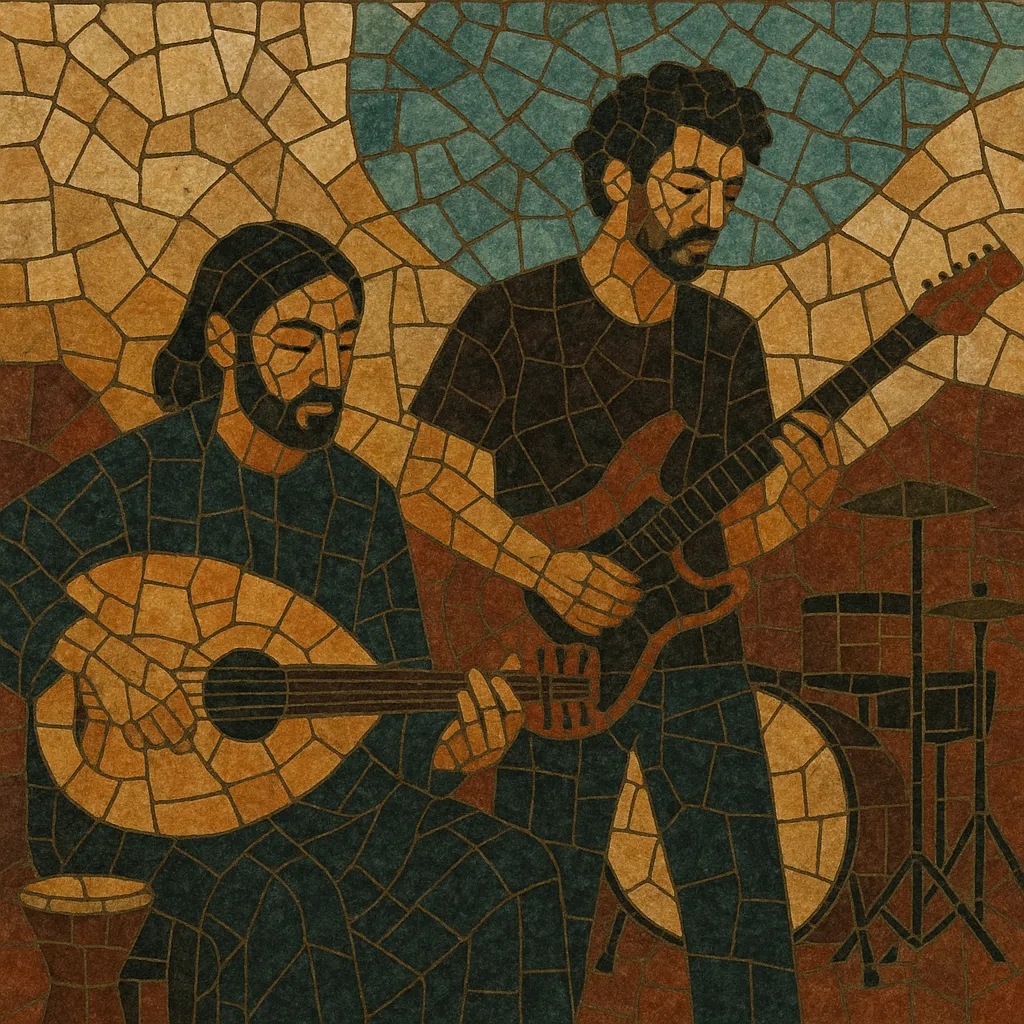
Typical arrangements fuse electric guitars, bass, and drum kits with oud, buzuq, qanun, or darbuka, and often weave in trip-hop textures, synth pads, and field recordings. Vocals draw on Arabic ornamentation and microtonal inflections, while lyrics span dialects (Levantine, Egyptian, Maghrebi, Gulf) and address identity, urban life, love, and politics. The result ranges from moody, downtempo electronica to gritty post‑punk and dreamy indie rock—always grounded in a distinctly Arabic sensibility.
History
Beirut’s late‑1990s underground is widely cited as the cradle of Arab alternative. The duo Soap Kills (Yasmine Hamdan and Zeid Hamdan, formed 1997) pioneered a blend of trip‑hop ambience and Arabic melodic phrasing, proving that Arabic vocals and maqam ornamentation could coexist with downtempo electronics and indie sensibilities. Parallel stirrings in Cairo and other cities nurtured a small network of DIY venues, home studios, and college scenes.
Through the 2000s, hubs emerged in Beirut, Cairo, Amman, Ramallah, Tunis, and Casablanca. Independent spaces and festivals—such as Metro Al Madina (Beirut), Cairo Jazz Club and 100Copies Music Space (Cairo), and regional showcases—created platforms for bands that didn’t fit commercial pop or metal circuits. Artists experimented with post‑punk, synth‑pop, and art‑rock forms while keeping Arabic lyrics and rhythmic feels, gradually coalescing into a recognizable “alternative Arabic” current.
The 2010s saw a surge of visibility. Mashrou' Leila became emblematic of the movement’s lyrical candor and modern production, while Jordan’s El Morabba3 and Autostrad defined a Levantine indie-rock sound. In Egypt, a wave of independent artists (e.g., Maryam Saleh, later collaborations with electro‑producers) pushed experimental song forms. Tunisian singer Emel Mathlouthi’s international rise spotlighted politically resonant songwriting. The spread of Bandcamp, YouTube, Anghami, and later global streaming services lowered distribution barriers and connected diasporic audiences.
By the 2020s, Arab alternative encompassed everything from microtonal synth-pop to guitar-driven post‑punk. Cross-border collaborations and diaspora projects became common, while curatorial platforms and media amplified discovery. Despite periodic censorship, visa constraints, and economic pressures on venues, the scene continues to innovate—often turning constraints into distinctive sonic identities and narratives.