Genres
Artists
Albums
Make Music
Sign in
Sign in
Artists
Experimental
Artists
Experimental
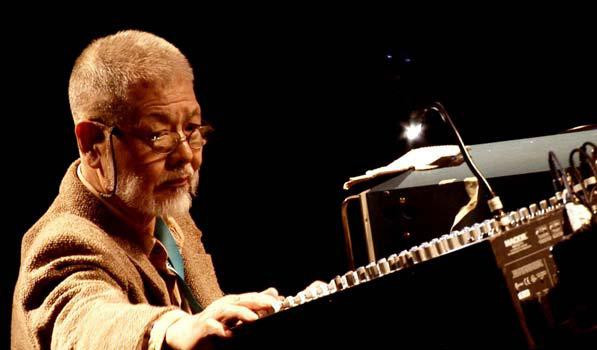
Yasunao Tone
1997
·
1 album
Listen
1
/5
Genres
Glitch
Glitch is an experimental electronic music genre that foregrounds the sounds of technological error—digital clicks, pops, clipping, buffer underruns, CD skipping, software crashes, and bit‑reduction. Rather than hiding artifacts, producers use them as primary musical material, often arranged through extreme micro‑editing and non‑linear sequencing. Texturally, glitch spans austere minimalism to warm, hazy ambience. Rhythms tend to be fragmented and asymmetrical, with sudden cuts, stutters, and silences that create tension and negative space. The palette commonly includes sine‑tone grains, granular clouds, filtered noise, and hyper‑detailed percussive fragments, sometimes sitting over subdued drones or dub‑inflected low end. The style emerged in the late 1990s around labels such as Mille Plateaux, influenced by IDM, minimal techno, and the aesthetics of failure in digital media. It later permeated pop and beat‑driven styles through sound‑design techniques that evoke imperfection and transience.
Discover
Listen
Experimental
Experimental music is an umbrella term for practices that prioritize exploration, process, and discovery over adherence to established genre norms. It embraces new sound sources, nonstandard tuning systems, indeterminacy and chance operations, graphic and open-form scores, extended techniques, and technology-led sound design (tape, electronics, computers, and live processing). Rather than a single style, it is a methodology and ethos: testing hypotheses about sound, structure, and performance, often blurring boundaries between composition, improvisation, sound art, and performance art. Listeners can expect unfamiliar timbres, unusual forms, and an emphasis on how music is made as much as the resulting sound.
Discover
Listen
Indeterminacy
Indeterminacy is a strand of post‑war experimental music in which some aspects of a composition are left to chance or to the free choice of the performer, ensuring that no two realizations are exactly the same. The approach encompasses chance procedures used during composition (e.g., tossing coins or consulting the I Ching), open or mobile forms in which sections may be reordered, graphic or text‑based notation that prompts interpretation rather than strict reading, and time‑bracket techniques that specify durations but not exact synchrony. Closely associated with the New York School (John Cage, Earle Brown, Morton Feldman, Christian Wolff), indeterminacy challenged traditional authorship, fixed works, and score‑bound precision by shifting agency to processes and performers. While often conflated with “aleatoric” music, indeterminacy typically denotes unpredictability at the level of performance/realization (open form, variable notation), whereas chance composition may use randomness to create a fixed score. In practice, many works combine both.
Discover
Listen
Avant-Garde
Avant-garde music is an umbrella term for boundary-pushing practices that challenge prevailing norms of harmony, rhythm, timbre, form, and performance. It privileges experimentation, conceptual rigor, and a willingness to reframe what counts as music at all. Historically tied to early 20th‑century artistic modernism, avant-garde music introduced atonality, the emancipation of noise, and new forms of notation and process. It embraces indeterminacy, extended techniques, electronics, spatialization, and multimedia performance, treating sound as material to be sculpted, questioned, and reinvented.
Discover
Listen
Electronic
Electronic is a broad umbrella genre defined by the primary use of electronically generated or electronically processed sound. It encompasses music made with synthesizers, drum machines, samplers, computers, and studio/tape techniques, as well as electroacoustic manipulation of recorded or synthetic sources. The genre ranges from academic and experimental traditions to popular and dance-oriented forms. While its sonic palette is rooted in electricity and circuitry, its aesthetics span minimal and textural explorations, structured song forms, and beat-driven club permutations. Electronic emphasizes sound design, timbre, and studio-as-instrument practices as much as melody and harmony.
Discover
Listen
Albums
1997
1
/5
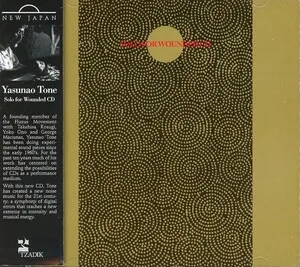
Solo for Wounded CD
Yasunao Tone
Indeterminacy
Electronic
Experimental
Similar artists
3
/5
Ryoji Ikeda
Microsound
Glitch
Sound Art
2
/5
Matmos
Experimental
Avant-Garde
Glitch
1
/5
Carl Stone
Experimental
Lowercase
Avant-Garde
2
/5
John Cage
Indeterminacy
Classical
Experimental
2
/5
Terry Riley
Minimalism
Classical
Experimental
2
/5
Otomo Yoshihide
Experimental
Avant-Garde
Anime Lo-Fi
2
/5
Negativland
Experimental
Plunderphonics
Satire
1
/5
John Zorn
Avant-Garde Jazz
Free Improvisation
Jazz
1
/5
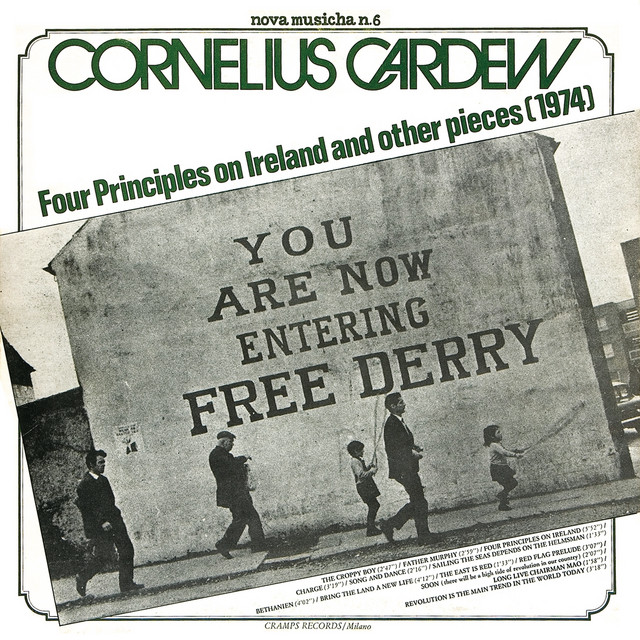
Cornelius Cardew
Experimental
Avant-Garde
Indeterminacy
1
/5
David Tudor
Experimental
Minimalism
Acousmatic
Download our mobile app
Get the Melodigging app and start digging for new genres on the go
Download on the App Store
Get it on Google Play
© 2026 Melodigging
Give feedback
Legal
Melodding was created as a tribute to
Every Noise at Once
, which inspired us to help curious minds keep digging into music's ever-evolving genres.