Your digging level
Description
Microsound is an experimental electronic music aesthetic that focuses on sound at extremely small time scales, often in the range of milliseconds. Rather than developing melodies and rhythms in the conventional sense, it foregrounds the grain, texture, and morphology of audio—clicks, cuts, sine blips, static, and near-silent filigree—arranged with surgical precision.
Heavily shaped by digital signal processing and granular/spectral techniques, microsound treats errors, residual noise, and computational artifacts as musical material. The results are sparse, highly dynamic soundfields that emphasize detail, negative space, and the sensation of listening under a microscope.
The style sits at the intersection of glitch, ambient, electroacoustic composition, and minimalism, and it is frequently associated with labels and artists who advanced “post-digital” aesthetics in the late 1990s and early 2000s.


History
Microsound coalesced in the late 1990s as artists began privileging the smallest perceivable sonic events—often below 100 ms—as primary musical units. The conceptual groundwork drew on electroacoustic composition, minimalism, and musique concrète, while the textural palette borrowed from glitch practices that embraced digital artifacts, CD skips, and software errors as expressive material.
A critical theoretical spark was Kim Cascone’s 2000 essay on “post-digital” aesthetics, which framed the aesthetics of failure and the trace of computation as creative resources. In parallel, Curtis Roads popularized the term “microsound” in academic and artistic circles, emphasizing granular and micro-time approaches in his research and writing.
Compilation series and labels spotlighting clicks-and-cuts, ultra-minimal DSP works, and near-silent sound design helped define the field. Raster-Noton, Mille Plateaux, 12k, and related imprints became hubs for artists working with sparse structures, high dynamic range, and laboratory-grade sound design. Gallery and installation contexts also embraced the music’s attention to space, perception, and detail.
The rise of affordable computers and environments such as Max/MSP, SuperCollider, Csound, AudioMulch, and Kyma enabled precise control over micro-time, amplitude envelopes, and spectra. Artists exploited FFT processes, resynthesis, granular clouds, and custom code to sculpt minute sonic events into coherent pieces.
Microsound’s vocabulary informed lowercase listening, onkyo minimalism, certain branches of ambient and minimal techno, and sound art/installation practices. While never a mainstream style, it remains influential in academic electroacoustic circles, boutique labels, and interdisciplinary media art, continuing to evolve with new software, high-resolution formats, and immersive presentation spaces.
Work at micro-time scales. Think in grains, transients, and spectral gestures rather than traditional melody or groove. Prioritize detail, silence, and dynamic range so that tiny sounds have room to breathe.
Use ultra-short samples, synthesized sines, filtered noise, digital artifacts (clicks, buffer underruns), and quiet field recordings. Source material can be deliberately fragile—bit reductions, denormal noise, or codec residue—to emphasize texture.
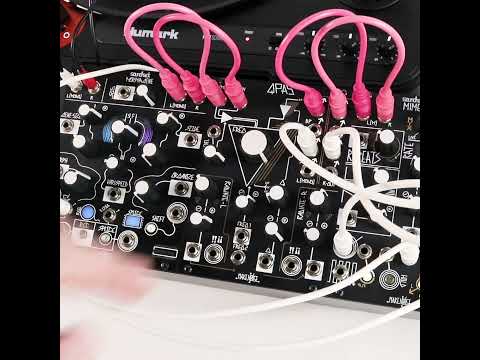
Employ granular synthesis, FFT-based processing, micro-editing, and precise envelope shaping. Environments such as Max/MSP, SuperCollider, Reaper with spectral tools, or Kyma enable sub-100 ms control. Use extremely short fades to sculpt clicks and micro-blips; apply long, subtle envelopes to shape space.
Favor sparse, pointillistic placement over linear beat-making. Consider stochastic or generative distributions of events (Poisson processes, low-density randomization). Use silence and negative space as structural elements; introduce slow macro-form while keeping micro-events active.
If used at all, keep harmony static or spectral—single tones, beating patterns, and subtly detuned clusters. Timbre morphing and spectral motion often replace chord progressions. Microtonal intervals and high-resolution tuning can add richness at low densities.
Monitor at low volume to balance near-silent details; avoid heavy bus compression to preserve microdynamics. Use wide headroom, careful EQ to reveal high-frequency filigree, and restrained reverb for spatial definition. Consider multichannel or installation settings where spatialization enhances microscopic motion.