Genres
Artists
Albums
Make Music
Sign in
Sign in
Artists
Analog Horror
Artists
Analog Horror
Xamã
Listen
4
/5
Genres
No Melody Trap
No melody trap is a minimalist branch of trap where the beat intentionally avoids tonal melodies and chord progressions. Instead, it relies almost entirely on drums, 808s, and percussive one‑shots, letting the rapper’s cadence and the 808 bass line supply most of the musical movement. The style emphasizes negative space, stark textures, and raw rhythm. Producers often use bouncy hi‑hat grids, emphatic claps/snares, and saturated, sliding 808s as the "hook" in place of a synth or sample lead. The result is a direct, performance-forward canvas that spotlights flow, punchlines, and personality.
Discover
Listen
Beat Bolha
Beat bolha is a recent Brazilian microstyle that blends baile funk drum programming with airy, “watery” textures and soft, plucky synths that resemble floating bubbles. Producers emphasize minimal, spacious arrangements, glossy sound design, and gentle 808 slides, making it a mellow, romantic counterpoint to heavier strands of funk and trap. The aesthetic is closely tied to internet beat culture and “type beat” ecosystems, spreading through TikTok, YouTube, and SoundCloud and often backing melodic, emotive vocals from MCs and trappers.
Discover
Listen
Rave Funk
Rave funk is a contemporary Brazilian club style that fuses the raw percussion, call‑and‑response vocals, and gritty bass of funk carioca with the supersaws, hoover stabs, white‑noise risers, and big‑room drops of EDM and rave. Typically sitting between 140–150 BPM (often at the Brazilian "150 BPM" pace), it uses the tamborzão or mandelão drum feel under festival‑scale synth builds and DJ‑friendly drops. The result is a high‑impact, dance‑floor sound that keeps the street energy of funk while adopting the dramatic structures of modern rave.
Discover
Listen
Analog Horror
Analog horror is an internet-born horror style that foregrounds the texture and limits of obsolete media. It is characterized by lo‑fi, band‑limited sound, tape hiss, wow and flutter, and the sonic vocabulary of public‑access TV, VHS cassettes, emergency broadcast signals, and numbers stations. In narrative terms, it tends toward cryptic, surreal plots presented as faux archival broadcasts, training films, or interrupted transmissions. Musically, the idiom leans on drones, minimal motifs, degraded samples, and detuned analog synths, using period‑authentic processing to evoke dread, nostalgia, and the uncanny.
Discover
Listen
Brazilian Trap
Brazilian trap (trap brasileiro) is the Brazilian adaptation of the Atlanta-born trap sound, performed primarily in Portuguese and colored by local rhythms, slang, and aesthetics. It features 808-heavy beats, half-time grooves, rapid hi-hat rolls, and melodic, Auto-Tuned vocals, while often folding in the swing and percussive feel of funk carioca. Lyrics commonly move between street realities, internet-native lifestyle, fashion, and aspirational luxury, with strong regional accents and Brazilian vernacular giving it a distinct identity from US trap.
Discover
Listen
Trap Carioca
Trap carioca is a Rio de Janeiro–rooted branch of Brazilian trap that fuses the half‑time 808 power of U.S. trap with the swing, percussion accents, and party ethos of funk carioca. Built on booming 808 sub‑bass, triplet hi‑hats, and minor‑key loops, it often layers or references the tamborzão and other baile funk drum idioms, local slang, and narratives of favela life, hustle, style, and romance. The result is a gritty yet polished sound that can slide between cold, nocturnal menace and swaggering dance energy, reflecting Rio’s street reality and club culture.
Discover
Listen
Trapfunk
Trapfunk is a Brazilian hybrid that fuses the drum programming, 808 bass, and hi‑hat articulations of trap with the syncopated tamborzão grooves, vocal cadences, and party‑ready attitude of funk carioca (baile funk). Tracks typically balance sparse, hard‑hitting trap frameworks with driving Brazilian funk percussion at 130–150 BPM, sliding 808s, and vocal deliveries that alternate between melodic hooks and rapid-fire chants. Lyrically, it draws on the street storytelling, ostentation, and party culture of the baile while adopting the darker textures and sound design of contemporary trap. The result is a club-optimized, bass-forward style that feels equally at home in the baile, on streaming playlists, and across social platforms, linking Brazil’s local funk scenes to global trap aesthetics.
Discover
Listen
Nova Mpb
Nova MPB ("new Música Popular Brasileira") is a contemporary wave of Brazilian popular music that renews the classic MPB ethos with indie, electronic, neo‑soul, and modern pop production. Artists in this scene preserve the melodic richness, poetic lyricism, and rhythmic DNA of bossa nova and samba while embracing lo‑fi textures, synth pads, and intimate, close‑mic vocals. Compared to classic MPB, nova MPB tends to be more minimalist and bedroom‑studio friendly, favoring warm, analog‑leaning timbres and restrained grooves. Lyrics often blend romantic and introspective themes with snapshots of urban life, identity, and the everyday, delivered in Portuguese with a natural, conversational flow.
Discover
Listen
Rap Feminino Nacional
Rap feminino nacional is the Brazilian movement of women MCs who rap primarily in Portuguese, centering female perspectives, Black identity, and everyday life in Brazil. It spans classic boom‑bap and modern trap aesthetics while freely borrowing from baile funk, samba, MPB, and contemporary R&B. The sound is marked by confident flows, pointed social commentary, and hook‑forward choruses that often blur rapped and sung delivery. Production ranges from raw, sample‑driven beats to glossy, club‑ready tracks, with frequent use of Afro‑Brazilian percussion, 808 bass, and syncopated, danceable rhythms.
Discover
Listen
Deboxe
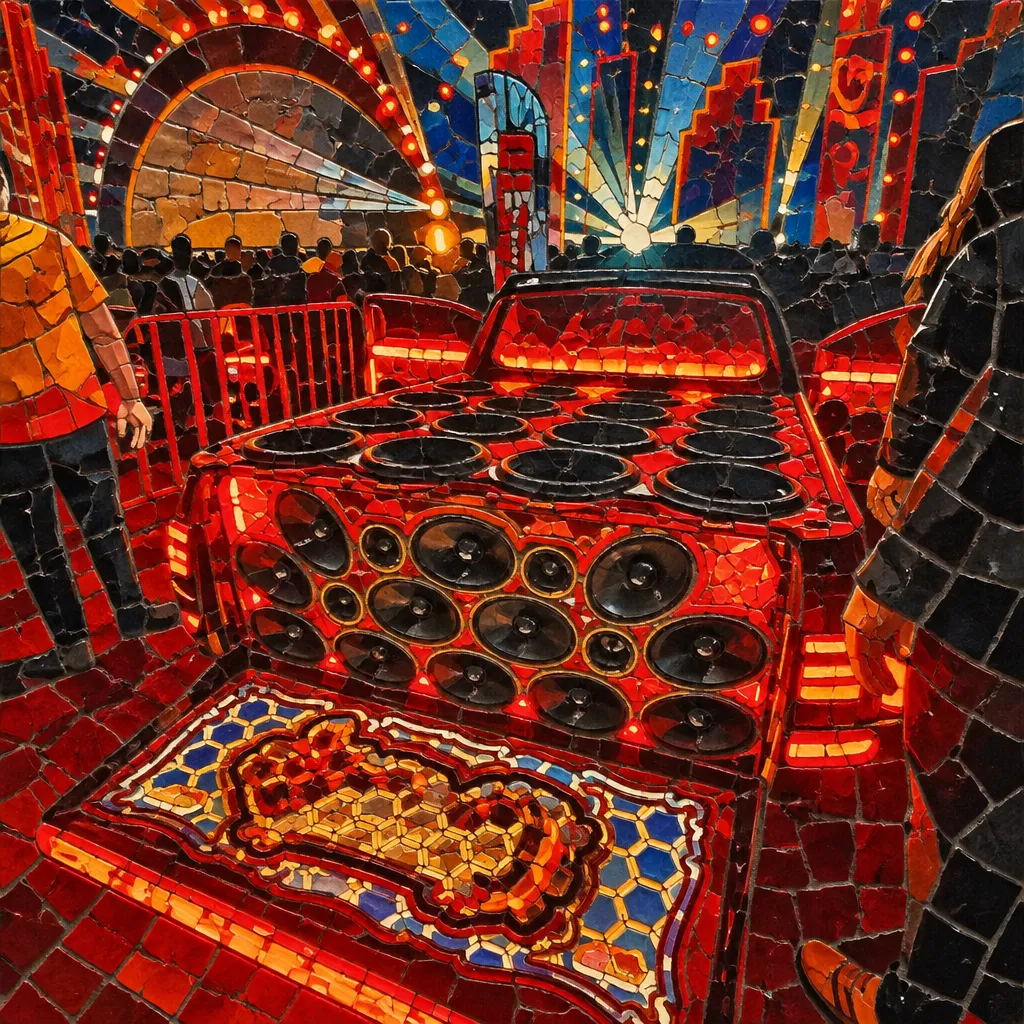
Deboxe is a contemporary Brazilian club and car-audio offshoot of funk that emphasizes massive, hypnotic sub‑bass, sparse drum patterns, and short, chant-like vocal phrases. Compared with earlier funk styles, deboxe is darker and more minimal: long 808 glides, roomy percussive hits, and reverbed stabs create an atmosphere designed for huge speaker arrays and parking‑lot parties. Drops are often built around “desande” moments—sections where the groove strips down, then slams back with heavier bass—while producer tags, chopped ad‑libs, and micro‑hooks replace long verses. Tempos most commonly sit between 135–150 BPM, borrowing the drive of mega funk and the weight of automotivo (car‑sound) culture, but delivered with a swaggering, deboche (“mocking”) attitude that gives the genre its name and vibe.
Discover
Listen
Chill Baile
Chill baile is a mellow, beat-driven offshoot of Brazil’s baile funk ecosystem that blends the genre’s signature tamborzão/808 percussion with laid‑back tempos, dreamy chords, and R&B‑ and downtempo‑leaning atmospheres. Instead of the raw, high‑energy club edge typical of baile funk, chill baile smooths the edges: tempos often drop into halftime or mid‑tempo ranges, grooves are swingy and elastic, and harmony favors jazzy seventh and ninth chords. The result is a sun‑bleached, coastal vibe—equal parts street rhythm and bedroom introspection—that sits comfortably between lo‑fi beats, chilled trap, and modern R&B.
Discover
Listen
Drill
Drill is a subgenre of hip hop that emerged on Chicago’s South Side in the early 2010s. It is defined by stark, menacing production; booming 808 sub‑bass with frequent pitch slides; skittering hi‑hats; and sparse, minor‑key melodies built from pianos, synth pads, strings, bells, or eerie soundscapes. Vocals are typically deadpan or urgent, with ad‑libs punctuating lines. Lyrically, drill foregrounds raw street reportage—survival, trauma, crews, and contested territory—often delivered with bleak realism. Tempos in original Chicago drill tend to sit around 60–75 BPM (often felt in double‑time), while later UK and New York scenes adopt 130–145 BPM grids with off‑kilter snare placement and distinctive sliding 808 patterns. The overall aesthetic prioritizes weighty low end, rhythmic tension, and an uncompromising mood.
Discover
Listen
Eletronica Underground Brasileira
Eletrônica underground brasileira (Brazilian underground electronic) is a catch‑all term for the country’s DIY, club‑rooted and internet‑native electronic scenes that blossomed outside the mainstream in the 2010s. It blends global club languages (techno, house, electro, bass music) with local rhythmic DNA (funk carioca, tecnobrega, samba, maracatu and other regional grooves), favoring gritty textures, syncopation, and adventurous sound design. The scene thrives on independent labels, parties and micro‑communities—often prioritizing live hardware sets and Bandcamp‑centric releases over commercial channels. A signature trait is rhythmic hybridity: straight four‑on‑the‑floor coexists with broken beats, baile‑derived tamborzão patterns, lo‑fi sampling of Brazilian percussion, and bold tempo play. The result is a spectrum that runs from hypnotic warehouse techno to colourful, percussive club experiments.
Discover
Listen
Musica Triste Brasileira
Música triste brasileira (Brazilian sad music) is a contemporary, streaming-native umbrella for mellow, downcast Brazilian pop, indie, and rap made to soundtrack heartbreak, solitude, and late‑night introspection. It blends intimate Portuguese‑language songwriting with lo‑fi textures, slow or mid‑tempo trap grooves, and MPB‑style bittersweet harmonies. While it borrows the global aesthetics of bedroom pop and emo‑rap, the genre’s core feeling is distinctly Brazilian: a modern, internet‑age rearticulation of saudade. Acoustic guitars and soft keys often share space with 808s and hazy synth pads; vocals are close‑mic’d, confessional, and drenched in reverb, with melodies that linger on minor/added‑color chords.
Discover
Listen
Pop Lgbtq+ Brasileira
Pop lgbtq+ brasileira is contemporary Brazilian pop created by openly LGBTQIA+ artists and rooted in the country’s club culture, internet-native scenes, and mainstream pop industry. Sonically, it blends glossy electropop and dance-pop with distinctly Brazilian rhythms and textures—most notably funk carioca’s tamborzão, brega/tecno-brega melodrama, axé’s carnival exuberance, and MPB’s lyrical sensibility. Productions often pull from reggaeton, house, trap-funk, and ballroom-vogue percussion, yielding high-energy tracks designed for both radio and dance floors. The genre is as much about voice and visibility as it is about hooks: lyrics commonly foreground queer love, pride, self-fashioning, resilience, and nightlife. Vocals range from diva belting to rap/sung hybrids, with campy, theatrical performance aesthetics that translate strongly to video and stage. The scene’s rise is tightly linked to streaming-era dynamics, YouTube/Instagram/TikTok virality, and collaborations with DJs and funk producers.
Discover
Listen
Trap Pesado
Trap pesado is a Brazilian substyle of trap characterized by hard‑hitting, saturated 808s, clipped kicks, and ominous, minor‑key melodies. It emphasizes density and impact: dark pads or detuned synth leads sit under tight snare rolls and rapid, syncopated hi‑hats, while bass slides and distortion push the low end to the front. Lyrically it leans toward street realism, braggadocio, and nightlife imagery, often reflecting Brazil’s contemporary urban scenes. Compared with more melodic or plug‑influenced variants, trap pesado favors an aggressive, weighty mix and a colder, grittier mood designed for both club sound systems and headphone impact.
Discover
Listen
Trap
Trap is a subgenre of hip hop that emerged from the Southern United States, defined by half-time grooves, ominous minor-key melodies, and the heavy use of 808 sub-bass. The style is characterized by rapid, syncopated hi-hat rolls, crisp rimshot/clap on the backbeat, and cinematic textures that convey tension and grit. Lyrically, it centers on street economies, survival, ambition, and introspection, with ad-libs used as percussive punctuation. Production is typically minimal but hard-hitting: layered 808s, sparse piano or bell motifs, dark pads, and occasional orchestral or choir samples. Vocals range from gravelly, staccato deliveries to melodic, Auto-Tuned flows, often using triplet cadences.
Discover
Listen
Brazilian Hip Hop
Brazilian hip hop (often called "rap nacional") adapts the core aesthetics of U.S. hip hop—MC-led storytelling, sample-based beats, and DJ culture—to Brazilian realities, accents, and rhythms. It balances gritty street reportage with poetic social critique, frequently referencing life in the periferias (urban outskirts), racism, police violence, and everyday resilience. Musically it ranges from classic boom-bap to trap-inflected productions and occasional fusions with samba, MPB, and funk carioca, creating a distinctly local cadence and swing. Over time, it has grown from a grassroots movement centered on breakdance circles and DIY shows to a mainstream force, launching influential albums, cyphers, and festival circuits while nurturing powerful scenes in São Paulo, Rio de Janeiro, Belo Horizonte, and beyond.
Discover
Listen
Show all 18 genres
Similar artists
4
/5
MC Cabelinho
Brazilian Trap
Funk Consciente
Trapfunk
4
/5
Borges
Analog Horror
Brazilian Hip Hop
Brazilian Trap
4
/5
Rock Danger
Uk Drill
Drill
Sample Drill
3
/5
KIB7
Analog Horror
Brazilian Hip Hop
Brazilian Trap
3
/5
MD Chefe
Trap Carioca
Trap Pesado
Brazilian Hip Hop
5
/5
Matuê
Brazilian Trap
Brazilian Hip Hop
Trap
4
/5
Filipe Ret
Brazilian Hip Hop
Brazilian Trap
Trap
4
/5
Veigh
Brazilian Hip Hop
Brazilian Trap
The Wave
4
/5
Orochi
Brazilian Hip Hop
Brazilian Trap
Trap
4
/5
Mc Poze do Rodo
Trapfunk
Brazilian Hip Hop
Brazilian Trap
Download our mobile app
Get the Melodigging app and start digging for new genres on the go
Download on the App Store
Get it on Google Play
© 2026 Melodigging
Give feedback
Legal
Melodding was created as a tribute to
Every Noise at Once
, which inspired us to help curious minds keep digging into music's ever-evolving genres.