Your digging level
Description
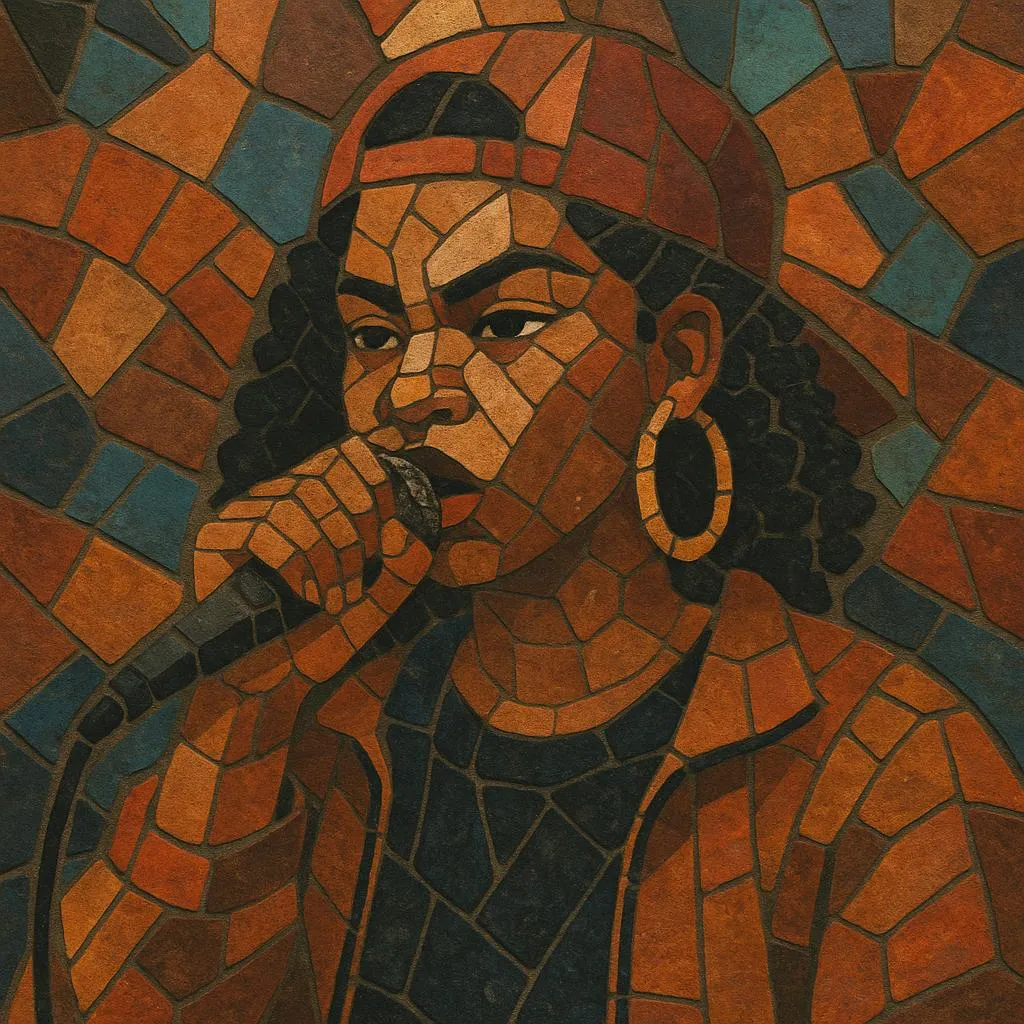
Rap feminino nacional is the Brazilian movement of women MCs who rap primarily in Portuguese, centering female perspectives, Black identity, and everyday life in Brazil. It spans classic boom‑bap and modern trap aesthetics while freely borrowing from baile funk, samba, MPB, and contemporary R&B.
The sound is marked by confident flows, pointed social commentary, and hook‑forward choruses that often blur rapped and sung delivery. Production ranges from raw, sample‑driven beats to glossy, club‑ready tracks, with frequent use of Afro‑Brazilian percussion, 808 bass, and syncopated, danceable rhythms.
History
Women have been present in Brazilian hip hop since the 1990s, but in a scene dominated by men, visibility was limited. Foundational figures such as Dina Di (from Visão de Rua) and Negra Li helped establish a blueprint for women MCs: incisive lyricism about sexism, racism, and working‑class realities, delivered with technical skill and stage presence.
The term “rap feminino nacional” became common as social media, independent labels, and cyphers lifted a new generation. Artists broadened the sonic palette with trap hi‑hats, R&B hooks, and baile funk grooves, while collectives and showcases specifically promoting women amplified voices across São Paulo, Rio de Janeiro, Brasília, Salvador, and beyond.
Women MCs gained greater media coverage and festival slots, influencing mainstream pop and R&B collaborations. The repertoire diversified—from hard‑hitting protest pieces to club‑leaning bangers—while keeping a sharp focus on intersectional feminism, body autonomy, anti‑racist discourse, and pride in Afro‑Brazilian culture. The movement continues to expand regionally and stylistically, shaping the sound and narratives of contemporary Brazilian rap.