Your digging level
Description
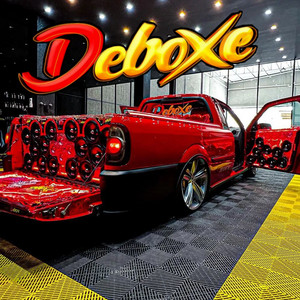
Deboxe is a contemporary Brazilian club and car-audio offshoot of funk that emphasizes massive, hypnotic sub‑bass, sparse drum patterns, and short, chant-like vocal phrases.
Compared with earlier funk styles, deboxe is darker and more minimal: long 808 glides, roomy percussive hits, and reverbed stabs create an atmosphere designed for huge speaker arrays and parking‑lot parties. Drops are often built around “desande” moments—sections where the groove strips down, then slams back with heavier bass—while producer tags, chopped ad‑libs, and micro‑hooks replace long verses.
Tempos most commonly sit between 135–150 BPM, borrowing the drive of mega funk and the weight of automotivo (car‑sound) culture, but delivered with a swaggering, deboche (“mocking”) attitude that gives the genre its name and vibe.
History
Deboxe emerges late in the 2010s inside Brazil’s broader funk ecosystem, as DJs and bedroom producers from the South/Southeast and Center‑West regions experiment with mega funk drums, mandelão swing, and automotivo (car‑sound) sub‑bass. The aim is simple: a harder, darker, and more minimal club format that hits brutally on large speaker walls while keeping arrangements flexible for DJ use.
The sound consolidates around 135–150 BPM with elongated 808s, roomy claps/rims, and short, call‑and‑response vocal chants. Producers popularize “desande” breakdowns—tension‑and‑release moments engineered to make systems sag then slam. Social platforms, YouTube channels, and WhatsApp/Telegram DJ groups speed up the spread, while car‑meet culture and paredão events provide the perfect real‑world testing ground.
By the early–mid 2020s, deboxe tracks circulate quickly between Santa Catarina, Paraná, Goiás, Distrito Federal, and São Paulo circuits, then radiate nationwide through DJ pools and influencer clips. Its aesthetics—heavy sub focus, minimal hooks, clipped vocal tags—cross over into adjacent funk and car‑audio styles, cementing deboxe as one of the signature Brazilian bass‑forward club sounds of the decade.