Your digging level

For this genre
0/8
🏆
Sign in, then listen to this genre to level up

Description

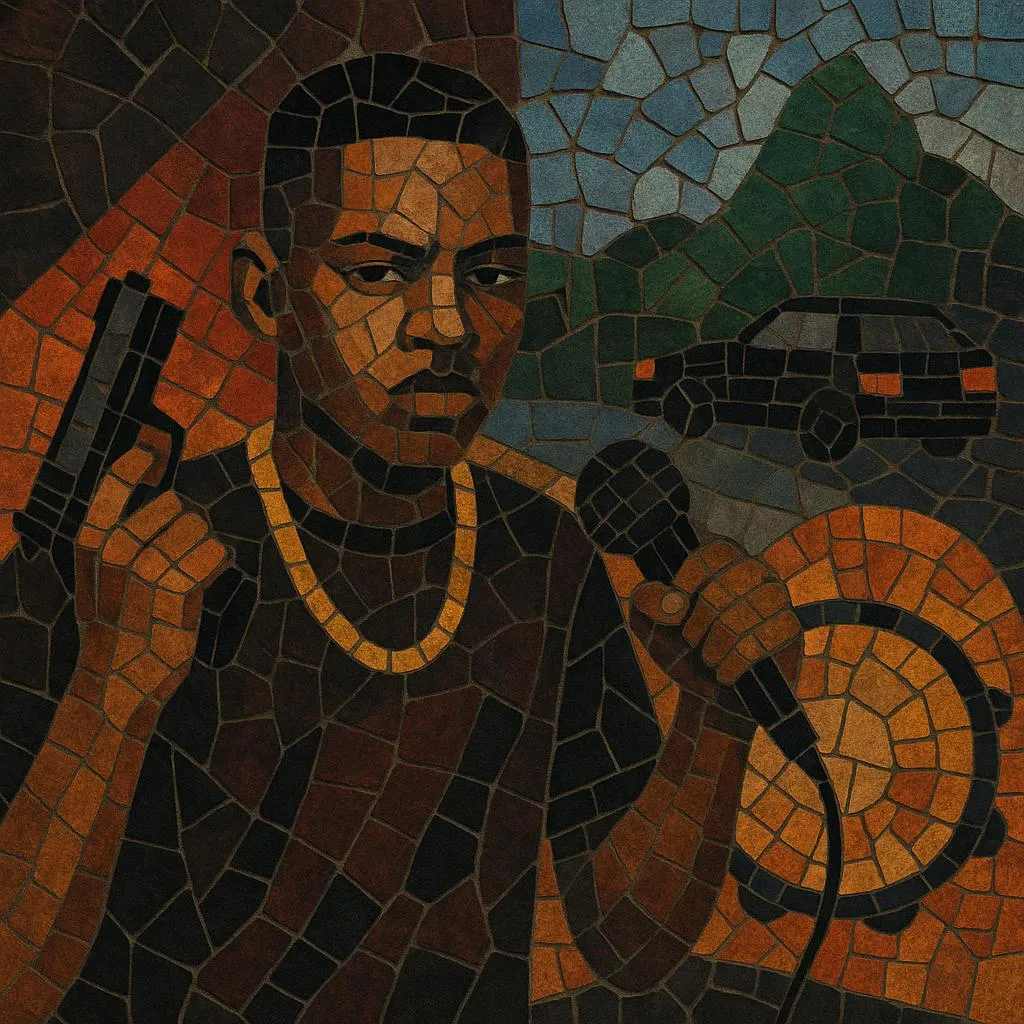
Trap carioca is a Rio de Janeiro–rooted branch of Brazilian trap that fuses the half‑time 808 power of U.S. trap with the swing, percussion accents, and party ethos of funk carioca.

Built on booming 808 sub‑bass, triplet hi‑hats, and minor‑key loops, it often layers or references the tamborzão and other baile funk drum idioms, local slang, and narratives of favela life, hustle, style, and romance. The result is a gritty yet polished sound that can slide between cold, nocturnal menace and swaggering dance energy, reflecting Rio’s street reality and club culture.


Sources: Spotify, Wikipedia, Discogs, RYM, MB, user feedback and other online sources

History

Early foundations (pre-2010s)

Rio’s hip-hop and funk ecosystems had been intertwined since the 1990s, with funk carioca drawing from Miami bass while local rap developed its own cadence and vocabulary. This shared ecosystem set the stage for a trap variant that could live comfortably beside the baile funk circuit.

Emergence in the 2010s

As U.S. trap production (808 slides, half‑time drums, sparse minor‑key loops) spread globally, Rio artists and producers adopted its toolkit and merged it with local flows, slang, and funk percussion inflections. By the mid‑to‑late 2010s, a distinct “trap carioca” identity coalesced: darker than pop‑rap, heavier than traditional boom‑bap, and unmistakably shaped by Rio’s baile culture and street narratives.

Consolidation and scene building (late 2010s–early 2020s)

Boutique labels, collectives, and producer hubs in Rio helped stabilize a pipeline for singles, videos, and collaborations. Artists leveraged YouTube, Instagram, and TikTok to scale quickly, while local studios refined a sleek low‑end mix aesthetic that traveled well on phones, earbuds, and car systems. Crossovers with funk producers became common—snare rushes, tamborzão fills, and 150 BPM motifs would surface within otherwise classic trap frameworks.

Sound traits and aesthetics

Trap carioca balances U.S. trap’s skeletal power with Rio’s rhythmic looseness and party DNA. Expect 808 glides, ratcheting hi‑hats, and mid‑tempo half‑time feels (effectively 65–75 BPM, perceived as 130–150 BPM), spiced with baile funk drum hits, call‑and‑response hooks, and vivid street imagery. Lyrically it spans ostentation, personal struggle, romance, and neighborhood pride, often delivered in melodic rap or bar‑heavy flows.

Influence and diffusion

By the 2020s, its success helped energize Brazil’s broader trap wave and cross‑pollinate with drill brasileiro, plug brasileiro, and trapfunk. While the Rio flavor remains distinctive, its production vocabulary and vocal approach now resonate nationwide and in Lusophone scenes abroad.


How to make a track in this genre

Core tempo and feel
•   Work in half‑time trap grids around 65–75 BPM (perceived as 130–150 BPM). This leaves space for vocal swagger while keeping club energy. •   Keep sections minimal so 808s and voice carry the record.
Drums and rhythm
•   Start with classic trap kit: deep 808 kick (long decays for slides), crisp snare/clap on 3, and busy hi‑hat programming (triplets, 1/32 stutters, velocity rolls). •   Add baile funk flavor subtly: tamborzão hits, tom fills, or 150 BPM‑style snare rushes as transitions. Layer these in fills or alternate sections so the groove breathes.
Harmony and bass
•   Use minor keys and sparse, moody loops (pads, keys, bell plucks, dark synths). 2–4 chord vamps or single‑chord drones work well. •   Program 808 slides (portamento) to answer the vocal or underline hook phrases. Sidechain lightly against the kick for clarity.
Vocals and flow
•   Alternate between melodic hooks (Auto‑Tune friendly) and tighter, bar‑driven verses. Switch cadences to mirror drum density. •   Lyrics: street storytelling, ambition and ostentation, romance, and local slang. Keep hooks short and chantable for live shows.
Sound design and texture
•   Blend cold, glassy leads with textured ambience (foley, vinyl grit, or field noise) to evoke Rio’s nighttime atmosphere. •   Use risers, reverse cymbals, and snare builds (sometimes funk‑style) to mark transitions without overcrowding.
Arrangement
•   Common form: Intro (8) → Hook (8) → Verse (16) → Hook (8) → Bridge/Beat Switch (8) → Hook (8). •   Consider a mid‑song beat switch that leans more into funk percussion or strips back to bare 808s for impact.
Mixing and mastering
•   Prioritize sub clarity; carve space around 30–80 Hz and keep low‑mids tidy (200–400 Hz). •   Bright hi‑hats and airy vocals (8–12 kHz) sit above a tight, punchy midrange. Aim for competitive loudness while retaining transient snap.

Main artists

Top tracks

Locked
Share your favorite track to unlock other users’ top tracks

Upcoming concerts

in this genre
Influenced by
Has influenced

Download our mobile app

Get the Melodigging app and start digging for new genres on the go
© 2026 Melodigging
Melodding was created as a tribute to Every Noise at Once, which inspired us to help curious minds keep digging into music's ever-evolving genres.
Buy me a coffee for Melodigging