Genres
Artists
Albums
Make Music
Sign in
Sign in
Artists
Avant-Garde
Artists
Avant-Garde
The Scratch Orchestra
2002
·
1 album
Listen
1
/5
Genres
Minimalism
Minimalism is a style of Western art music that emerged in the United States during the 1960s, characterized by the use of very limited musical materials, steady pulse, and extensive repetition. Composers often build pieces from short cells or motifs that are repeated and slowly transformed through additive or subtractive processes, phase shifting, and gradual changes in harmony, texture, or register. Harmony is typically consonant (often modal or diatonic), though just intonation and extended drones are also common. The result is music that foregrounds process, clarity, audibility of structure, and a hypnotic sense of stasis and flow. Typical ensembles include keyboards, mallet percussion, strings, winds, voices, and electronics or tape. Minimalism influenced a wide array of later styles, from ambient and new age to post-minimalism and minimal techno.
Discover
Listen
Process Music
Process music is a movement in which a composition is generated by a clearly defined procedure or rule-set. Sometimes this procedure is made audible—so the listener can follow the gradual changes as they unfold—and sometimes the process remains hidden behind the surface of the sound. Typical processes include phasing (two identical patterns drifting out of sync), additive or subtractive procedures (expanding or contracting a pattern by fixed steps), iterative feedback (repeating an operation so the output becomes the next input), permutations, stochastic or probabilistic rules, or instruction-based performance systems. The aesthetic ranges from hypnotic and pulse-driven to fragile and static, but the core idea remains: the music arises from the process.
Discover
Listen
Experimental
Experimental music is an umbrella term for practices that prioritize exploration, process, and discovery over adherence to established genre norms. It embraces new sound sources, nonstandard tuning systems, indeterminacy and chance operations, graphic and open-form scores, extended techniques, and technology-led sound design (tape, electronics, computers, and live processing). Rather than a single style, it is a methodology and ethos: testing hypotheses about sound, structure, and performance, often blurring boundaries between composition, improvisation, sound art, and performance art. Listeners can expect unfamiliar timbres, unusual forms, and an emphasis on how music is made as much as the resulting sound.
Discover
Listen
Indeterminacy
Indeterminacy is a strand of post‑war experimental music in which some aspects of a composition are left to chance or to the free choice of the performer, ensuring that no two realizations are exactly the same. The approach encompasses chance procedures used during composition (e.g., tossing coins or consulting the I Ching), open or mobile forms in which sections may be reordered, graphic or text‑based notation that prompts interpretation rather than strict reading, and time‑bracket techniques that specify durations but not exact synchrony. Closely associated with the New York School (John Cage, Earle Brown, Morton Feldman, Christian Wolff), indeterminacy challenged traditional authorship, fixed works, and score‑bound precision by shifting agency to processes and performers. While often conflated with “aleatoric” music, indeterminacy typically denotes unpredictability at the level of performance/realization (open form, variable notation), whereas chance composition may use randomness to create a fixed score. In practice, many works combine both.
Discover
Listen
Avant-Garde
Avant-garde music is an umbrella term for boundary-pushing practices that challenge prevailing norms of harmony, rhythm, timbre, form, and performance. It privileges experimentation, conceptual rigor, and a willingness to reframe what counts as music at all. Historically tied to early 20th‑century artistic modernism, avant-garde music introduced atonality, the emancipation of noise, and new forms of notation and process. It embraces indeterminacy, extended techniques, electronics, spatialization, and multimedia performance, treating sound as material to be sculpted, questioned, and reinvented.
Discover
Listen
Albums
2002
1
/5
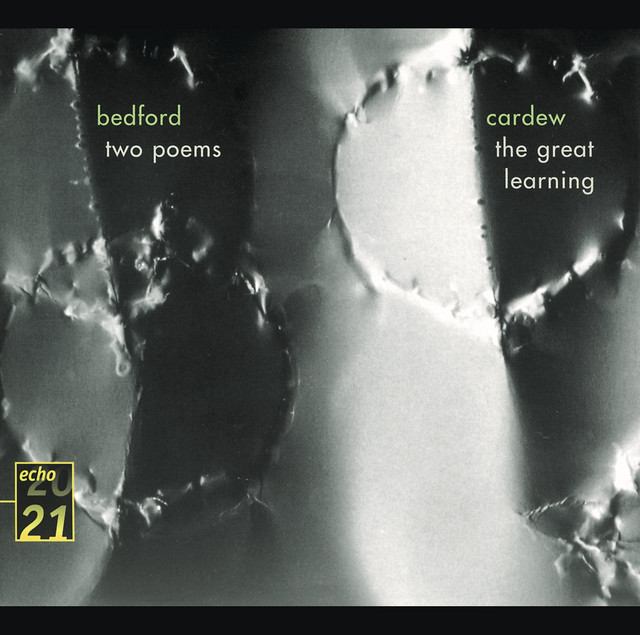
The Great Learning
Cornelius Cardew / The Scratch Orchestra
Indeterminacy
Process Music
Similar artists
2
/5
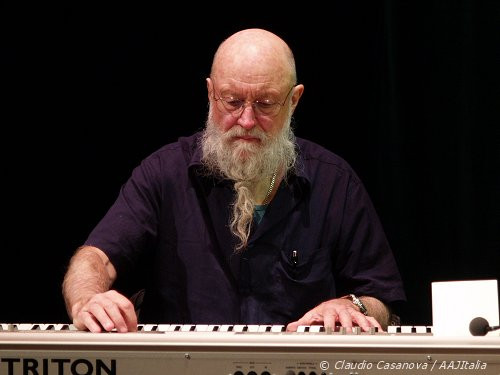
Terry Riley
Minimalism
Classical
Experimental
2
/5
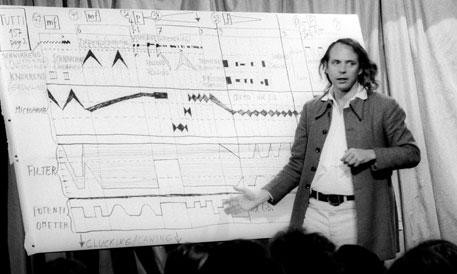
Karlheinz Stockhausen
Integral Serialism
Serialism
Darmstadt School
1
/5
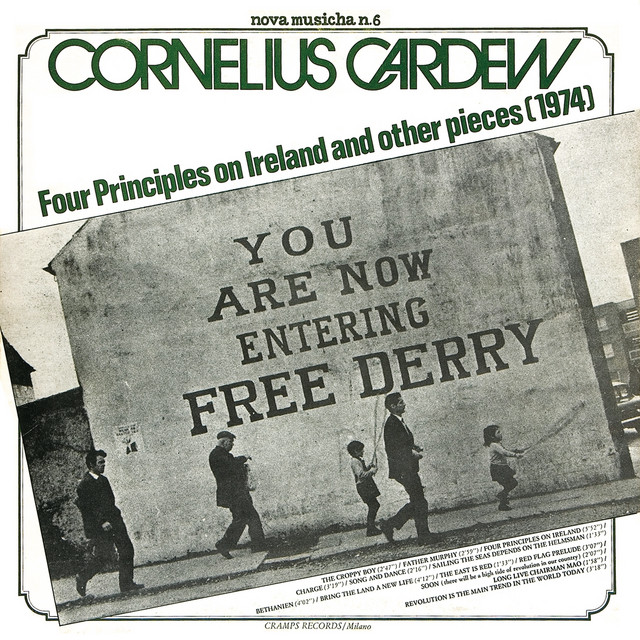
Cornelius Cardew
Experimental
Avant-Garde
Indeterminacy
3
/5
Steve Reich
Minimalism
Classical
Modern Classical
2
/5
John Cage
Indeterminacy
Classical
Experimental
2
/5
Bang On A Can All-Stars
Avant-Garde
Classical
Experimental
1
/5
Alvin Lucier
Acousmatic
New England Experimental
Sound Art
1
/5
David Tudor
Experimental
Minimalism
Acousmatic
3
/5
Paul Hillier
Choral
Minimalism
Classical
1
/5
David Behrman
Ambient
Avant-Garde
Minimalism
Download our mobile app
Get the Melodigging app and start digging for new genres on the go
Download on the App Store
Get it on Google Play
© 2026 Melodigging
Give feedback
Legal
Melodding was created as a tribute to
Every Noise at Once
, which inspired us to help curious minds keep digging into music's ever-evolving genres.