Genres
Artists
Albums
Make Music
Sign in
Sign in
Artists
Choral
Artists
Choral
SWR Vokalensemble Stuttgart
2004–2024
·
3 albums
Listen
2
/5
Genres
Musique Concrète Instrumentale
Musique concrète instrumentale is a compositional approach that transfers the ideas of musique concrète to the realm of purely acoustic instruments. Instead of manipulating recorded sound objects on tape or digitally, composers write for traditional instruments played with unconventional, extended techniques so that the instruments produce "concrete" sound-objects: breaths, frictions, scratches, resonances, and mechanical noises. Pitch and regular meter are de-centered in favor of the morphology of sounds—how they begin, sustain, and decay; their grain, spectrum, and energy; and the dramaturgy created by their transformation over time. The result is a highly tactile, timbre-driven music that treats the instrument as a source of material rather than as a vehicle for themes or harmonic progressions.
Discover
Listen
Mélodie
Mélodie is the French tradition of art song, typically for solo voice and piano, that blossomed in the mid-to-late 19th century. It places exceptional emphasis on the natural inflection and clarity of the French language, marrying refined poetry to nuanced melodic lines and sensitive accompaniments. Compared to the German Lied, mélodie is often more restrained and speech-like in phrasing, prioritizing text intelligibility, elegance of line, and subtle harmonic shading. Composers frequently set poems by major French writers—particularly from the Parnassian and Symbolist movements—resulting in music that is intimate, evocative, and rich in coloristic detail. The piano part in mélodie is not merely supportive; it participates actively in the narrative and atmosphere, with delicate figurations, harmonic ambiguity, and timbral nuance that paint the poem’s imagery. While most mélodies are for voice and piano, notable cycles were later orchestrated, expanding the genre’s palette without sacrificing its core intimacy.
Discover
Listen
Orchestral Song
Orchestral song is an art-song tradition in which a solo voice is accompanied by a full orchestra rather than piano or a small chamber ensemble. It preserves the intimate, text-led focus of lieder and mélodie while expanding the expressive palette with orchestral color, timbral contrast, and large-scale dynamic shaping. Unlike opera, it is not staged and typically sets discrete poems or groups of poems, often assembled into cycles. Forms range from strophic to through-composed, and the style spans late-Romantic tonal idioms to early modernist harmonies. Central to the genre is the careful balance between textual clarity and orchestral richness, with the orchestra acting as a commentator and colorist—introducing motives, painting imagery, and framing the vocal line with preludes, interludes, and postludes.
Discover
Listen
Choral Concerto
The choral concerto is a genre of Eastern Orthodox sacred music that emerged in the mid‑seventeenth century in the Russian Empire, particularly through the work of Ukrainian composers and chapel traditions. Written for unaccompanied choir (a cappella), these works are typically multi‑sectional and contrast homophonic, declamatory blocks with brief soloistic or small‑ensemble passages. Texts are drawn from Psalms and other scriptural or festal sources in Church Slavonic. In liturgical practice, choral concertos were sung during the Divine Liturgy at the moment when the clergy took Holy Communion—just before the Communion of the faithful—so they balance contemplative devotion with vivid rhetorical projection. Stylistically, the genre fuses native chant and Orthodox polyphony with Baroque concepts of contrast and sectional articulation. Although concise, many pieces employ double‑choir writing, antiphonal effects, and expressive dynamic “terracing,” all while maintaining the Orthodox prohibition against instruments inside the church.
Discover
Listen
Requiem
A requiem is a musical setting of the Roman Catholic Mass for the Dead (Missa pro defunctis). Historically rooted in Latin liturgy, it sets movements such as the Introit, Kyrie, (historically) the Sequence Dies irae, Offertory, Sanctus, Agnus Dei, and Communion, and often includes additional responsories like Libera me and In paradisum. While the earliest requiems were monophonic chants, the genre became a showcase for polyphonic and later symphonic choral writing. Renaissance composers wrote austere, modal settings; Classical and Romantic composers expanded the forces and dramatic scope; and 20th–21st century composers reimagined the form with new languages, from neo-modal and impressionistic harmonies to avant‑garde sonorities. Today, requiems appear both in liturgy and as concert works, symbolizing collective mourning, remembrance, and spiritual reflection.
Discover
Listen
Choral
Choral refers to music written for and performed by a choir—an ensemble of voices organized into sections such as soprano, alto, tenor, and bass (SATB), or same-voice groupings (SSA, TTBB). It encompasses both sacred and secular repertoire and may be sung a cappella or with accompaniment by organ, piano, or full orchestra. Stylistically, choral music ranges from chant-like monophony to intricate polyphony and rich homophonic textures. Texts are drawn from liturgy, scripture, poetry, and vernacular sources, and are set in many languages. Performance contexts include church services, concert halls, and community events, making choral one of the most socially embedded and widely practiced forms of ensemble music. Across history, choral music has served as a laboratory for vocal counterpoint, word painting, and text-driven form, while functioning as a cultural bridge among religious rites, national traditions, and contemporary concert practice.
Discover
Listen
Albums
2024
1
/5
Choir Concertos
Alfred Schnittke Альфред Шнитке / SWR Vokalensemble / Yuval Weinberg
Choral Concerto
2007
1
/5
Vocal Works With Orchestra
Charles Koechlin / Gabriel Fauré
Mélodie
Orchestral Song
2004
1
/5
Das Mädchen mit den Schwefelhölzern, Tokyo-Fassung 2000
Helmut Lachenmann / SWR Sinfonieorchester / Sylvain Cambreling
Musique Concrète Instrumentale
Similar artists
4
/5
Berliner Philharmoniker
Classical
Romantic Classical
Romanticism
3
/5
Philippe Herreweghe
Classical
Baroque
Choral
2
/5
Orchestre des Champs-Élysées
Choral
Classical
Requiem
3
/5
BBC Symphony Orchestra
Classical
Opera
Orchestral
4
/5
Wiener Philharmoniker
Classical
Romantic Classical
Romanticism
4
/5
Philharmonia Orchestra
Classical
Opera
Choral
3
/5
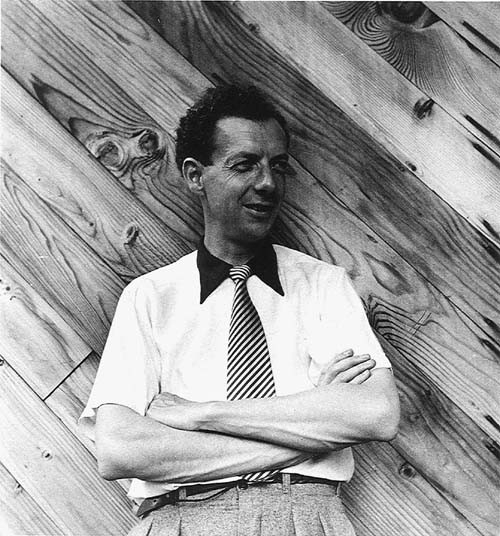
Benjamin Britten
Neoclassicism
Requiem
Choral
3
/5
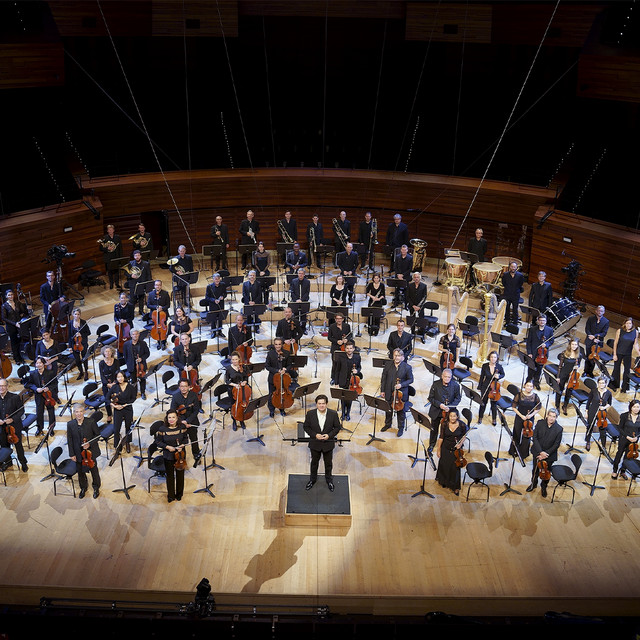
Orchestre National De France
Choral
Classical
Opera
3
/5
Michael Schade
Choral
Classical
Requiem
2
/5
Otto Klemperer
Choral
Classical
Opera
Download our mobile app
Get the Melodigging app and start digging for new genres on the go
Download on the App Store
Get it on Google Play
© 2026 Melodigging
Give feedback
Legal
Melodding was created as a tribute to
Every Noise at Once
, which inspired us to help curious minds keep digging into music's ever-evolving genres.