Genres
Artists
Albums
Make Music
Sign in
Sign in
Artists
Digital Cumbia
Artists
Digital Cumbia
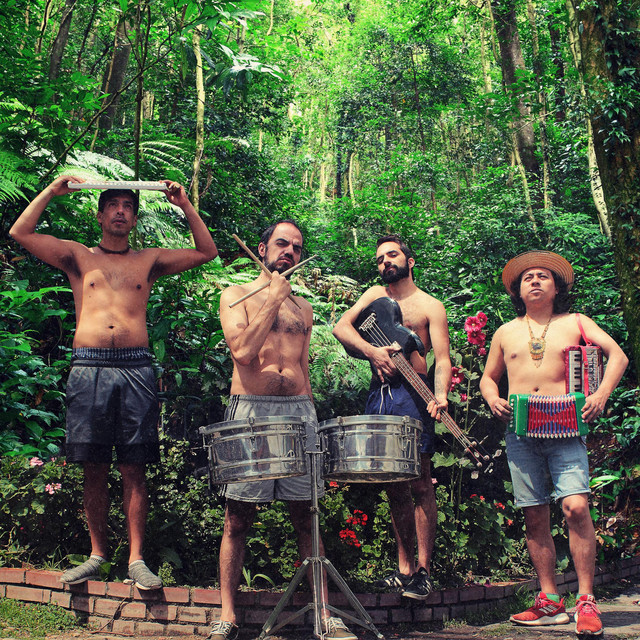
Romperayo
2015
·
1 album
Listen
2
/5
Genres
Latin Afrobeat
Latin Afrobeat is a contemporary fusion style that welds the polyrhythmic engine of West African Afrobeat with Latin American and Caribbean grooves. It often marries Afrobeat’s interlocking drum kit, shekere, and highlife‑style guitars with salsa/cumbia percussion sections, montuno piano figures, and bold horn arrangements. The result is a dance‑forward, big‑ensemble sound: long vamps, call‑and‑response vocals (frequently in Spanish or Portuguese), syncopated bass ostinati, and brass stabs—recorded with a warm, live, analog aesthetic. While it honors Fela Kuti’s Afrobeat blueprint, it colors that framework with Afro‑Cuban jazz harmony, salsa horn voicings, and coastal Colombia/Brazilian percussion idioms.
Discover
Listen
Digital Cumbia
Digital cumbia (often called nu cumbia) is a contemporary, electronically produced reinterpretation of traditional cumbia from Colombia and its many regional offshoots across Latin America. Producers sample or re-record classic cumbia elements—guacharaca scrapes, accordion riffs, woodwinds, and tumbao-style basslines—and set them against modern electronic frameworks such as downtempo, house, hip hop, dub, and dancehall. The result is a mid‑tempo, bass-forward sound (typically around 85–110 BPM) that balances folkloric groove with club-ready synthesis, creative sampling, and spacious dub effects. The scene first cohered in Buenos Aires club nights and netlabels before spreading across Latin America and diasporic hubs, becoming a key pillar of the broader “global bass” movement. Its aesthetics often embrace psychedelic textures, Andean timbres, and sound design techniques that feel both earthy and futuristic.
Discover
Listen
Tropicanibalismo
Tropicanibalismo is a Colombian scene and aesthetic that emerged in the early 2000s to reinvent coastal musics such as cumbia, porro, champeta, currulao, and chirimía through a contemporary, experimental lens. Artists in this movement treat the traditional repertoire as raw material to be “cannibalized”: they splice Afro‑Colombian rhythms with fuzz guitars, Farfisa/organ timbres, dub mixing, tape echo, and left‑field studio techniques. The result moves between sweaty dance‑floor energy and playful, psychedelic collage, while still keeping the hand‑drummed swing and call‑and‑response singing of the Caribbean and Pacific coasts. Beyond a sound, tropicanibalismo is a DIY, crate‑digging attitude: recover forgotten records and rhythms, filter them through modern electronics and art‑rock sensibilities, and feed them back into Colombia’s urban club and indie circuits.
Discover
Listen
Electrocumbia
Electrocumbia (often called digital cumbia or nu-cumbia) is a contemporary, electronic reinterpretation of traditional cumbia. It merges cumbia’s signature off‑beat percussion, guacharaca/güiro textures, and tumbao bass with modern production elements such as synthesizers, drum machines, sampling, and dub-style effects. While rooted in Colombian cumbia, the style took shape across Latin America—especially within Buenos Aires’ club scene—where producers fused folkloric rhythms with downtempo, house, hip hop, and dub aesthetics. The result is a sound that can be both hypnotic and dance‑forward, oscillating between dreamy, psychedelic atmospheres and gritty, bass‑heavy grooves.
Discover
Listen
Chicha
Chicha is a Peruvian branch of cumbia that crystallized in urban migrant neighborhoods during the late 1960s and 1970s. It fuses Colombian cumbia rhythms with Andean huayno melodies, played on electric guitars that carry surf- and psychedelic-rock inflections. The style is defined by bright, reverb-soaked lead guitar lines in pentatonic (often Andean) motifs, Farfisa- or Hammond-type organs doubling riffs, and a steady cumbia groove driven by drum kit, güiro, and congas. Lyrics frequently reflect internal migration, working-class life, love, longing, and the bittersweet experience of cultural hybridity in Lima and other Peruvian cities. Chicha is sometimes called cumbia peruana (though that umbrella also includes Amazonian cumbia). Its imagery and street-poster aesthetics—neon colors and bold typography—became synonymous with the sound’s vibrant, grassroots identity.
Discover
Listen
Cumbia
Cumbia is a syncretic dance-music tradition from Colombia’s Caribbean coast that blends African rhythmic heritage, Indigenous (especially gaita flute) melodic practice, and Spanish colonial instrumentation and forms. Traditionally performed in a moderate 2/4 (often felt in 4/4 today), it features interlocking hand-drum parts (tambora, alegre, llamador), guacharaca or maracas for steady texture, and long cane flutes (gaita hembra and gaita macho) carrying call-and-response melodies. As it spread in the 20th century, orchestras and dance bands added accordion, horns, piano, bass, and later electric guitar and synthesizers, creating urban and pan–Latin American variants. Harmonically simple and rhythm-forward, cumbia places groove, ostinati, and vocal refrains at the center, making it both ceremonial in origin and enduringly popular on social dance floors across the Americas.
Discover
Listen
Albums
2015
1
/5
Romperayo
Romperayo
Tropicanibalismo
Digital Cumbia
Similar artists
2
/5
Meridian Brothers
Tropicanibalismo
Cumbia
Digital Cumbia
2
/5
Los Pirañas
Cumbia
Chicha
Tropicanibalismo
2
/5
Frente Cumbiero
Tropicanibalismo
Chicha
Cumbia
3
/5
La Yegros
Nu-Cumbia
Chicha
Digital Cumbia
2
/5
El Hijo De La Cumbia
Cumbia
Chicha
Cumbia Sonidera
3
/5
Ondatrópica
Cumbia
Chicha
Electrocumbia
2
/5
Grupo Fantasma
Chicha
Cumbia
Electrocumbia
2
/5
Dos Santos
Chicha
Electrocumbia
Latin Afrobeat
2
/5
Money Chicha
Chicha
Cumbia
Electrocumbia
1
/5
La Cumbia Chicharra
Afrobeat
Chicha
Electrocumbia
Download our mobile app
Get the Melodigging app and start digging for new genres on the go
Download on the App Store
Get it on Google Play
© 2026 Melodigging
Give feedback
Legal
Melodding was created as a tribute to
Every Noise at Once
, which inspired us to help curious minds keep digging into music's ever-evolving genres.