Genres
Artists
Albums
Make Music
Sign in
Sign in
Artists
Street Band
Artists
Street Band
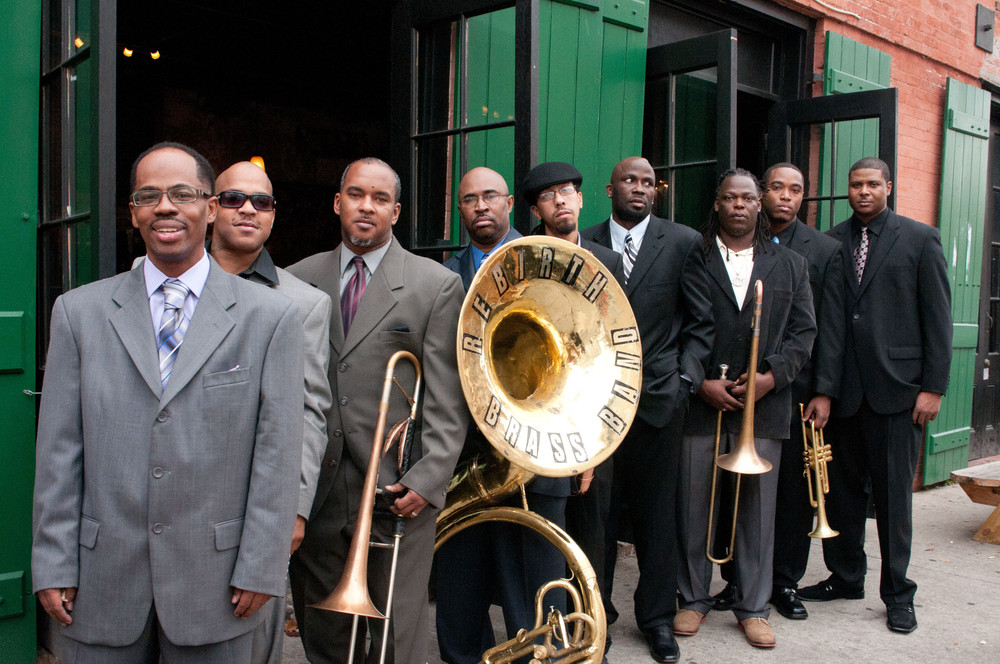
Rebirth Brass Band
1989–2014
·
11 albums
Listen
2
/5
Genres
Street Band
Street band refers to the modern, ambulatory brass-and-percussion ensemble movement that performs at street level in parades, protests, and festivals without stages or amplification. These groups are mobile, acoustic, and participatory, collapsing the space between performers and audience and often engaging communities directly. Musically, contemporary street bands draw on a broad palette: New Orleans second line grooves and jazz, Balkan/Romani fanfare traditions, klezmer, Brazilian samba/batucada, Afrobeat and Highlife, as well as punk, funk, and hip hop. The result is a high-energy, rhythm-forward sound designed for dancing, procession, and public celebration or protest.
Discover
Listen
Bounce
Bounce is a high-energy regional style of hip hop that emerged in New Orleans in the early 1990s. It is built on fast, repetitive party grooves, commanding chants, and call‑and‑response hooks that directly engage dancers and the crowd. Its signature rhythmic bed centers on the "Triggerman" beat (from the Showboys' 1986 track Drag Rap) and the "Brown Beat" break, usually driven by punchy TR‑808 drums, handclaps, and chopped vocal samples. Lyrics tend to be chant-like, local, and instructional—naming neighborhoods, wards, and housing projects, and cueing specific dance moves (notably twerking). Bounce’s performance tradition connects to New Orleans second‑line and parade culture: it’s communal, percussive, and built for the club and block party. The result is a kinetic, minimal, bass‑forward sound that prioritizes movement, crowd interaction, and relentless momentum.
Discover
Listen
Jazz-Funk
Jazz-funk is a groove-forward hybrid of jazz improvisation and harmony with the rhythmic drive and backbeat of funk. It features syncopated basslines, crisp drum patterns, and tight horn or keyboard riffs, often organized around vamping two- or four-bar progressions rather than complex chord changes. The sound is defined by electric instruments—Fender Rhodes, Clavinet, analog and early digital synthesizers, electric bass, and wah-inflected guitar—alongside punchy horn sections and extended solos. Compared to traditional jazz, the harmonic language is leaner but still rich, emphasizing 9ths, 11ths, 13ths, and modal centers (especially Dorian). The music aims for deep, danceable pocket, slick production, and a soulful, urban feel.
Discover
Listen
Zydeco
Zydeco is a high-energy dance music of the Louisiana Creole community that blends Creole and Cajun traditions with blues, rhythm & blues, boogie‑woogie, and rock and roll. It is distinguished by its driving accordion leads, the metallic scrape of the vest washboard (frottoir), and a tight rhythm section built for two-steps and shuffles. Typically sung in English and Louisiana Creole French (and sometimes in Louisiana French), zydeco features call-and-response hooks, blue notes, and earthy storytelling about love, work, celebration, and community life. Modern bands often add electric guitar, bass, and drum kit, while some retain more traditional button or piano accordion textures. The result is a propulsive, joyful sound designed for packed dance floors.
Discover
Listen
New Orleans R&b
New Orleans R&B is a piano-driven, horn-rich strain of rhythm and blues that emerged in the late 1940s and flourished through the 1950s. It blends blues harmony with the lilt of Caribbean rhythms, the swing of jazz, and gospel’s vocal inflections, creating an irresistibly rolling groove. The style is marked by triplet-based piano patterns, parade-inspired backbeats, syncopated horn riffs, and relaxed yet danceable shuffles. Its sound was defined by the city’s storied studio scene (notably Cosimo Matassa’s J&M Studio), visionary bandleaders and producers like Dave Bartholomew and Allen Toussaint, and charismatic singer-pianists such as Fats Domino and Professor Longhair. Lyrically, New Orleans R&B favors good-time party themes, romance, and streetwise vignettes. Its warm, unhurried feel and rhythmic cross-pollination would prove foundational to rock and roll, soul, funk, ska, and swamp pop.
Discover
Listen
R&b
R&B (Rhythm and Blues) is a vocal- and groove-centered popular music tradition that blends blues tonality, jazz harmony, and gospel-inflected singing with a steady backbeat. It emphasizes expressive lead vocals, call-and-response, lush harmonies, and danceable rhythms. From its 1940s roots in African American communities to its later evolutions, R&B has continually absorbed and reshaped surrounding sounds—from jump blues and swing in the early days to soul, funk, hip hop, and electronic production in the contemporary era. Today, R&B ranges from intimate, slow-burning ballads to club-ready tracks, all tied together by a focus on feel, melody, and vocal performance.
Discover
Listen
Cajun
Cajun is the dance-driven traditional music of the Francophone Cajuns of south Louisiana, characterized by driving two-steps, lonesome waltzes, and heartfelt, often nasal-tinged vocals sung in Cajun French and English. Its core sound blends button accordion and fiddle, propelled by guitar, bass, and the metallic pulse of the triangle (tit-fer). Built for social dancing in packed halls, the music emphasizes strong melodic hooks, call-and-response refrains, and sturdy rhythms. Repertoires include up-tempo two-steps in duple meter and lyrical waltzes in triple meter, with instrumental breaks that showcase the accordion’s bellows phrasing and the fiddle’s double-stops and slides. Over time, Cajun incorporated elements from country, blues, and swing while retaining a distinct regional identity.
Discover
Listen
Jazz
Jazz is an improvisation-centered music tradition that emerged from African American communities in the early 20th century. It blends blues feeling, ragtime syncopation, European harmonic practice, and brass band instrumentation into a flexible, conversational art. Defining features include swing rhythm (a triplet-based pulse), call-and-response phrasing, blue notes, and extended harmonies built on 7ths, 9ths, 11ths, and 13ths. Jazz is as much a way of making music—spontaneous interaction, variation, and personal sound—as it is a set of forms and tunes. Across its history, jazz has continually hybridized, from New Orleans ensembles and big-band swing to bebop, cool and hard bop, modal and free jazz, fusion, and contemporary cross-genre experiments. Its influence permeates global popular and art music.
Discover
Listen
Dixieland
Dixieland is one of the earliest forms of jazz, crystallizing in New Orleans in the 1910s and spreading to Chicago and New York in the 1920s. It is characterized by collective improvisation, where the front line—trumpet or cornet carrying the melody, clarinet weaving countermelodies, and trombone providing "tailgate" harmonies and slides—creates a lively polyphonic texture over a buoyant two-beat feel. Its rhythm section often features banjo or piano, tuba or string bass, and drums playing parade-derived press rolls and stop-time figures. Harmonically it draws on functional tonality (I–IV–V with frequent secondary dominants), and structurally it favors 12-bar blues, 16-bar strains from ragtime, and 32-bar AABA song forms. Repertoire includes marches, blues, spirituals, popular songs, and Creole dances, rendered with a brassy, celebratory sound that evokes the New Orleans brass band tradition.
Discover
Listen
New Orleans Brass Band
New Orleans brass band is a parade-born ensemble tradition that blends European military band instrumentation with African American rhythmic feel and collective improvisation. Typical lineups feature trumpets and/or cornets carrying the melody, trombones with tailgate counter-lines, clarinet or saxophone weaving obligato figures, a sousaphone (or tuba) providing walking bass, and a street percussion battery with snare, bass drum, and cymbals driving the second line groove. Repertoire spans hymns and dirges for jazz funerals, blues, ragtime strains, marches, and joyous up-tempo shout choruses for social-aid-and-pleasure club parades. The style is defined by swing, syncopation, call-and-response, polyphonic collective improvisation, and the distinctive second line beat—an elastic, syncopated march feel that turns the street into a dance floor. Since the 1970s, many bands have incorporated funk, R&B, and hip-hop influences while retaining the core parade ethos.
Discover
Listen
Brass Band
Brass band refers to ensemble-driven music performed primarily by brass instruments and percussion, with a sound characterized by powerful, blended timbres, antiphonal choirs, and a strong emphasis on melody and counter-melody. In its most codified form (the British-style brass band), the ensemble uses cornets, flugelhorn, tenor horns, baritones, euphoniums, trombones, tubas, and percussion, all written in transposed parts to create a homogenous, organ-like sonority. Repertoire spans marches, hymn tune settings, operatic and orchestral transcriptions, original contest works, and light music. Globally, the term also encompasses regional traditions such as New Orleans parade/second-line bands (merging ragtime, early jazz, and funk), and Balkan Romani brass bands (fast dance meters and virtuosic ornamentation), showing the format’s adaptability across cultures and celebrations.
Discover
Listen
Show all 11 genres
Albums
2014
2
/5
Move Your Body
Rebirth Brass Band
Street Band
Dixieland
Jazz
2011
1
/5
Why You Worried 'bout Me?
Rebirth Brass Band
Street Band
2011
2
/5
Rebirth of New Orleans
Rebirth Brass Band
New Orleans Brass Band
Street Band
Jazz
2008
2
/5
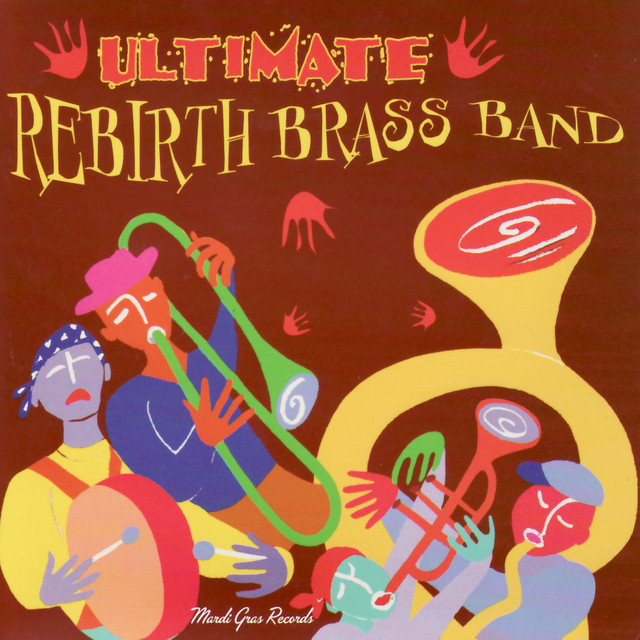
Ultimate Rebirth Brass Band
Rebirth Brass Band
Street Band
2008
1
/5
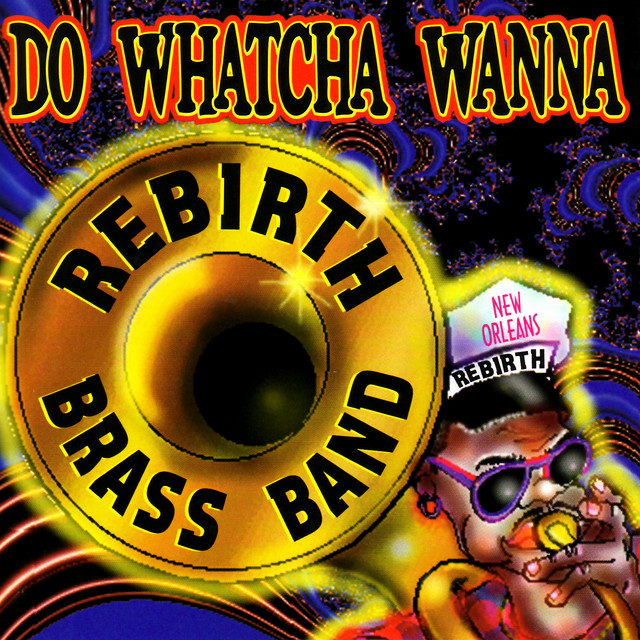
Do Watcha Wanna
Rebirth Brass Band
Street Band
Dixieland
Jazz
2008
2
/5
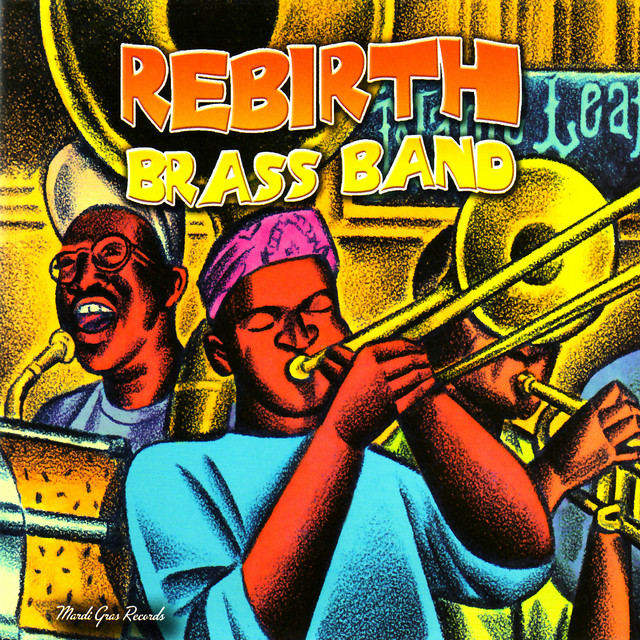
The Main Event: Live at the Maple Leaf
Rebirth Brass Band
Street Band
Jazz
2008
1
/5
Hot Venom
Rebirth Brass Band
New Orleans Brass Band
2008
2
/5
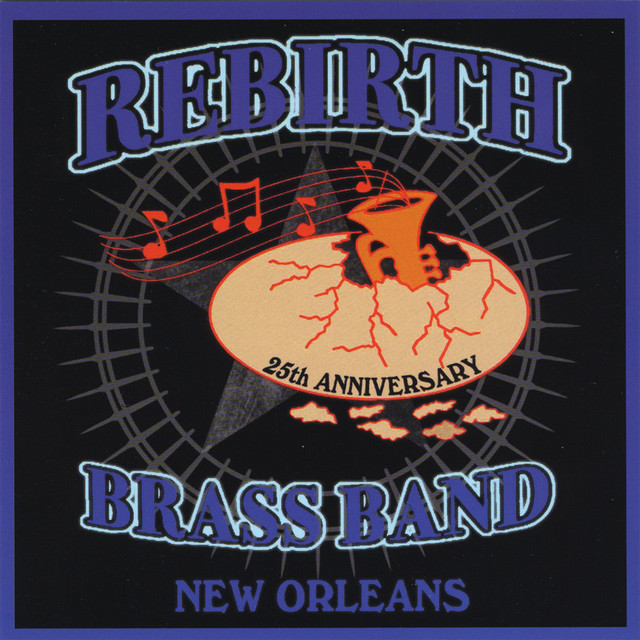
25th Anniversary
Rebirth Brass Band
Street Band
2006
1
/5
Rebirth For Life
Rebirth Brass Band
Street Band
1992
2
/5
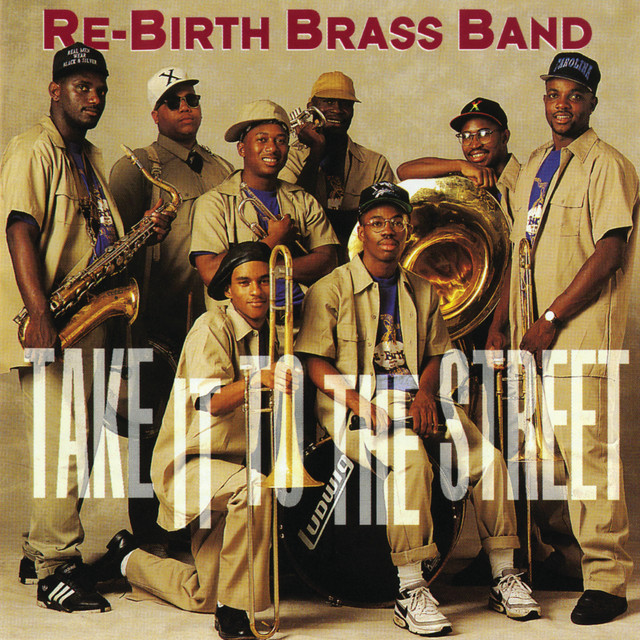
Take It To The Street
Rebirth Brass Band
Street Band
Brass Band
Jazz
1989
2
/5
Feel Like Funkin' It Up
Rebirth Brass Band
New Orleans Brass Band
Jazz
Similar artists
2
/5
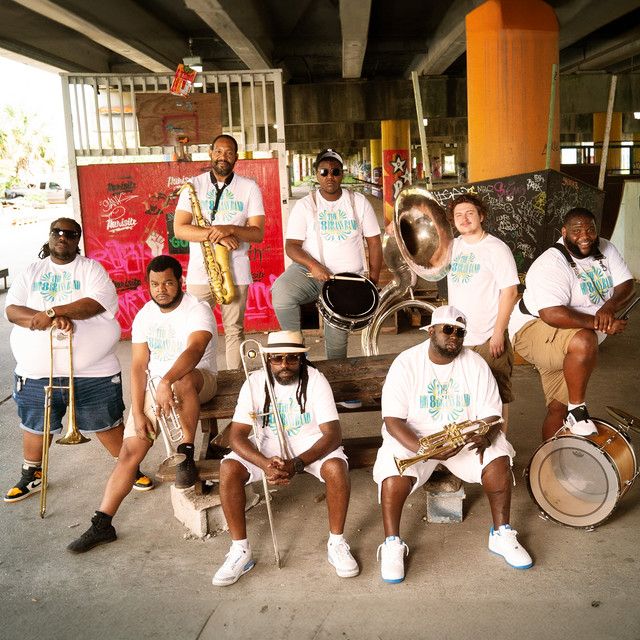
Hot 8 Brass Band
Street Band
New Orleans Brass Band
Brass Band
1
/5
Various Artists
Afro-Funk
Alternative Rock
Ambient
3
/5
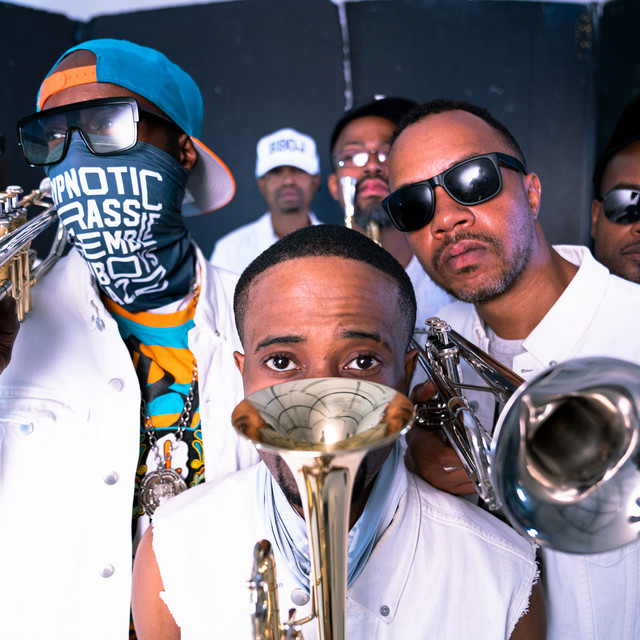
Hypnotic Brass Ensemble
Street Band
New Orleans Brass Band
Brass Band
2
/5
The Dirty Dozen Brass Band
New Orleans Brass Band
Street Band
Jazz
2
/5
Youngblood Brass Band
Street Band
Hip Hop
New Orleans Brass Band
2
/5
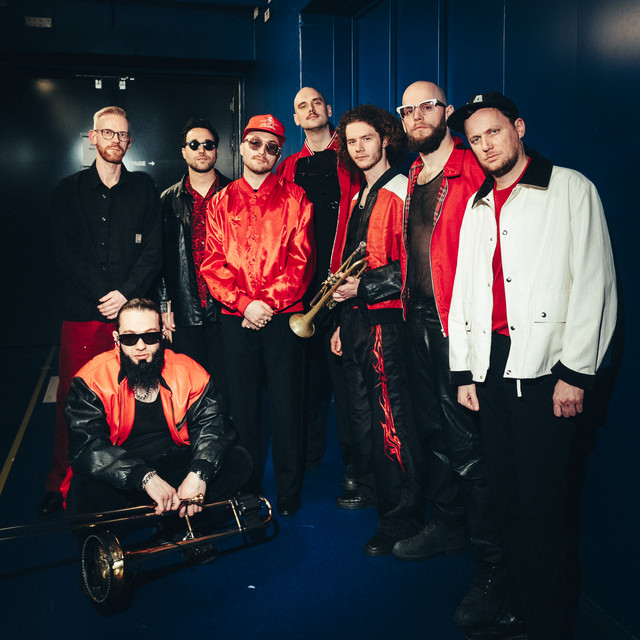
Gallowstreet
Street Band
Brass Band
Hip Hop
2
/5
Moon Hooch
Modern Jazz Trio
Brass Band
Jazz
2
/5
Tuba Skinny
Ragtime
New Orleans Brass Band
Jug Band
3
/5
MEUTE
Brass Band Pop
Brass Band
Livetronica
1
/5
The Buddy Bolden Legacy Band
Bounce
Jazz
Ragtime
Download our mobile app
Get the Melodigging app and start digging for new genres on the go
Download on the App Store
Get it on Google Play
© 2026 Melodigging
Give feedback
Legal
Melodding was created as a tribute to
Every Noise at Once
, which inspired us to help curious minds keep digging into music's ever-evolving genres.