Your digging level
Description
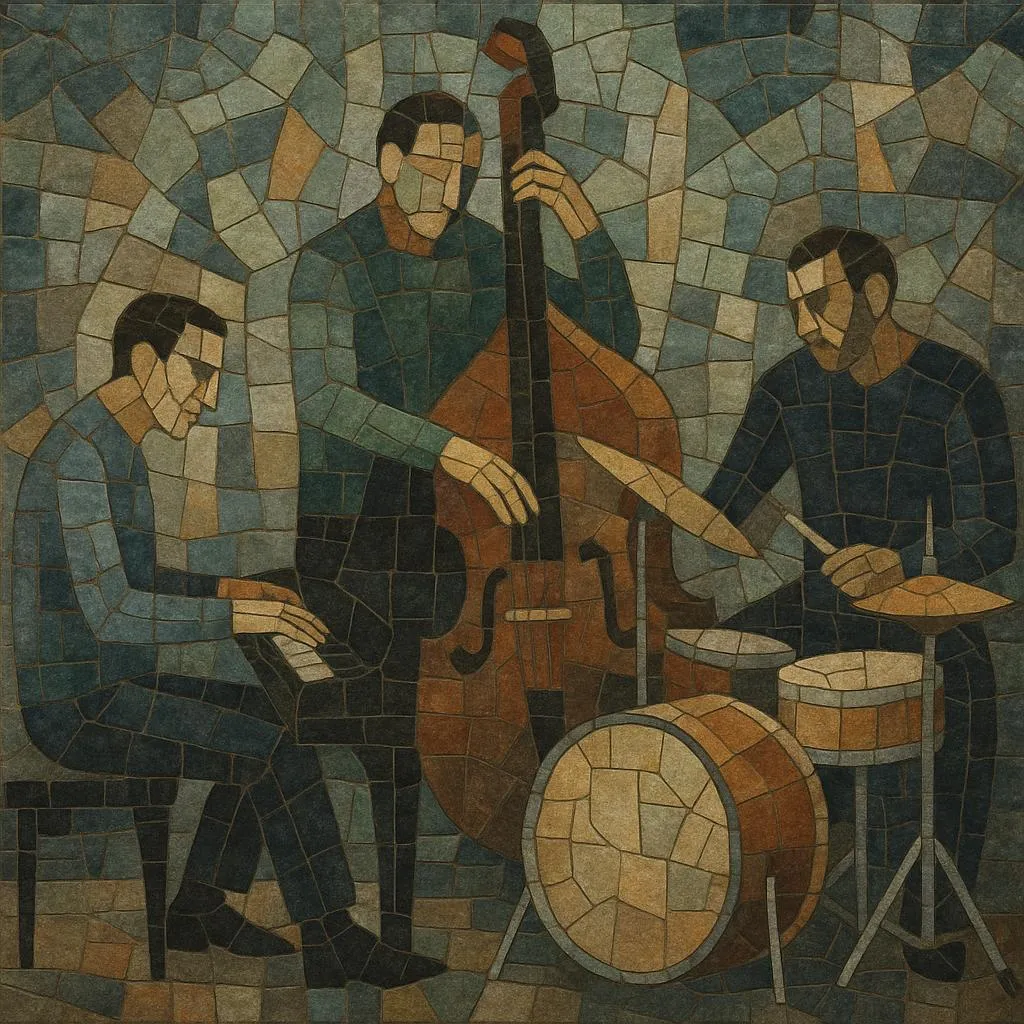
Modern jazz trio is a contemporary approach to the classic jazz trio format—most often piano, double bass, and drums—that blends post-bop language with European contemporary aesthetics, minimalist ostinatos, ambient textures, and rhythmic ideas drawn from rock, electronica, and world music.
Compared with mid‑century piano trios, modern trios favor original compositions, modular forms, odd-meters and polyrhythms, and an ensemble concept where bass and drums are equal partners in counterpoint and narrative, not merely accompanists. Production values range from intimate, club-forward sounds to spacious, reverberant “ECM-like” soundscapes.
Melodically and harmonically, the idiom spans from songlike, diatonic themes to chromatic, modal, and post-tonal harmony, frequently employing pedal points, quartal voicings, modal interchange, and subtle reharmonization. The result is a pliable language that can move seamlessly between lyrical balladry, groove-driven propulsion, and exploratory improvisation.
History
While the piano–bass–drums trio became central to jazz in the bebop and post-bop eras, the modern jazz trio aesthetic crystallized from a combination of U.S. post-bop lineage and European concert-hall sensibilities. Bill Evans’ conversational interplay, Ahmad Jamal’s use of space, and later Keith Jarrett’s long-form lyricism laid conceptual foundations that modern trios would expand—emphasizing group dialogue, elastic time, and songlike arches.
In the 1990s, a new wave reframed the trio for contemporary audiences. American groups brought post-bop fluency into dialogue with indie/classical minimalism and rock backbeats, while Northern European bands embraced ambience, hypnotic ostinati, and chamber-like dynamics. Labels that prized clarity and atmosphere helped define a hallmark sound—transparent textures, balanced ensemble roles, and original repertoire.
By the 2000s, modern trios around the world drew freely from electronica (loop-like grooves, synth colors), post-rock (crescendo/decrescendo forms, metric modulations), and non-Western rhythmic cycles. The bass took on melodic counterlines and arco colors; drums explored brushwork, cymbal swells, and metric illusions; piano extended techniques, prepared timbres, and subtle electronics. The repertoire shifted decisively toward original music, though creative re‑composerly takes on standards and pop/folk songs also became signatures.
Modern jazz trio now denotes an ensemble attitude more than a strict recipe: equal-partner interplay, compositional depth, flexible forms, and a sound world that can be intimate or cinematic. Festival stages and conservatories worldwide cultivate this approach, and streaming has amplified a broad audience for contemplative, rhythmically sophisticated, and melodically direct trio music.


Top albums