Genres
Artists
Albums
Make Music
Sign in
Sign in
Artists
Hard Bop
Artists
Hard Bop
Mulgrew Miller
2002
·
1 album
Listen
2
/5
Genres
Post-Bop
Post-bop is a modern jazz style that emerged in the early-to-mid 1960s as a synthesis of bebop, hard bop, modal jazz, cool jazz, third stream ideas, and the experimental impulses of the avant‑garde. It typically features acoustic small ensembles (often trumpet, saxophone, piano, bass, and drums) interacting with highly flexible time, non-functional or modal harmony, and motivic development rather than relying strictly on bebop chord cycles. Its sound balances structure and freedom: forms are clearly composed and often intricate, but improvisers stretch time feels, reharmonize on the fly, and use advanced harmonic colors such as quartal voicings, pedal points, and chromatic planing. Canonical touchstones include Miles Davis’s mid‑’60s Second Great Quintet (e.g., E.S.P., Nefertiti), Wayne Shorter’s Speak No Evil, Herbie Hancock’s Maiden Voyage, Andrew Hill’s Point of Departure, and many mid‑’60s Blue Note recordings that pushed beyond hard bop.
Discover
Listen
Hard Bop
Hard bop is a mid‑1950s subgenre of jazz that extends bebop’s virtuosic improvisation while bringing back a more explicitly African‑American groove. It incorporates pronounced influences from blues, rhythm & blues, and gospel—especially evident in riff‑based heads, church‑like harmonic movements on piano, and earthy saxophone phrasing. Compared with bebop, hard bop favors stronger backbeat accents, more grounded bass lines, and memorable, soulful melodies, all while retaining fast, harmonically rich improvisation when desired. Typical ensembles are small groups (often quintets) with trumpet, tenor sax, piano, bass, and drums. The style’s hallmark is the blend of bop harmony and lines with blues/gospel feeling and a driving swing feel.
Discover
Listen
Latin Jazz
Latin jazz is a fusion of jazz harmony and improvisation with Afro–Latin American rhythms, song forms, and percussion. It combines the swing, bebop, and big-band traditions with clave-based grooves such as son, rumba, danzón, and mambo, and later integrates Brazilian feels like samba and bossa nova. Typical features include the use of the clave (2–3 or 3–2), piano montunos (guajeos), bass tumbao patterns, timbales cáscara, conga marcha, and call-and-response horn "mambo" figures. While the rhythm section locks into cyclical patterns, soloists improvise using the vocabulary of jazz, creating music that is both danceable and harmonically rich.
Discover
Listen
Jazz Ballads
Jazz ballads are slow-tempo jazz performances that emphasize melody, lyric-like phrasing, and emotional nuance rather than rhythmic drive. They typically feature a clear song form (often AABA or 32-bar popular song forms) and rich harmonic movement, with improvisation that stays closely connected to the tune. Common settings include small ensembles or big bands, and the style is strongly associated with standards from the Great American Songbook as well as original jazz compositions treated in a ballad tempo. The defining traits are expressive tone, spacious time feel, and sophisticated harmony, often using rubato introductions and subtle reharmonization.
Discover
Listen
Jazz
Jazz is an improvisation-centered music tradition that emerged from African American communities in the early 20th century. It blends blues feeling, ragtime syncopation, European harmonic practice, and brass band instrumentation into a flexible, conversational art. Defining features include swing rhythm (a triplet-based pulse), call-and-response phrasing, blue notes, and extended harmonies built on 7ths, 9ths, 11ths, and 13ths. Jazz is as much a way of making music—spontaneous interaction, variation, and personal sound—as it is a set of forms and tunes. Across its history, jazz has continually hybridized, from New Orleans ensembles and big-band swing to bebop, cool and hard bop, modal and free jazz, fusion, and contemporary cross-genre experiments. Its influence permeates global popular and art music.
Discover
Listen
Jazz Piano
Jazz piano is the art of performing jazz on the piano, combining syncopated rhythms, blues-inflected melodies, and advanced harmony with improvisation. It grew from ragtime and early New Orleans styles into stride, swing, bebop, post-bop, and beyond, developing a vast vocabulary of voicings, comping approaches, left-hand textures, and soloing concepts. The genre spans intimate solo performances to interactive trio settings and orchestral jazz contexts, while remaining rooted in groove, storytelling, and spontaneous creation.
Discover
Listen
Albums
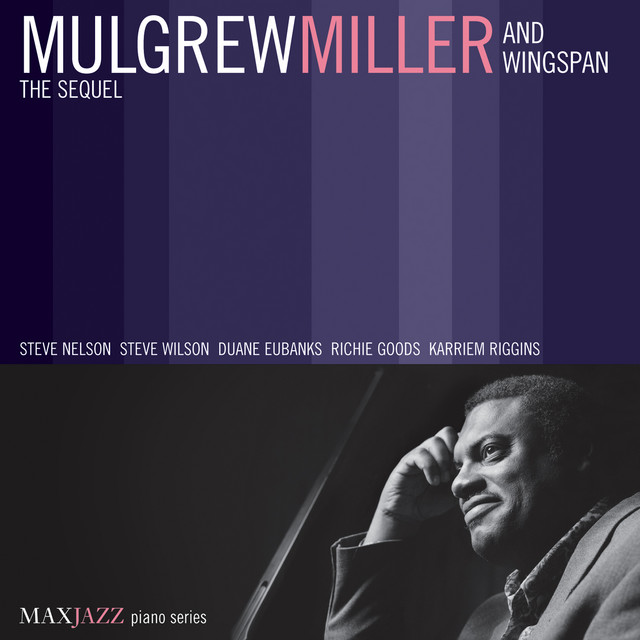
2002
The Sequel
Mulgrew Miller
Jazz Piano
Similar artists
2
/5
Clark Terry
Bebop
Jazz
Afro-Cuban Jazz
2
/5
Charlie Rouse
Bebop
Bossa Nova
Brazilian Jazz
4
/5
John Coltrane
Free Jazz
Hard Bop
Jazz
3
/5
Red Garland
Bebop
Contemporary Post-Bop
Cool Jazz
3
/5
Wynton Kelly
Bebop
Cool Jazz
Hard Bop
3
/5
Paul Motian
Cool Jazz
Free Jazz
Hard Bop
2
/5
Earl Hines
Big Band
Boogie-Woogie
Hard Bop
3
/5
Roy Hargrove
Contemporary Post-Bop
Jazz
Latin Jazz
2
/5
Joe Zawinul
Free Jazz
Jazz
Jazz Ballads
4
/5
Chet Baker
Cool Jazz
Jazz
Jazz Trumpet
Download our mobile app
Get the Melodigging app and start digging for new genres on the go
Download on the App Store
Get it on Google Play
© 2026 Melodigging
Give feedback
Legal
Melodding was created as a tribute to
Every Noise at Once
, which inspired us to help curious minds keep digging into music's ever-evolving genres.