Genres
Artists
Albums
Make Music
Sign in
Sign in
Artists
Sound Collage
Artists
Sound Collage
Marshall McLuhan
1967
·
1 album
Listen
1
/5
Genres
Sound Collage
Sound collage is a practice and genre that assembles disparate recorded sounds—speech, field recordings, musical fragments, noise, and media detritus—into a new, cohesive work. It treats recorded sound as raw material to be cut, layered, looped, juxtaposed, and transformed, often privileging texture, timbre, and context over conventional melody and harmony. Emerging from mid‑century tape and electroacoustic experiments, sound collage spans avant‑garde, popular, and club contexts, ranging from radical tape splices to sample‑dense pop and hip‑hop. Because it recontextualizes existing audio, it can be narrative, political, archival, or purely abstract—oscillating between documentary and dreamlike mosaic.
Discover
Listen
Spoken Word
Spoken word is a performance-centered genre where text—poems, monologues, stories, or manifestos—is delivered aloud with musicality in voice rather than through singing. It may be entirely a cappella or accompanied by sparse instrumentation (often jazz combos, ambient textures, or minimal electronics) that frames the cadence and rhetoric of the performer. The emphasis is on language: prosody, pacing, imagery, and argument. Pieces often explore personal narratives, social critique, and political themes, drawing on techniques such as internal rhyme, alliteration, and repetition. While recordings exist, the tradition is fundamentally live, prioritizing immediacy, audience engagement, and oratorical presence.
Discover
Listen
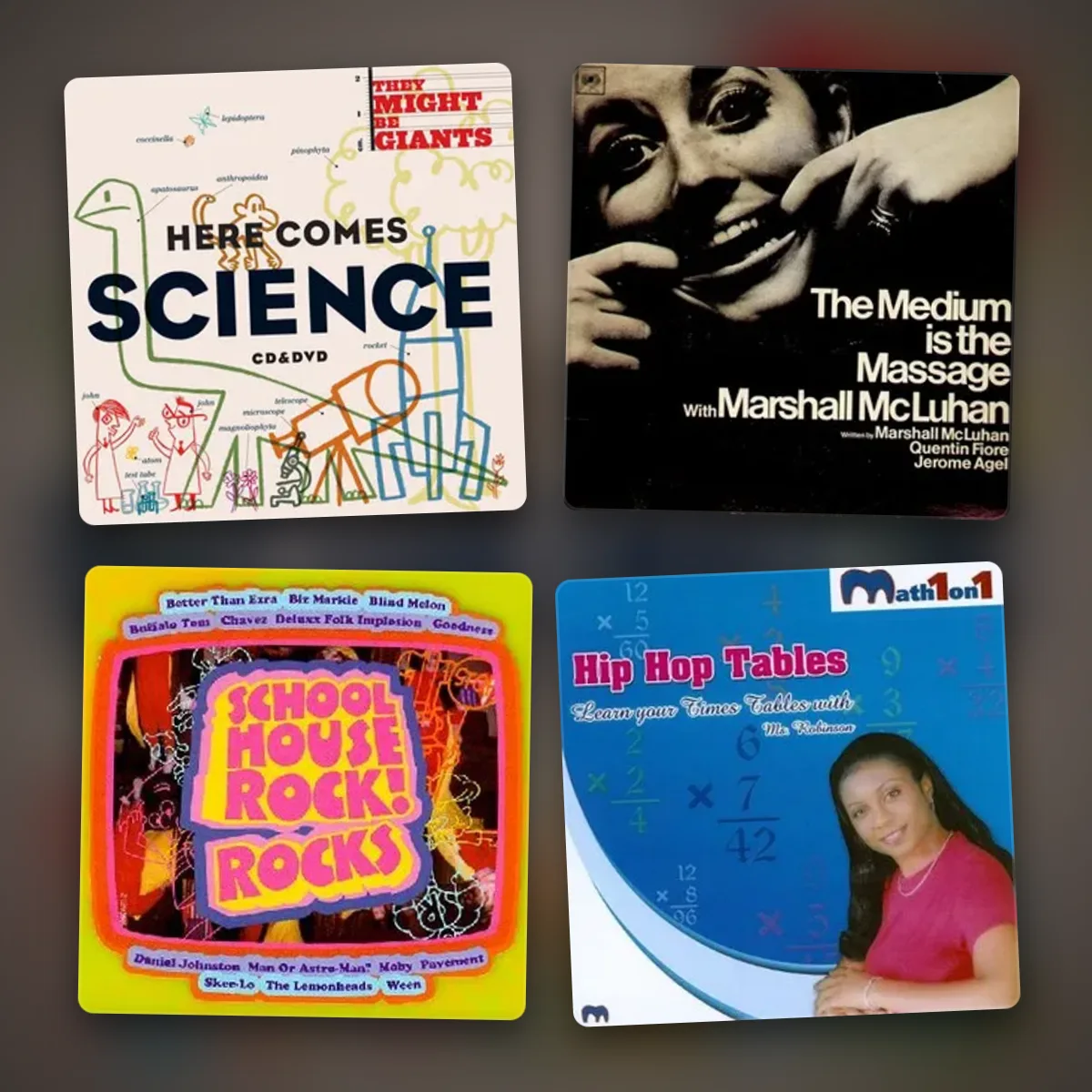
Educational Music
Educational music is a functional genre designed specifically to facilitate learning and retention of information through song. It leverages musical elements like rhythm, rhyme, and melody to act as mnemonic devices, making complex or rote information (such as the alphabet, multiplication tables, historical facts, or scientific concepts) easier to memorize. While often overlapping with children's music, it is distinct in its primary pedagogical intent. The genre ranges from simple folk-based nursery rhymes to sophisticated pop and rock compositions found in television edutainment, and more recently, hip-hop and electronic styles used in online educational content.
Discover
Listen
Indeterminacy
Indeterminacy is a strand of post‑war experimental music in which some aspects of a composition are left to chance or to the free choice of the performer, ensuring that no two realizations are exactly the same. The approach encompasses chance procedures used during composition (e.g., tossing coins or consulting the I Ching), open or mobile forms in which sections may be reordered, graphic or text‑based notation that prompts interpretation rather than strict reading, and time‑bracket techniques that specify durations but not exact synchrony. Closely associated with the New York School (John Cage, Earle Brown, Morton Feldman, Christian Wolff), indeterminacy challenged traditional authorship, fixed works, and score‑bound precision by shifting agency to processes and performers. While often conflated with “aleatoric” music, indeterminacy typically denotes unpredictability at the level of performance/realization (open form, variable notation), whereas chance composition may use randomness to create a fixed score. In practice, many works combine both.
Discover
Listen
Avant-Garde
Avant-garde music is an umbrella term for boundary-pushing practices that challenge prevailing norms of harmony, rhythm, timbre, form, and performance. It privileges experimentation, conceptual rigor, and a willingness to reframe what counts as music at all. Historically tied to early 20th‑century artistic modernism, avant-garde music introduced atonality, the emancipation of noise, and new forms of notation and process. It embraces indeterminacy, extended techniques, electronics, spatialization, and multimedia performance, treating sound as material to be sculpted, questioned, and reinvented.
Discover
Listen
Lecture
Lecture is a spoken-word audio genre centered on the delivery of information and ideas by a single speaker (or a small panel) to an audience. It prioritizes clarity, structure, and rhetorical craft over musical accompaniment, with production focusing on intelligible voice capture and minimal sonic distraction. As a recorded format, lecture evolved from public oratory and classroom teaching into publishable audio: first on phonograph cylinders and 78 rpm discs, later on LPs, cassettes, CDs, and today via digital streaming, podcasts, and open courseware. Topics span philosophy, science, social theory, religion, psychology, technology, and public policy. A typical lecture has an introduction that frames the thesis, a body that progresses through signposted sections and examples, and a conclusion that synthesizes takeaways—sometimes followed by audience Q&A. Audience ambience, brief applause, or light cues may be present, but music beds are rare or restrained.
Discover
Listen
Albums
1967
1
/5
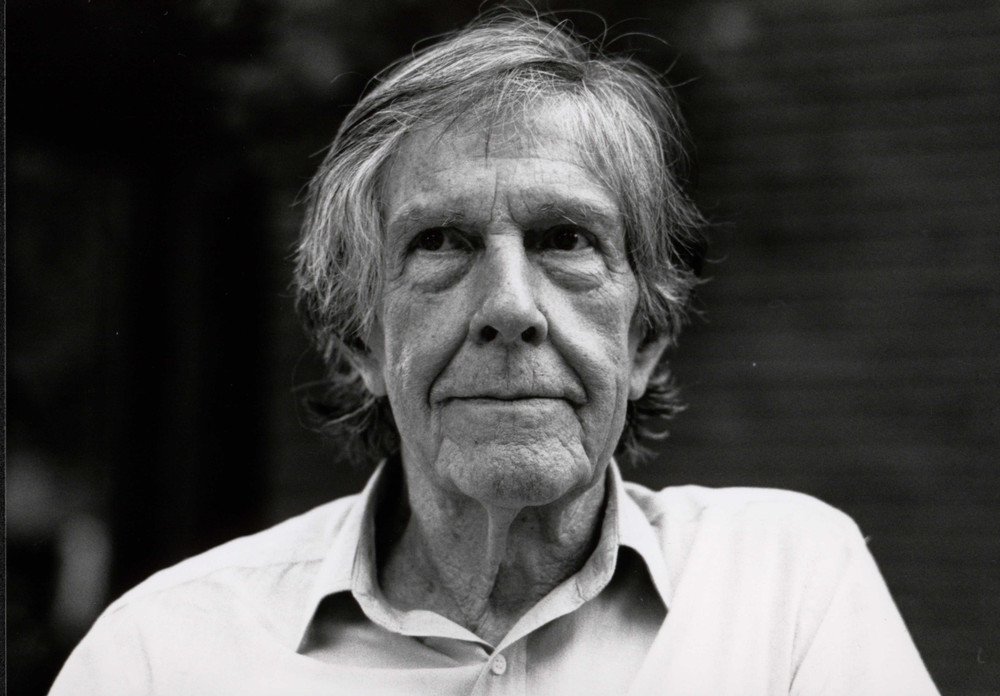
The Medium Is the Massage
Marshall McLuhan
Educational Music
Lecture
Indeterminacy
Similar artists
1
/5
Various Artists
Afro-Funk
Alternative Rock
Ambient
2
/5
Negativland
Experimental
Plunderphonics
Satire
2
/5
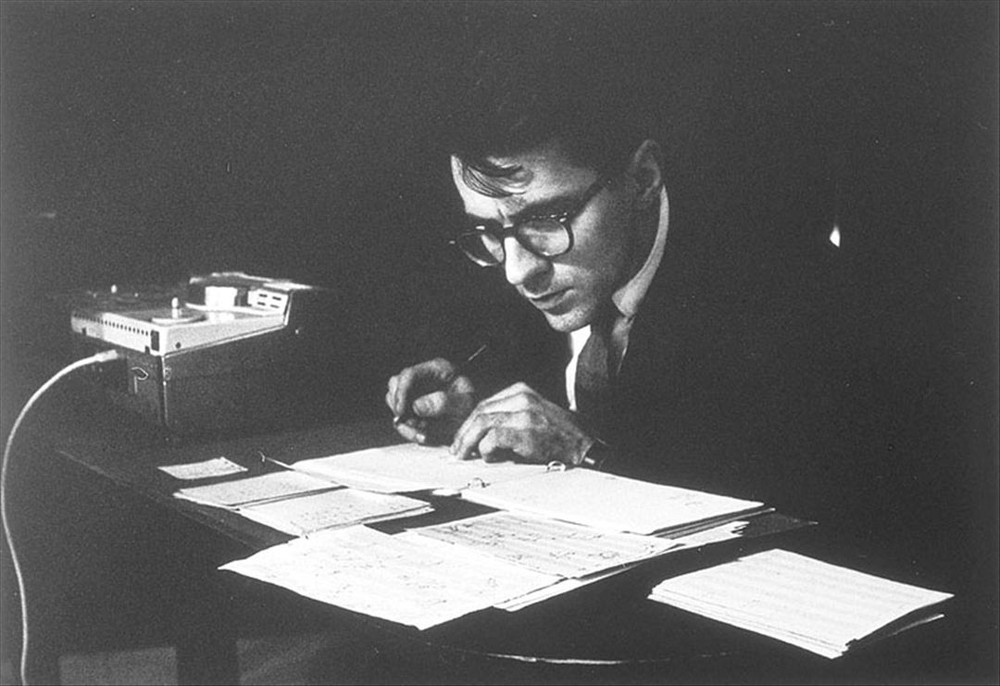
John Cage
Indeterminacy
Classical
Experimental
1
/5
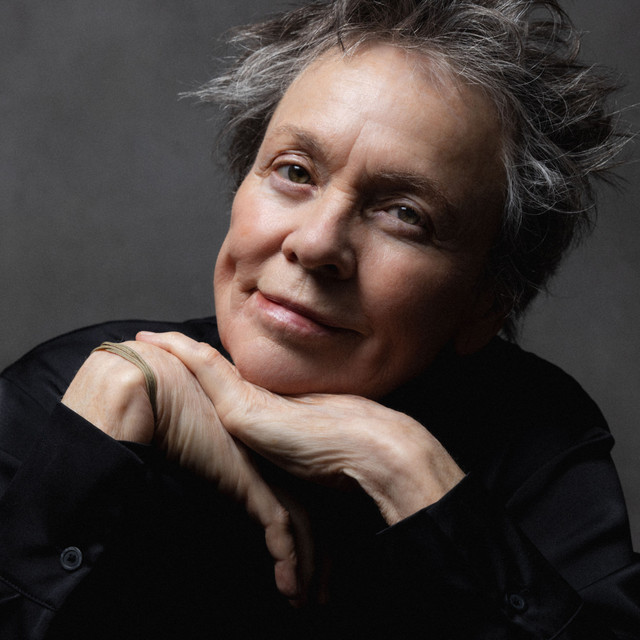
David Tudor
Experimental
Minimalism
Acousmatic
1
/5
William S. Burroughs
Beat Poetry
Spoken Word
Sound Collage
3
/5
Laurie Anderson
Avant-Garde
Spoken Word
Laboratorio
2
/5
Ralph Carney
Avant-Garde
Noise Rock
Proto-Punk
2
/5
Felicia Atkinson
Modern Electroacoustic
Ambient
Avant-Garde
2
/5
The Conet Project
Avant-Garde
Experimental
Spoken Word
2
/5
Fanny Paccoud
Avant-Garde
Spoken Word
Download our mobile app
Get the Melodigging app and start digging for new genres on the go
Download on the App Store
Get it on Google Play
© 2026 Melodigging
Give feedback
Legal
Melodding was created as a tribute to
Every Noise at Once
, which inspired us to help curious minds keep digging into music's ever-evolving genres.