Your digging level
Description
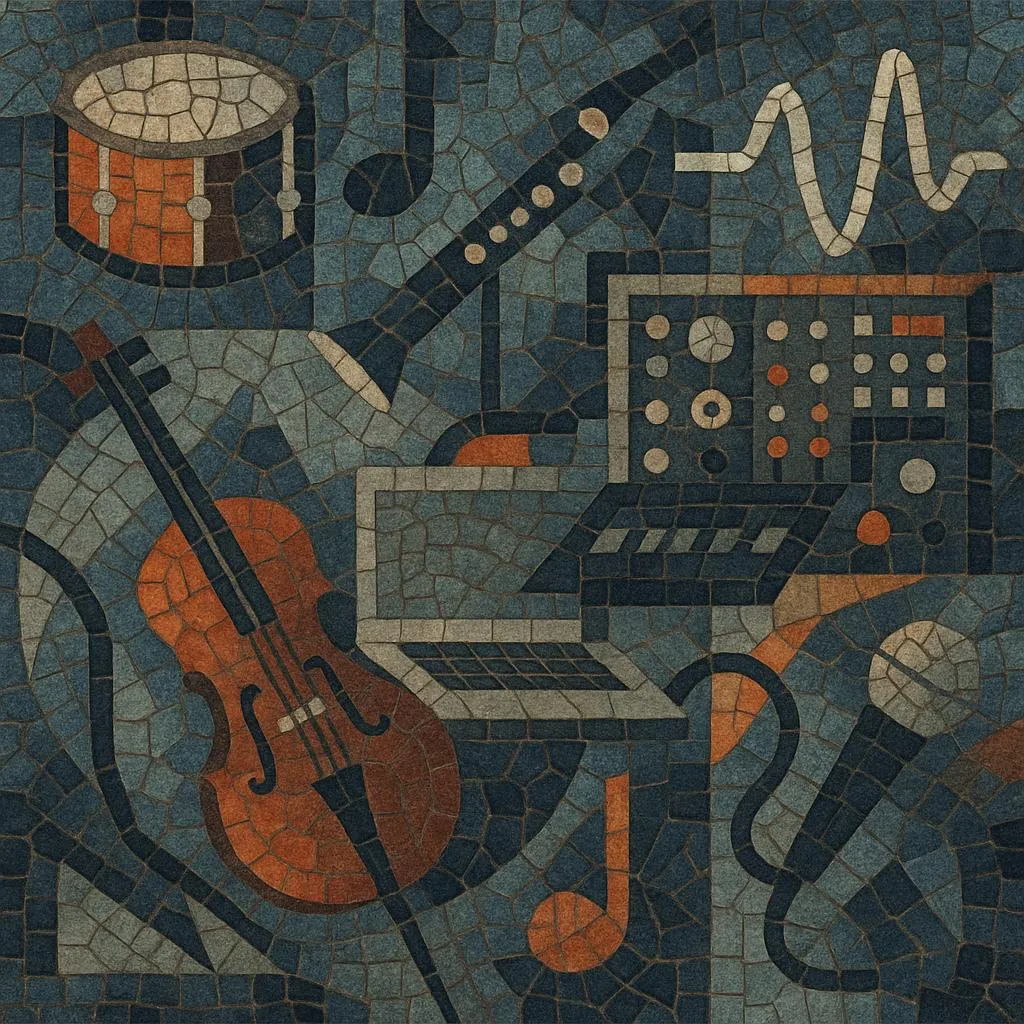
Modern electroacoustic is a contemporary strand of electroacoustic music in which acoustic instruments, found objects, voice, and environmental recordings are fused with digital signal processing and electronic production. It favors timbre, space, texture, and spectral detail over traditional melody–harmony–rhythm hierarchies.
Works often combine chamber-instrument writing (strings, winds, piano, percussion) with laptops, modular synthesis, and live electronics. Field recordings, feedback systems, granular and spectral processing, and extended instrumental techniques are common. Releases typically appear on experimental/ambient and post-classical labels, with performances ranging from intimate multichannel diffusions to gallery sound installations.



History
Electroacoustic practice arises from mid‑20th‑century studios that pioneered musique concrète, tape music, and acousmatic listening. Throughout the 1960s–90s, academic studios and radio laboratories developed multichannel diffusion, spectral thinking, and live electronics alongside minimalism, ambient, and sound art. These laid the technical and aesthetic groundwork (microphone-as-instrument, montage, diffusion, timbral composition) for later artists.
Affordable laptops, DAWs, and portable recorders democratized tools once limited to institutions. Artists outside the academy began to fuse chamber instrumentation with real‑time processing, granular synthesis, and live sampling on stage. Independent labels and festivals nurtured a scene that blurred boundaries between contemporary classical, experimental electronic, and ambient.
Modern electroacoustic matured into a broad, international practice: composers integrate strings, winds, and piano with electronics; improvisers fold in contact mics, feedback, and objects; sound artists expand pieces into installations and multichannel works. Techniques from acousmatic music (spectromorphology, spatial diffusion) coexist with minimal harmony, drone, and post‑classical pacing. Collaboration with filmmakers, choreographers, and galleries is common, and hi‑fi spatial audio (from ambisonics to immersive formats) further foregrounds space and texture as compositional parameters.



Top albums