Genres
Artists
Albums
Make Music
Sign in
Sign in
Artists
Zeitoper
Artists
Zeitoper
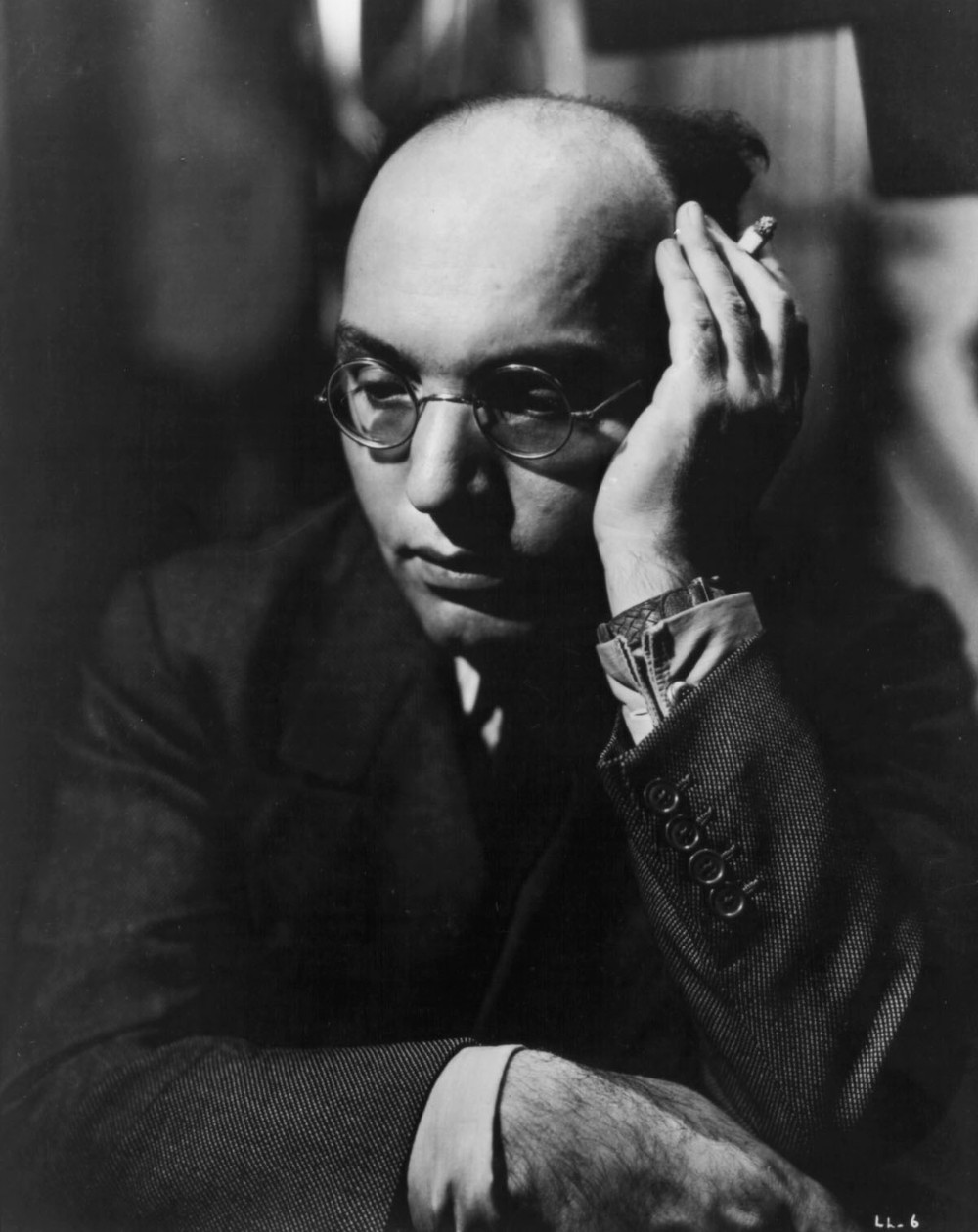
Kurt Weill
1955–2017
·
18 albums
Listen
2
/5
Genres
Modern Classical
Modern classical is a contemporary strand of instrumental music that applies classical composition techniques to intimate, cinematic settings. It typically foregrounds piano and strings, is sparsely orchestrated, and embraces ambience, repetition, and timbral detail. Rather than the academic modernism of the early 20th century, modern classical as used today refers to accessible, mood-driven works that sit between classical, ambient, and film music. Felt pianos, close‑miked string quartets, tape hiss, drones, soft electronics, and minimal harmonic movement are common, producing a contemplative, emotionally direct sound that translates well to headphones, streaming playlists, and screen media.
Discover
Listen
Zeitoper
Zeitoper (literally “opera of the times”) is a Weimar-era operatic current that set contemporary, urban life on the operatic stage. Emerging in late‑1920s Germany, it fused classical vocal writing with the rhythms, timbres, and topicality of the day—foxtrot and tango grooves, jazz harmonies and instrumentation, telephones, radios, cars, and news bulletins. Typical works are fast‑paced, satirical, and montage‑like, prioritizing clarity, brevity, and immediacy. The music often blends neoclassical transparency with jazz-inflected chords and dance rhythms, while librettos target modern subjects such as mass media, celebrity culture, bureaucracy, and technology. The result is a sharp, witty, and socially observant opera designed for—and about—its contemporary audience.
Discover
Listen
Jazz
Jazz is an improvisation-centered music tradition that emerged from African American communities in the early 20th century. It blends blues feeling, ragtime syncopation, European harmonic practice, and brass band instrumentation into a flexible, conversational art. Defining features include swing rhythm (a triplet-based pulse), call-and-response phrasing, blue notes, and extended harmonies built on 7ths, 9ths, 11ths, and 13ths. Jazz is as much a way of making music—spontaneous interaction, variation, and personal sound—as it is a set of forms and tunes. Across its history, jazz has continually hybridized, from New Orleans ensembles and big-band swing to bebop, cool and hard bop, modal and free jazz, fusion, and contemporary cross-genre experiments. Its influence permeates global popular and art music.
Discover
Listen
Show Tunes
Show tunes are songs written for stage musicals and revues, designed to advance plot, reveal character, or provide memorable set‑piece moments. They favor strong, singable melodies, clear structures (often AABA 32‑bar or verse–chorus), witty and narrative lyrics, and orchestrations that support drama and choreography. While rooted in the Great American Songbook, show tunes draw on operetta, vaudeville, ragtime, jazz, and popular songcraft, and they are typically performed by stage voices (from legit to belt) with pit orchestras. Because many became popular standards beyond the theater, show tunes occupy a central place in American popular music and are frequently adapted for cabaret, big band, and vocal jazz.
Discover
Listen
Musical
Musical (musical theatre) is a narrative stage form that integrates songs, spoken dialogue, acting, and dance to tell a story. Its core aim is dramatic storytelling in which music advances plot, deepens character, and shapes emotional arcs, often through recurring motives and reprises. Developed primarily on Broadway (New York) and later the West End (London), the genre blends operetta’s melodic lyricism, vaudeville’s variety entertainment, revue’s song-driven showcase, and Tin Pan Alley’s popular songcraft. Musicals range from intimate chamber pieces to large-scale "megamusicals," and from traditional book musicals to rock, hip‑hop, and concept-driven works. The musical’s songbook has fed the Great American Songbook and popular music at large, while the stage craft has influenced film, television, and concert performance.
Discover
Listen
Cabaret
Cabaret is an intimate form of stage entertainment centered on songs, witty monologues, satire, and character pieces, typically presented in small rooms with table seating and a master of ceremonies. Performers address the audience directly, and the atmosphere is conversational, risqué, and often politically or socially pointed. Musically, cabaret blends the French chanson tradition with Weimar-era “Kabarett” and, later, American torch-song and jazz idioms. Arrangements are usually piano-led with small ensembles (accordion, violin, clarinet, upright bass, light percussion), supporting nuanced storytelling and dramatic delivery. Vocal approaches range from parlando (speech-like) delivery to a smoky croon. Common grooves include waltz and musette-inflected 3/4, tango and habanera patterns, foxtrot, and slow blues; harmonies are tonal with chromatic color and expressive rubato. Lyrics favor irony, double entendre, longing, and social commentary.
Discover
Listen
Operetta
Operetta is a light, theatrical form of musical drama that blends spoken dialogue with tuneful, dance-inflected numbers and comic plots. It favors memorable melodies, witty wordplay, and a buoyant orchestral palette over the heavy dramatic weight of grand opera. Emerging in mid-19th-century Paris and quickly flourishing in Vienna and beyond, operetta draws on popular dance rhythms (especially the waltz and march), satirical or romantic storylines, and clear, lyrical vocal writing. It serves as a bridge between opera and modern musical theatre, balancing classical technique with popular appeal.
Discover
Listen
Musical Theatre And Entertainment
Musical theatre and entertainment is an umbrella term for stage works that combine spoken drama with song, dance, comedy, and popular spectacle. It spans a range of formats—revue, vaudeville/variety, music hall, operetta, zarzuela, cabaret, and, later, the modern musical—that were designed first and foremost to delight broad public audiences. In theatre studies it is often treated as one of the four classical branches of the theater (alongside spoken drama, opera, and dance/ballet). Historically, it crystallized in Europe and the United States during the 19th century and flourished into the mid‑20th century, evolving in dialogue with popular music, dance fashions, and new technologies (from gas and electric lighting to film and radio).
Discover
Listen
Opera
Opera is a large-scale theatrical genre that combines music, drama, and visual spectacle, in which the story is primarily conveyed through singing accompanied by an orchestra. It unites solo voices, ensembles, and chorus with staging, costumes, and often dance to create a total artwork. Emerging in late Renaissance Italy and flourishing in the Baroque era, opera developed signature forms such as recitative (speech-like singing that advances the plot) and aria (lyrical numbers that explore character and emotion). Over the centuries it evolved diverse national styles—Italian bel canto, French grand opéra, German music drama—while continually experimenting with orchestration, harmony, narrative structure, and stagecraft.
Discover
Listen
German Music
German music is a broad umbrella for the musical traditions created in the German-speaking lands, spanning from medieval sacred chant and courtly song to world-shaping classical composition, folk idioms, and modern popular and electronic styles. It is central to the Western classical canon (from chorales and counterpoint to symphonies and opera), yet it also encompasses vernacular streams such as Volksmusik and Schlager, as well as innovative modern movements like Krautrock, Neue Deutsche Welle, Berlin techno, Deutschrap, and Neue Deutsche Härte. Across eras, characteristic traits include structural clarity, deep harmonic development, contrapuntal craft, and—especially in vocal genres—German-language texts that range from devotional and philosophical to satirical and everyday themes. Because “German music” names a national tradition rather than one single style, it combines art-music lineages (medieval to contemporary), regional folk practices, and international exchange, with German hubs (Leipzig, Dresden, Berlin, Hamburg, Munich, Düsseldorf, Cologne) acting as engines of musical education, performance, and experimentation.
Discover
Listen
Classical
Classical music is the notated art-music tradition of Europe and its global descendants, characterized by durable forms, carefully codified harmony and counterpoint, and a literate score-based practice. The term “classical” can refer broadly to the entire Western art-music lineage from the Medieval era to today, not just the Classical period (c. 1750s–1820s). It privileges long-form structures (such as symphonies, sonatas, concertos, masses, and operas), functional or modal harmony, thematic development, and timbral nuance across ensembles ranging from solo instruments to full orchestras and choirs. Across centuries, the style evolved from chant and modal polyphony to tonal harmony, and later to post-tonal idioms, while maintaining a shared emphasis on written notation, performance practice, and craft.
Discover
Listen
Show all 11 genres
Albums
2017
1
/5
Die Dreigroschenoper
Kurt Weill
Zeitoper
1999
2
/5
Die Dreigroschenoper
Kurt Weill
Zeitoper
Operetta
Cabaret
1988
2
/5
Ute Lemper Sings Kurt Weill
Ute Lemper
Show Tunes
Cabaret
1988
1
/5
Die Dreigroschenoper
Kurt Weill
Zeitoper
Operetta
Cabaret
1984
1
/5
Der Zar lässt sich photographieren
Kurt Weill
Zeitoper
1958
1
/5
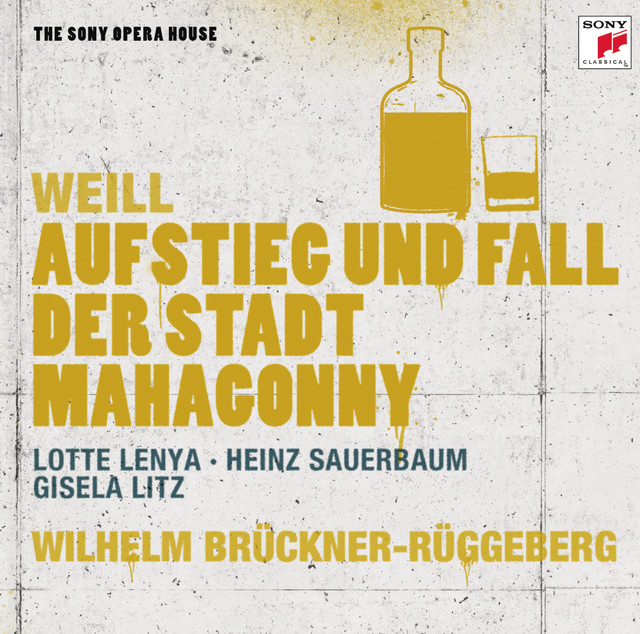
Rise and Fall of the City of Mahagonny
Kurt Weill, Lotte Lenya
Zeitoper
1958
2
/5
Die Dreigroschenoper
Kurt Weill / Wilhelm Brückner-Rüggeberg / Lotte Lenya
Zeitoper
Operetta
Musical Theatre And Entertainment
1957
1
/5
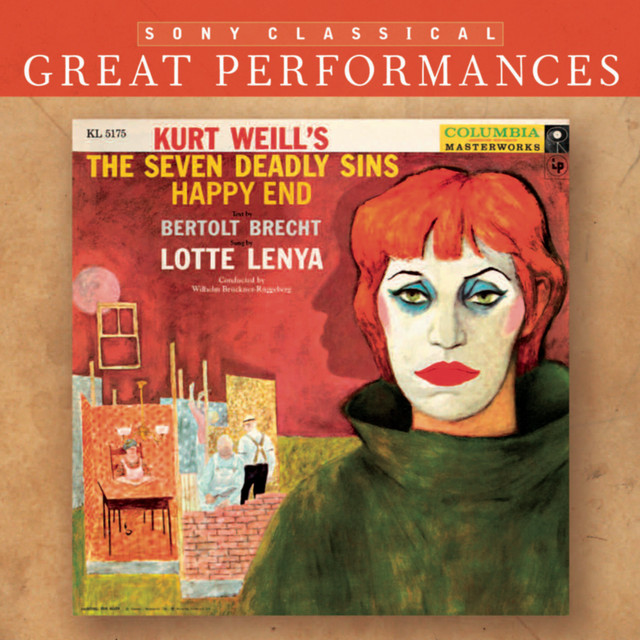
Lotte Lenya Sings Kurt Weill (The Seven Deadly Sins; Happy End) [Great Performances]
Kurt Weill, Lotte Lenya, Wilhelm Brückner-Rüggeberg
Show Tunes
Cabaret
1955
2
/5
Lotte Lenya singt Kurt Weill
Kurt Weill / Lotte Lenya
Show Tunes
Zeitoper
Cabaret
The Seven Deadly Sins; Little Threepenny Music
Kurt Weill
Operetta
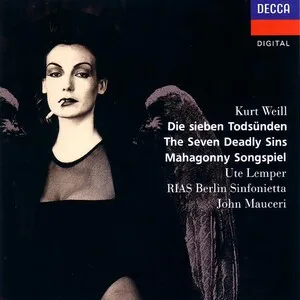
Die sieben Todsünden (The Seven Deadly Sins); Mahagonny Songspiel
Kurt Weill
Operetta
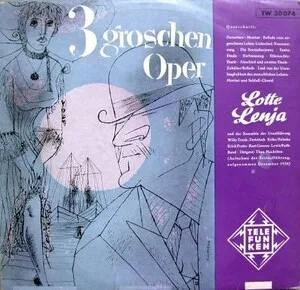
3 Groschen Oper
Kurt Weill
Operetta
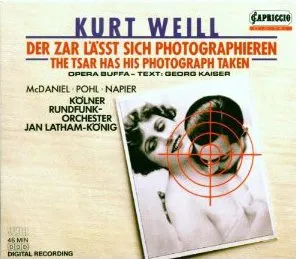
Der Zar läßt sich photographieren
Kurt Weill
Zeitoper
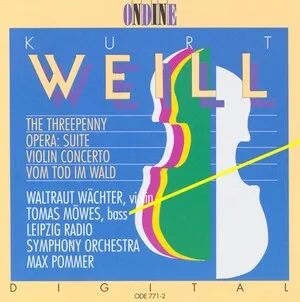
Kleine Dreigroschenmusik, etc. (Wächter, Möwes/Leipzig Radio Symphony Orchestra/Max Pommer)
Kurt Weill
Zeitoper
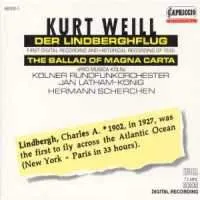
Der Lindberghflug - Ballad of the Magna Carta
Kurt Weill
Zeitoper
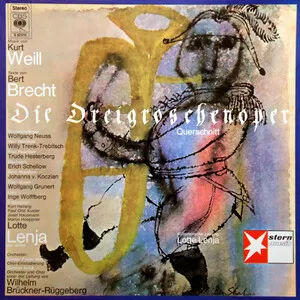
Die Dreigroschenoper: Querschnitt (Orchester des SFB/Wilhelm Brückner-Rüggeberg; Lotte Lenya; Trude Hesterburg)
Kurt Weill
Zeitoper
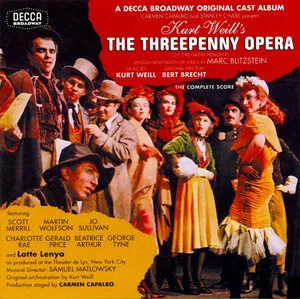
The Threepenny Opera
Kurt Weill
Zeitoper
3 Groschen Oper
Kurt Weill
Zeitoper
Similar artists
2
/5
Lotte Lenya
Cabaret
Zeitoper
German Music
1
/5
Various Artists
Afro-Funk
Alternative Rock
Ambient
2
/5
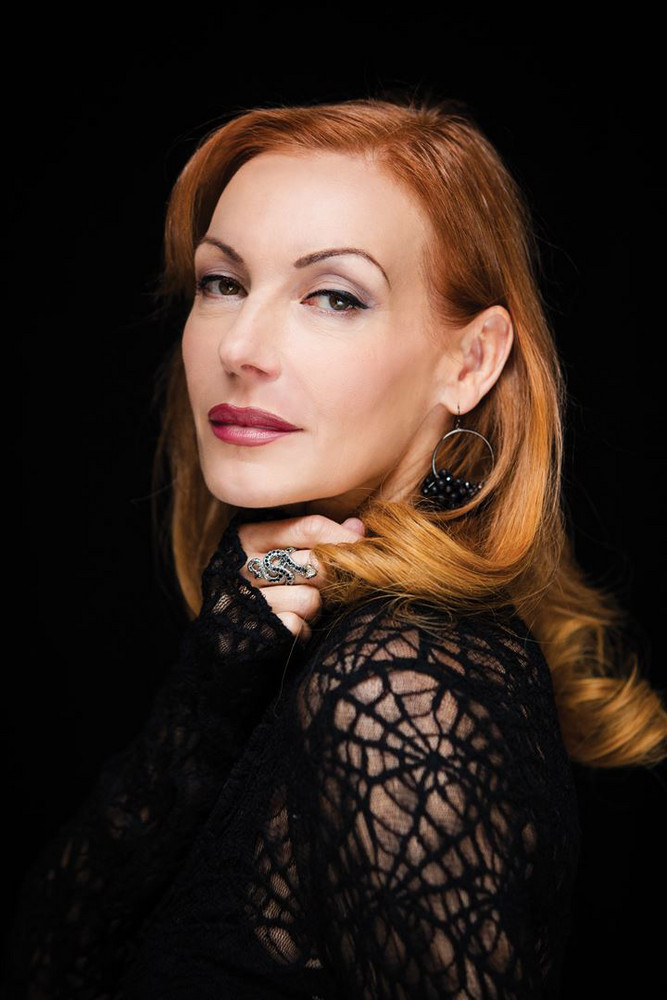
Ute Lemper
Cabaret
Operetta
Show Tunes
2
/5
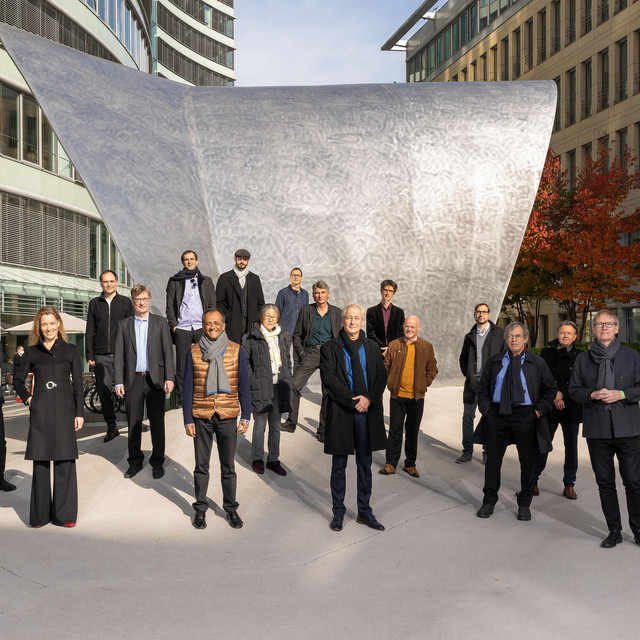
Ensemble Modern
Minimalism
Avant-Garde
Classical
4
/5
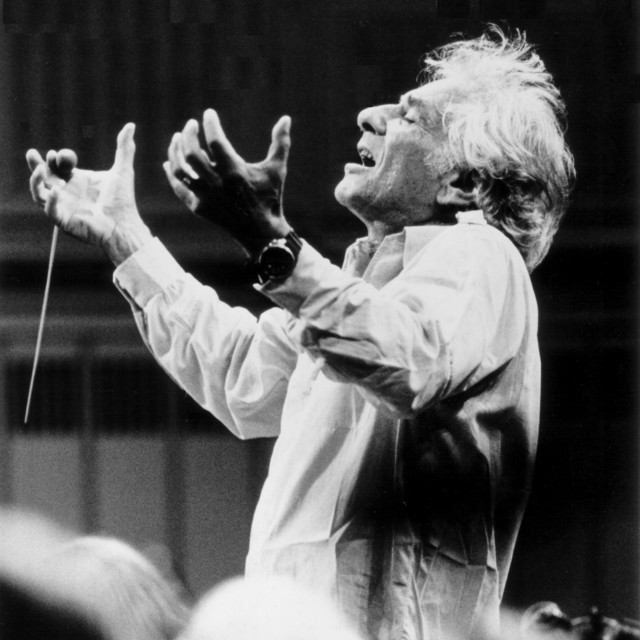
Leonard Bernstein
Orchestral Performance
Classical
Symphony
2
/5
John Mauceri
Deep Soundtrack
Opera
Cabaret
2
/5
Milva
Italian Singer-Songwriter
Italo Dance
Schlager
3
/5
Jacques Offenbach
Operetta
Classical
Opéra Comique
3
/5
Johann Strauss II
Operetta
Waltz
Classical
4
/5
Herbert von Karajan
Classical
Symphonic Poem
Symphony
Download our mobile app
Get the Melodigging app and start digging for new genres on the go
Download on the App Store
Get it on Google Play
© 2026 Melodigging
Give feedback
Legal
Melodding was created as a tribute to
Every Noise at Once
, which inspired us to help curious minds keep digging into music's ever-evolving genres.