Genres
Artists
Albums
Make Music
Sign in
Sign in
Artists
Art Pop
Artists
Art Pop
Komeda
1993
·
1 album
Listen
2
/5
Genres
Indie Pop
Indie pop is a melodic, DIY-rooted branch of alternative music that blends the immediacy of pop songwriting with the independence and aesthetics of underground scenes. It typically features jangly, clean-toned guitars, tuneful bass lines, compact song structures, and intimate, literate lyrics that balance sweetness with subtle melancholy. The sound often leans toward bright chord progressions, earworm choruses, and understated production, favoring charm and personality over gloss. Culturally, indie pop is tied to small labels, fanzines, and community radio, with influential scenes and imprints such as Postcard, Sarah, and Creation laying the groundwork for its global diffusion.
Discover
Listen
Indie Rock
Indie rock is a subgenre of rock and a branch of alternative rock that coalesced in the early–mid 1980s around independent labels and DIY practices in the United Kingdom, the United States, and New Zealand. Defined less by a single sound than by an ethos, indie rock favors non‑mainstream approaches, self‑recording and small‑label distribution, and an interest in pop‑informed melody and eclectic experimentation. Hallmarks include jangly or fuzzed guitars, intimate or deadpan vocals, off‑kilter song structures, and production that often preserves a raw, “authentic” feel rather than glossy studio polish.
Discover
Listen
Art Pop
Art pop is a strand of pop music that treats the pop song as a canvas for high-concept ideas, experimental techniques, and cross-media aesthetics. It marries accessible melodies and hooks with the visual culture of art schools, the conceptual rigor of the avant-garde, and the studio-as-instrument ethos. Sonically, art pop favors eclectic instrumentation (synths, orchestral timbres, guitars, found sounds), unusual song forms, and sophisticated harmony. It often employs collage, musique concrète–like textures, and theatrical vocal delivery while still keeping a pop-facing surface. Beyond sound, art pop is deeply visual and conceptual: albums are framed as coherent artworks, stagecraft and video are integral, and lyrics tend toward intertextuality, character work, irony, and social commentary. The result is pop that is both immediate and idea-driven.
Discover
Listen
Space Age Pop
Space age pop is a mid‑century style of highly produced “hi‑fi” lounge and easy listening that embraced postwar futurism, stereo spectacle, and exotic color. It blends plush orchestras, jazz harmonies, and Latin/"exotica" percussion with novel timbres such as vibraphone, celeste, theremin, ondes Martenot, and early electronic/echo effects. Arrangers focused on dazzling stereo staging, crisp percussion, and sparkling instrumental details meant to show off new home sound systems. Melodies are tuneful and sophisticated, harmonies are rich (9ths, 11ths, 13ths), and rhythms often draw from mambo, cha‑cha‑cha, and bossa‑tinged grooves. The mood ranges from dreamy and romantic to playful and futuristic—an aural image of the “Jet Age,” tiki bars, and optimistic science fiction.
Discover
Listen
Pop
Pop is a broad, hook-driven style of popular music designed for wide appeal. It emphasizes memorable melodies, concise song structures, polished vocals, and production intended for radio, charts, and mass media. While pop continually absorbs elements from other styles, its core remains singable choruses, accessible harmonies, and rhythmic clarity. Typical forms include verse–pre-chorus–chorus, frequent use of bridges and middle-eights, and ear-catching intros and outros. Pop is not defined by a single instrumentation. It flexibly incorporates acoustic and electric instruments, drum machines, synthesizers, and increasingly digital production techniques, always in service of the song and the hook.
Discover
Listen
Rock
Rock is a broad family of popular music centered on amplified instruments, a strong backbeat, and song forms that foreground riffs, choruses, and anthemic hooks. Emerging from mid‑20th‑century American styles like rhythm & blues, country, and gospel-inflected rock and roll, rock quickly expanded in scope—absorbing folk, blues, and psychedelic ideas—while shaping global youth culture. Core sonic markers include electric guitar (often overdriven), electric bass, drum kit emphasizing beats 2 and 4, and emotive lead vocals. Rock songs commonly use verse–chorus structures, blues-derived harmony, and memorable melodic motifs, ranging from intimate ballads to high‑energy, stadium‑sized performances.
Discover
Listen
Albums
1993
1
/5
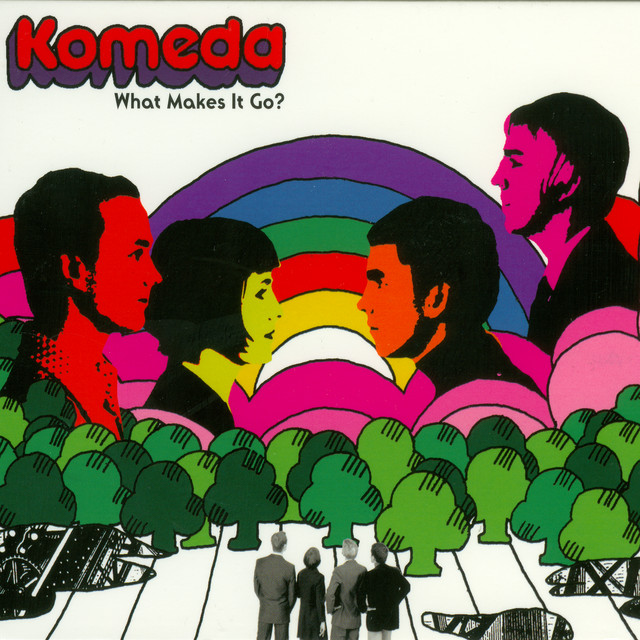
Pop på Svenska
Komeda
Space Age Pop
Similar artists
1
/5
Various Artists
Afro-Funk
Alternative Rock
Ambient
5
/5
Radiohead
Alternative Rock
Art Rock
Melancholia
5
/5
Mitski
Rock
Indie Rock
Alternative Rock
4
/5
Beach House
Dream Pop
Indie Rock
Dreamo
4
/5
Sufjan Stevens
Singer-Songwriter
Chamber Pop
Indie Rock
4
/5
Dean Blunt
Collage Pop
Hypnagogic Pop
Electronic
3
/5
of Montreal
Elephant 6
Rock
Indie Rock
3
/5
Stereolab
Experimental Rock
No Wave
Post-Rock
4
/5
Arcade Fire
Baroque Pop
Chamber Pop
Indie Rock
2
/5
Bruno Pernadas
Art Pop
Modern Indie Pop
Contemporary Jazz
Download our mobile app
Get the Melodigging app and start digging for new genres on the go
Download on the App Store
Get it on Google Play
© 2026 Melodigging
Give feedback
Legal
Melodding was created as a tribute to
Every Noise at Once
, which inspired us to help curious minds keep digging into music's ever-evolving genres.