Genres
Artists
Albums
Make Music
Sign in
Sign in
Artists
Opera Buffa
Artists
Opera Buffa
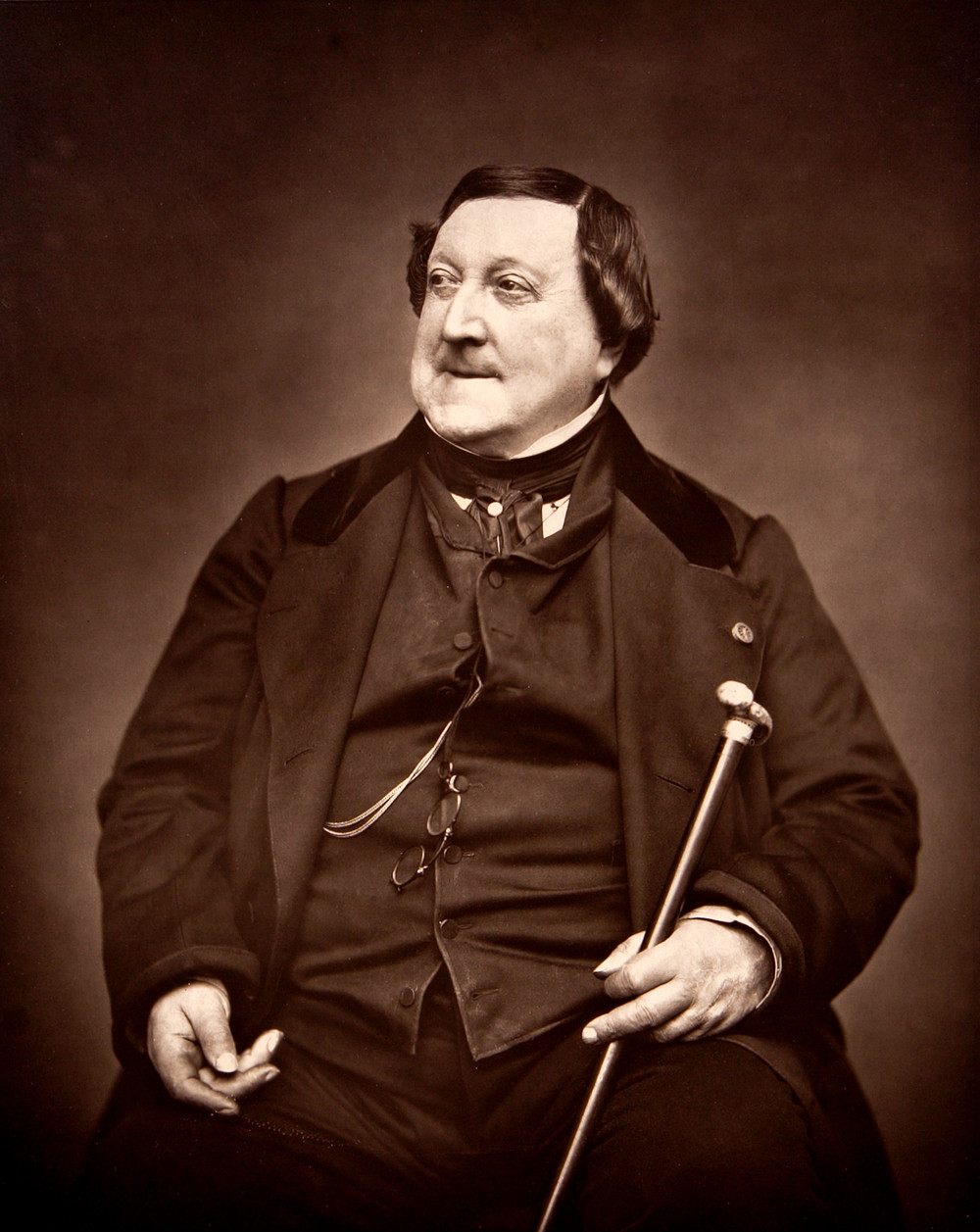
Gioachino Rossini
1955–2010
·
14 albums
Listen
3
/5
Genres
Beats
Beats is a loose, producer-driven category for rhythm-forward instrumentals built around hip‑hop drum patterns without necessarily being rap songs or featuring vocals. It functions as an umbrella for stock, "type," and backing tracks used by rappers, singers, streamers, and content creators, spanning boom‑bap swing to trap hi‑hat grids and R&B‑leaning grooves. On streaming platforms it often appears as standalone instrumentals packaged by tempo, mood, or artist style (e.g., “trap type beat,” “R&B instrumental,” “club beat”), prioritizing portability and utility over artist identity. While rooted in hip‑hop production aesthetics—kicks, snares, 808s, chopped samples—Beats blends downtempo, electronic, and contemporary R&B sensibilities, aiming for clarity, loopability, and immediate vibe.
Discover
Listen
432hz
432hz is a wellness-oriented ambient/New Age micro-genre built around tuning music to the alternative concert pitch A=432 Hz instead of the modern standard A=440 Hz. In practice, 432hz releases are largely instrumental, slow-tempo, and reverb-rich, combining soft pads, drones, gentle piano, bowls/chimes, and nature sounds. Tracks are marketed for relaxation, meditation, yoga, sleep, and "energy" or "chakra" work, and are frequently tagged with wellness keywords. While advocates claim psychoacoustic or physiological benefits from 432 Hz tuning, these claims remain unproven; the sound signature audiences respond to is the calm production, consonant harmony, and spacious mixing typical of ambient and New Age music. As a streaming-native style, 432hz thrives on platforms like YouTube and Spotify where long-form background listening, SEO-friendly titling, and looping visuals support use-cases such as study, mindfulness, and sleep.
Discover
Listen
Connecticut Indie
Connecticut indie is a regional strain of U.S. indie rock that blends the heartfelt directness of emo-revival with the fuzzy guitars, DIY ethics, and adventurous textures of New England’s underground. Rooted in college-town and small-city scenes (Middletown, New Haven, Willimantic, Hartford), the sound swings between twinkly, lyrically confessional indie and louder, shoegaze- or noise-tinged guitar rock. You’ll hear gang-vocal catharsis, transparent production that favors live-room energy, and occasional orchestral or synth flourishes that reflect the area’s art-school and experimental leanings. While it is geographically defined, the micro-scene’s bands networked nationally through house shows, small labels, and online communities, making Connecticut indie both locally grounded and widely connected.
Discover
Listen
Doble Paso
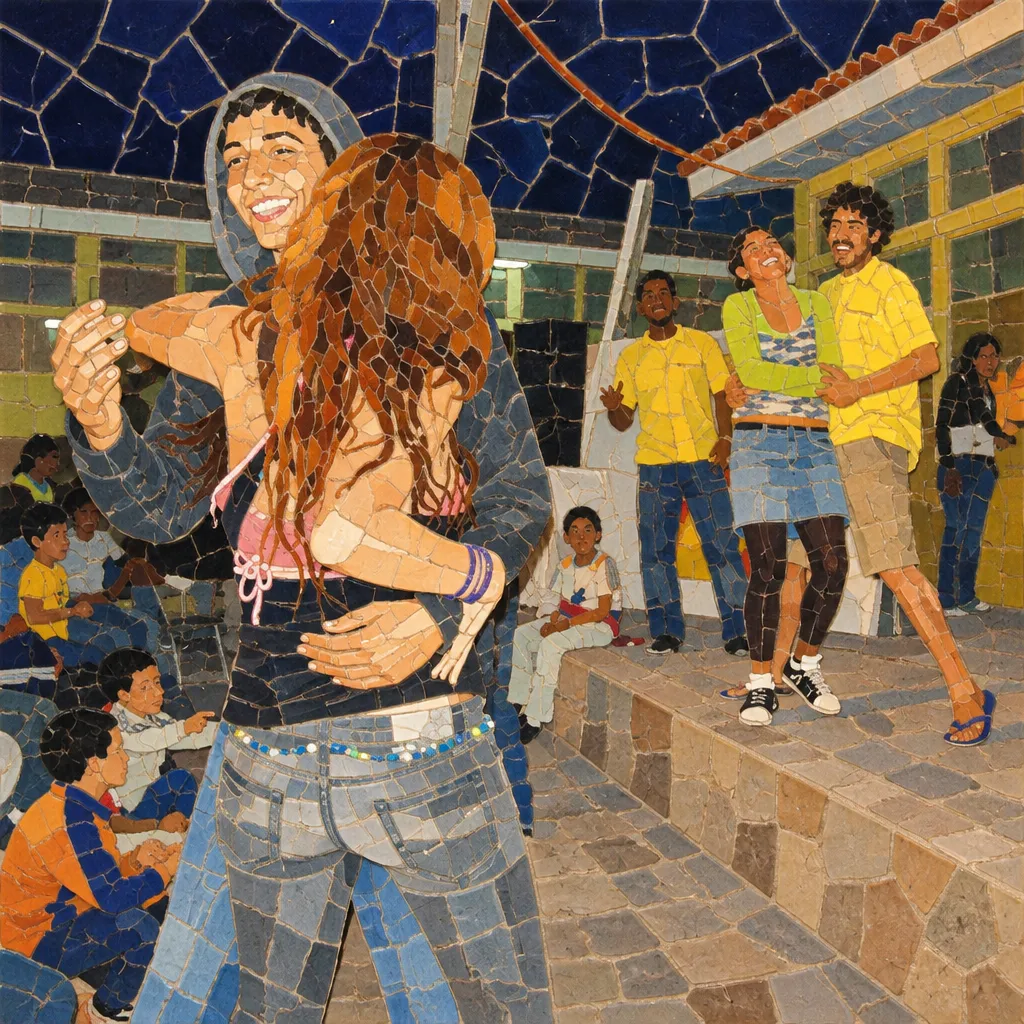
Doble paso is a high‑tempo reggaetón variant characterized by running the classic dembow groove at double speed, creating a frenetic, hard‑hitting feel aimed squarely at the dance floor. Compared with standard reggaetón drum patterns (typically around 90–100 BPM), doble paso accelerates the same rhythmic skeleton to roughly 120–140 BPM, often accompanying a club dance of the same name. Producers keep the core syncopation and low‑end punch of reggaetón while tightening hi‑hats, adding denser percussion fills, and favoring short, chant‑like hooks that match the breathless pace. The result is intense, perreo‑ready energy that bridges classic reggaetón, Dominican dembow’s urgency, and club‑forward editing trends.
Discover
Listen
Grand Opera
Grand opera is a monumental 19th‑century French operatic form defined by large forces, spectacular staging, and serious historical or religious subjects. Typically laid out in five acts, it features extensive choruses, virtuosic arias and ensembles, full ballet sequences (the obligatory "divertissement"), and elaborate scenic effects that turn political and moral conflicts into public spectacle. Musically, grand opera expands the Romantic orchestra, favors accompanied recitative over secco dialogue, and uses coloristic orchestration, on‑ and off‑stage bands, and crowd scenes to heighten dramaturgy. It emerged at the Paris Opéra (Académie Royale/Impériale) in the late 1820s–1830s through works by Auber, Meyerbeer, and Halévy, and quickly became an international template for large‑scale operatic production.
Discover
Listen
Romantic Classical
Romantic classical (Romantic-era) music is the 19th‑century phase of Western art music in which expression, individuality, and imagination came to the fore. Composers expanded the orchestra, embraced chromatic harmony and bold modulations, and favored long‑breathed, emotive melodies. Aligned with the wider Romantic movement in literature and the arts, it prized the subjective—love, nature, the supernatural, nationalism, and the sublime—often through programmatic narratives. New and transformed genres (the symphonic poem, grand opera, the art song/Lied, concert overtures) coexisted with reimagined Classical forms (symphony, sonata, concerto) that grew in scale and harmonic daring. From ca. 1800 through the early 20th century, Romantic music stretched from Beethoven’s heroic style and Schubert’s lyricism to Wagner’s leitmotivic dramas and Tchaikovsky’s symphonic ballet-infused language, culminating in late-Romantic gigantism and post-Romantic continuations.
Discover
Listen
Opera Semiseria
Opera semiseria is an Italian operatic subgenre that blends the elevated, noble tone of opera seria with the lively wit and stock comic figures of opera buffa. Its stories often revolve around pastoral or small-town settings, endangered innocence, sudden reversals of fortune, and a rescue or reconciliation that leads to a happy ending (lieto fine). Musically, it sits within the late Classical and early Romantic bel canto idiom: graceful cantabile melodies, virtuosic cabalettas, buoyant ensembles, and theatrically charged finales are typical. A hallmark is the coexistence of a noble soprano or tenor with a basso buffo (comic bass), allowing serious pathos and comic relief to interweave within the same drama.
Discover
Listen
Opera Buffa
Opera buffa is an Italian comic opera tradition that crystallized in the early 18th century as a lively, vernacular counterpart to opera seria. It features everyday characters, social satire, rapid-fire patter singing (especially for the basso buffo), and bustling ensemble finales that drive the drama forward. Musically it favors clear, galant-era melody, diatonic harmony, recitativo secco with continuo in earlier works, and increasingly sophisticated multi-voice ensembles. Plotlines draw on commedia dell’arte archetypes and revolve around mistaken identities, class tensions, and witty intrigues, presented in the Italian language with crisp, syllabic text setting.
Discover
Listen
Overture
An overture is an orchestral piece that traditionally serves as the opening to an opera, ballet, or stage work, and later evolved into an independent concert genre. Two foundational models emerged in the Baroque era: the French overture (slow, majestic dotted-rhythm opening followed by a faster, often fugal section) associated with Jean-Baptiste Lully, and the Italian overture (sinfonia) with a fast–slow–fast three-part design that presaged the Classical symphony. During the 19th century, the overture expanded into programmatic concert works, sometimes called "concert overtures," that used sonata-allegro or hybrid forms to depict narratives, scenes, or dramatic ideas. Overtures are characterized by bold thematic statements, clear formal signposts, and striking orchestration for full ensemble—strings, woodwinds, brass, and timpani—often designed to set the dramatic tone, preview motifs, or energize an audience before the curtain rises.
Discover
Listen
Opera
Opera is a large-scale theatrical genre that combines music, drama, and visual spectacle, in which the story is primarily conveyed through singing accompanied by an orchestra. It unites solo voices, ensembles, and chorus with staging, costumes, and often dance to create a total artwork. Emerging in late Renaissance Italy and flourishing in the Baroque era, opera developed signature forms such as recitative (speech-like singing that advances the plot) and aria (lyrical numbers that explore character and emotion). Over the centuries it evolved diverse national styles—Italian bel canto, French grand opéra, German music drama—while continually experimenting with orchestration, harmony, narrative structure, and stagecraft.
Discover
Listen
Classical
Classical music is the notated art-music tradition of Europe and its global descendants, characterized by durable forms, carefully codified harmony and counterpoint, and a literate score-based practice. The term “classical” can refer broadly to the entire Western art-music lineage from the Medieval era to today, not just the Classical period (c. 1750s–1820s). It privileges long-form structures (such as symphonies, sonatas, concertos, masses, and operas), functional or modal harmony, thematic development, and timbral nuance across ensembles ranging from solo instruments to full orchestras and choirs. Across centuries, the style evolved from chant and modal polyphony to tonal harmony, and later to post-tonal idioms, while maintaining a shared emphasis on written notation, performance practice, and craft.
Discover
Listen
Show all 11 genres
Albums
2010
2
/5
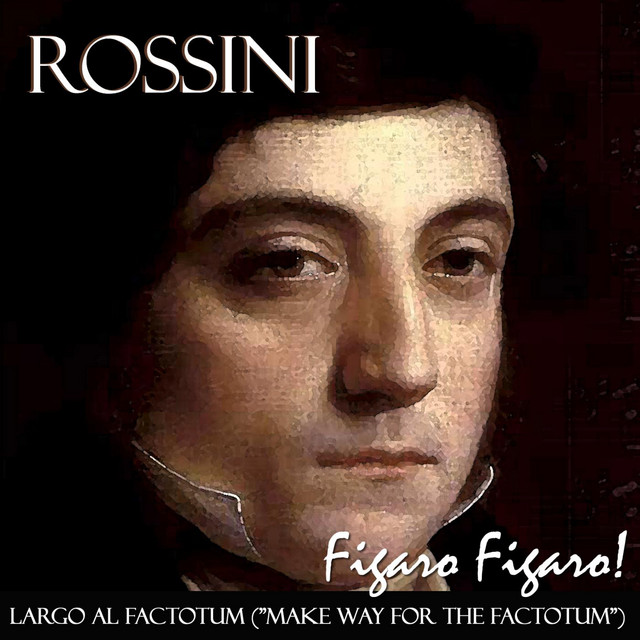
Figaro Figaro Figaro! The Barber of Seville: "Largo Al Factotum"
Gioachino Rossini
Opera
2003
1
/5
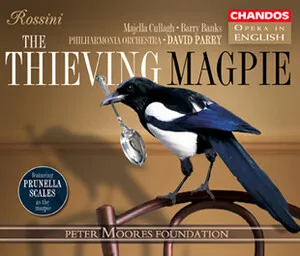
The Thieving Magpie
Gioachino Rossini
Opera Semiseria
1993
2
/5
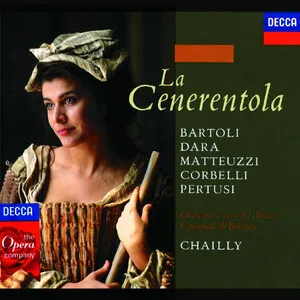
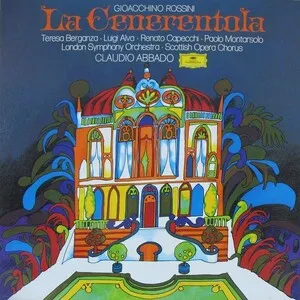
La Cenerentola
Gioachino Rossini
Opera Buffa
1989
1
/5
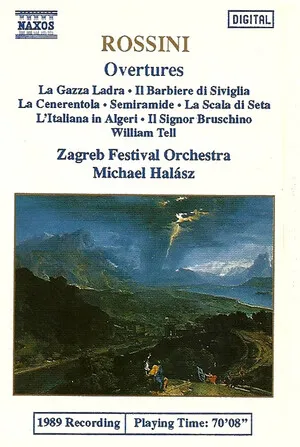
Overtures
Gioachino Rossini / Zagreb Festival Orchestra / Michael Halász
Overture
Classical
1983
1
/5
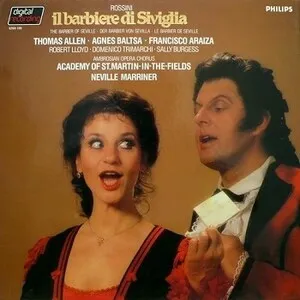
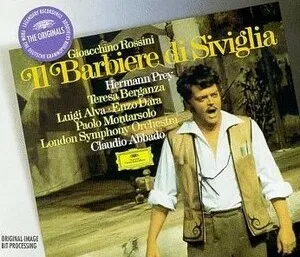
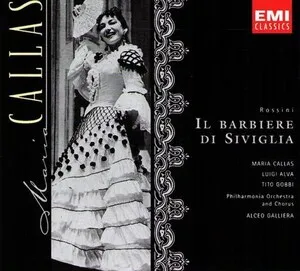
Il barbiere di Siviglia
Gioachino Rossini
Opera Buffa
1980
1
/5
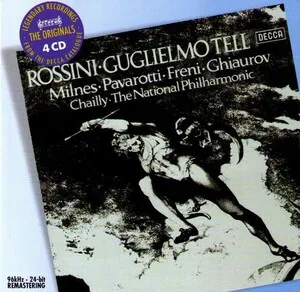
Guglielmo Tell
Gioachino Rossini
Grand Opera
1972
2
/5
Il barbiere di Siviglia
Gioachino Rossini
Opera Buffa
1958
2
/5
Il barbiere di Siviglia
Gioachino Rossini
Opera Buffa
1955
1
/5
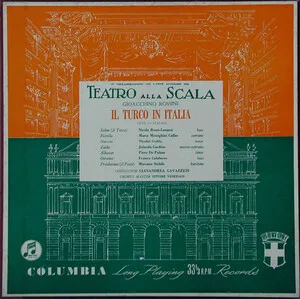
Il Turco in Italia
Gioachino Rossini
Opera Buffa
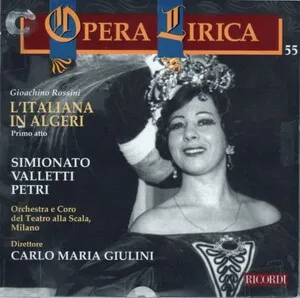
L'Italiana in Algeri
Gioachino Rossini
Opera Buffa
La Cenerentola
Gioachino Rossini
Opera Buffa
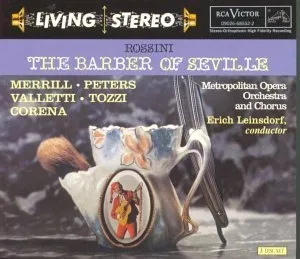
The Barber of Seville
Gioachino Rossini
Opera Buffa
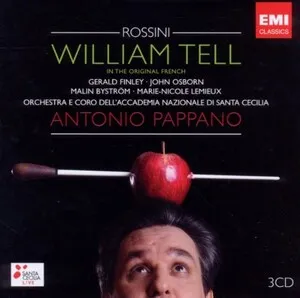
William Tell
Gioachino Rossini
Grand Opera
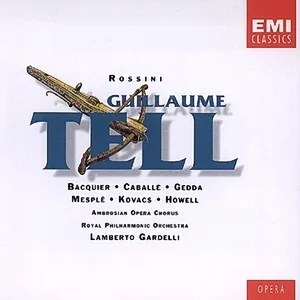
Guillaume Tell
Gioachino Rossini
Grand Opera
Similar artists
4
/5
Philharmonia Orchestra
Classical
Opera
Choral
4
/5
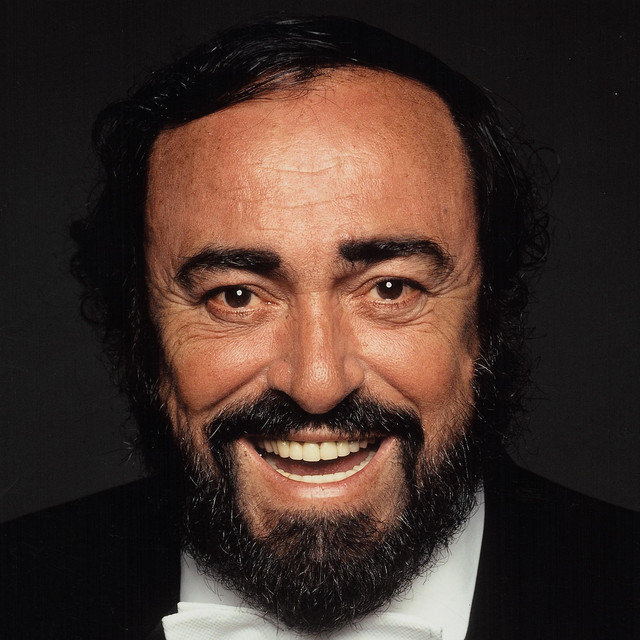
Luciano Pavarotti
Canzone Napoletana
Classical
Opera
4
/5
London Symphony Orchestra
Classical
Ballet
Concerto
3
/5
Maria Callas
Opera
Verismo
Classical
3
/5
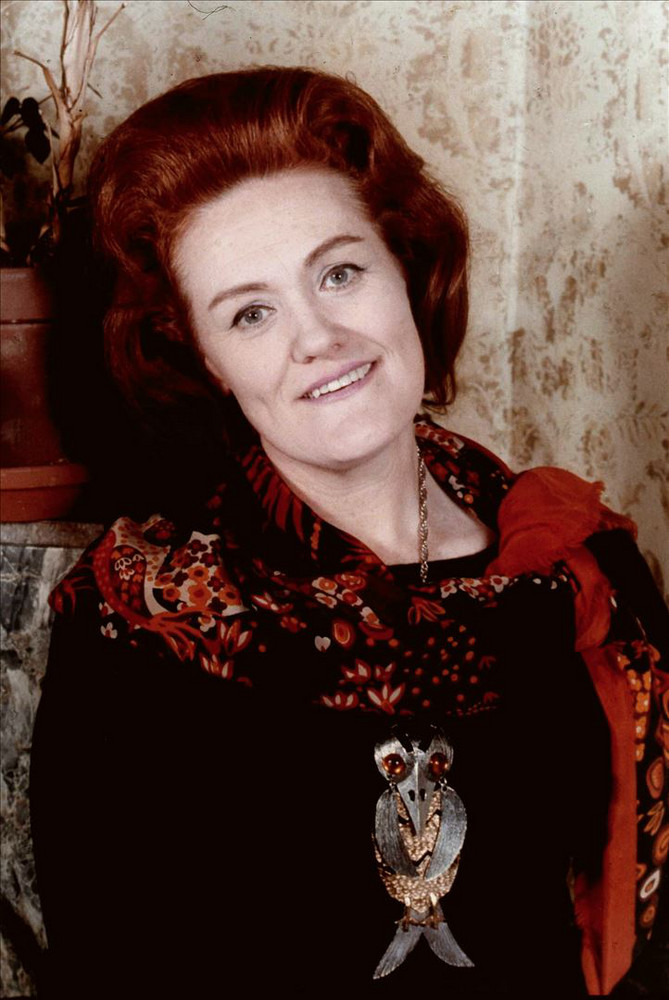
Dame Joan Sutherland
Classical
Opéra Comique
Opera
3
/5
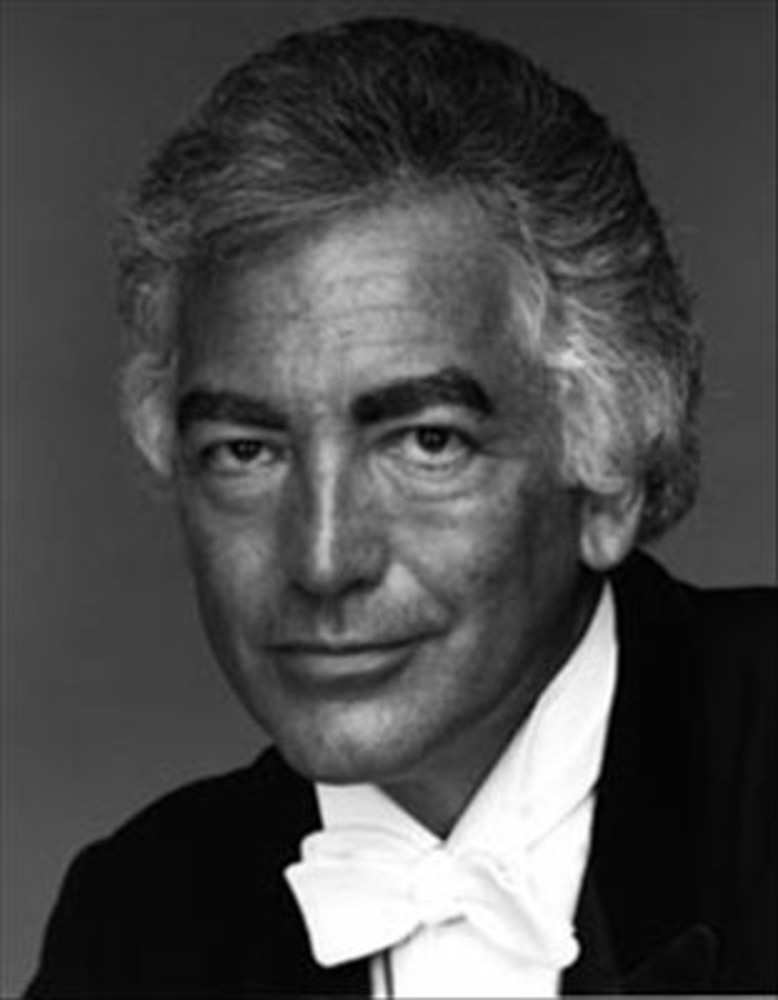
Richard Bonynge
Classical
Opera
Opéra Comique
3
/5
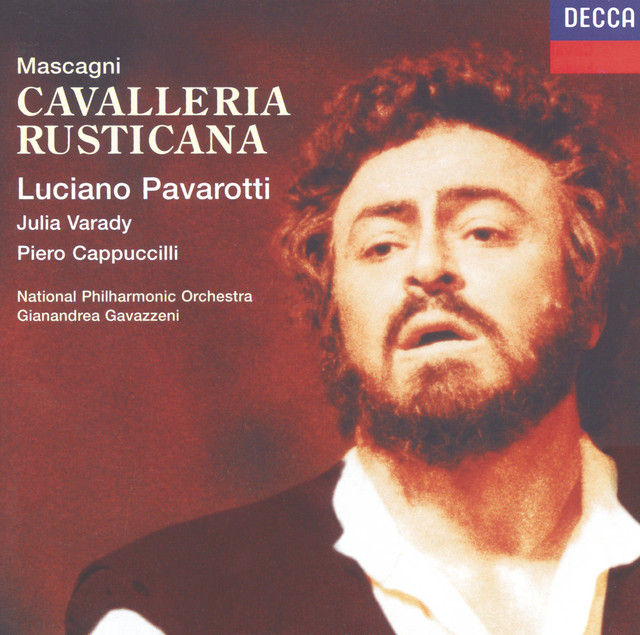
National Philharmonic Orchestra
Classical
Opera
Verismo
3
/5
Sir Georg Solti
Classical
Romantic Classical
Romanticism
3
/5
Carlo Maria Giulini
Classical
Opera
Requiem
2
/5
José van Dam
Classical
Opera
Requiem
Download our mobile app
Get the Melodigging app and start digging for new genres on the go
Download on the App Store
Get it on Google Play
© 2026 Melodigging
Give feedback
Legal
Melodding was created as a tribute to
Every Noise at Once
, which inspired us to help curious minds keep digging into music's ever-evolving genres.