Genres
Artists
Albums
Make Music
Sign in
Sign in
Artists
Classical
Artists
Classical
National Philharmonic Orchestra
1978–2004
·
6 albums
Listen
3
/5
Genres
Verismo
Verismo is a late‑19th‑century Italian operatic movement that champions realism: ordinary people in contemporary or recent settings, intense emotions, and vivid, sometimes violent, conflicts. It favors continuous musical drama with flowing arioso and declamation over display arias, a rich late‑Romantic harmonic palette, and a large, coloristic orchestra that paints psychological and environmental detail (bells, banda, onstage chorus, local dances). Vocally, it spotlights spinto and dramatic voices capable of sudden dynamic surges, urgent parlando, and soaring lyrical lines that erupt at emotional peaks. The result is taut, cinematic storytelling that feels immediate, visceral, and unabashedly human.
Discover
Listen
Saint Petersburg School
The Saint Petersburg school refers to interrelated circles of 19th-century Russian Western Classical composers centered in Saint Petersburg. Its core aim was to develop a distinctly Russian national style within Western art-music forms, blending European conservatory craft (symphony, opera, chamber music) with Russian-language declamation, folk-like melodic turns, Orthodox-tinged sonorities, and programmatic subjects drawn from Russian history and literature. In practice, the term often overlaps with the so‑called “Mighty Handful” (Balakirev’s circle) and their broader St. Petersburg milieu, where national-romantic aesthetics were pursued alongside vigorous debate with more academically oriented musicians.
Discover
Listen
Grand Opera
Grand opera is a monumental 19th‑century French operatic form defined by large forces, spectacular staging, and serious historical or religious subjects. Typically laid out in five acts, it features extensive choruses, virtuosic arias and ensembles, full ballet sequences (the obligatory "divertissement"), and elaborate scenic effects that turn political and moral conflicts into public spectacle. Musically, grand opera expands the Romantic orchestra, favors accompanied recitative over secco dialogue, and uses coloristic orchestration, on‑ and off‑stage bands, and crowd scenes to heighten dramaturgy. It emerged at the Paris Opéra (Académie Royale/Impériale) in the late 1820s–1830s through works by Auber, Meyerbeer, and Halévy, and quickly became an international template for large‑scale operatic production.
Discover
Listen
Canzone Napoletana
Canzone napoletana (Neapolitan song) is a lyrical, melodically rich tradition from Naples, Italy, sung primarily in the Neapolitan language. It fuses folk street-song roots with operatic bel canto phrasing and salon/classical songcraft. Characterized by soaring vocal lines, emotive rubato, and memorable refrains, it often features themes of love, longing, the sea, and the city of Naples itself. Typical accompaniments include guitar, mandolin (with tremolo), piano, or small orchestra, supporting strophic or verse–refrain forms that spotlight the singer’s timbre and expression. Iconic standards such as “’O sole mio,” “Funiculì funiculà,” “Torna a Surriento,” and “Santa Lucia” became international calling cards for Italian vocalism, helping define the archetype of the tenor-led popular ballad.
Discover
Listen
Italian Folk Music
Italian folk music encompasses a mosaic of regional traditions that developed across the Italian peninsula and islands, each with distinct languages/dialects, instruments, dance rhythms, and vocal practices. While the roots reach far back, the repertoire and identity we recognize today were largely documented and consolidated from the 19th century onward. Characteristic elements include lively dance forms such as tarantella, pizzica, saltarello, and tammurriata; robust polyphonic traditions like Sardinia’s canto a tenore and Liguria’s trallalero; narrative stornelli and ballads; and ritual songs tied to the seasons, work, and devotion. Typical instruments are frame drums (tamburello/tammorra), diatonic accordion (organetto), Italian bagpipes (zampogna) with shawm (ciaramella), launeddas (Sardinia), chitarra battente, mandolin, and fiddle. Modal melodies, drones, and call-and-response vocals are common throughout. Beyond entertainment, the music historically served social and spiritual functions—from communal dance to religious processions and even the famous (and debated) "tarantism" healing rituals in the South. In modern times it thrives in both local festivities and the global world-music circuit.
Discover
Listen
Opera Semiseria
Opera semiseria is an Italian operatic subgenre that blends the elevated, noble tone of opera seria with the lively wit and stock comic figures of opera buffa. Its stories often revolve around pastoral or small-town settings, endangered innocence, sudden reversals of fortune, and a rescue or reconciliation that leads to a happy ending (lieto fine). Musically, it sits within the late Classical and early Romantic bel canto idiom: graceful cantabile melodies, virtuosic cabalettas, buoyant ensembles, and theatrically charged finales are typical. A hallmark is the coexistence of a noble soprano or tenor with a basso buffo (comic bass), allowing serious pathos and comic relief to interweave within the same drama.
Discover
Listen
Symphony
A symphony is a large-scale composition for orchestra, typically cast in multiple movements that contrast in tempo, key, and character. In the Classical era, the most common layout was four movements: a fast opening movement (often in sonata form), a slow movement, a dance-like movement (minuet or later scherzo), and a fast finale. Over time, the symphony evolved from compact works of the mid-18th century into expansive, architecturally ambitious statements in the 19th and 20th centuries. Composers increasingly treated the symphony as a vehicle for thematic development, cyclical unity, and dramatic narrative—sometimes programmatic, sometimes abstract—using the full coloristic range of the modern orchestra. While rooted in Classical balance and clarity, symphonies incorporate a wide spectrum of harmonic languages and orchestral techniques. From Haydn’s wit and structural innovation to Beethoven’s heroic scope, Mahler’s cosmic breadth, and Shostakovich’s modern intensity, the symphony has remained a central pillar of Western concert music.
Discover
Listen
Opera
Opera is a large-scale theatrical genre that combines music, drama, and visual spectacle, in which the story is primarily conveyed through singing accompanied by an orchestra. It unites solo voices, ensembles, and chorus with staging, costumes, and often dance to create a total artwork. Emerging in late Renaissance Italy and flourishing in the Baroque era, opera developed signature forms such as recitative (speech-like singing that advances the plot) and aria (lyrical numbers that explore character and emotion). Over the centuries it evolved diverse national styles—Italian bel canto, French grand opéra, German music drama—while continually experimenting with orchestration, harmony, narrative structure, and stagecraft.
Discover
Listen
Classical
Classical music is the notated art-music tradition of Europe and its global descendants, characterized by durable forms, carefully codified harmony and counterpoint, and a literate score-based practice. The term “classical” can refer broadly to the entire Western art-music lineage from the Medieval era to today, not just the Classical period (c. 1750s–1820s). It privileges long-form structures (such as symphonies, sonatas, concertos, masses, and operas), functional or modal harmony, thematic development, and timbral nuance across ensembles ranging from solo instruments to full orchestras and choirs. Across centuries, the style evolved from chant and modal polyphony to tonal harmony, and later to post-tonal idioms, while maintaining a shared emphasis on written notation, performance practice, and craft.
Discover
Listen
Show all 9 genres
Albums
2004
1
/5
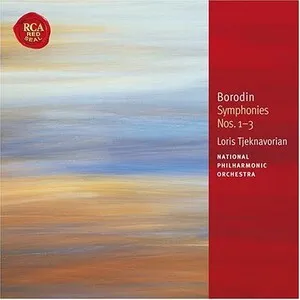
Symphonies Nos. 1-3
Alexander Borodin Александр Бородин / National Philharmonic Orchestra / Loris T…
Saint Petersburg School
Classical
Symphony
1982
2
/5
La sonnambula
Vincenzo Bellini
Opera Semiseria
1980
1
/5
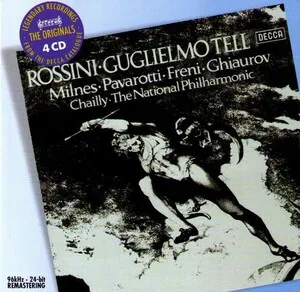
Guglielmo Tell
Gioachino Rossini
Grand Opera
1979
2
/5
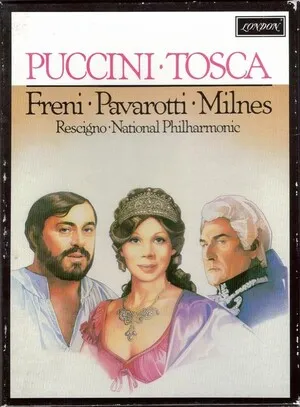
Tosca
Giacomo Puccini
Verismo
1979
3
/5
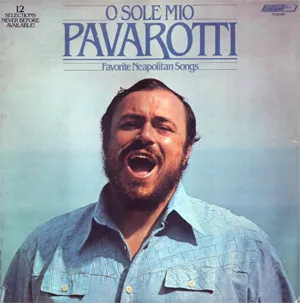
O sole mio: Favorite Neapolitan Songs
Eduardo Di Capua / Luciano Pavarotti
Canzone Napoletana
Italian Folk Music
Classical
1978
3
/5
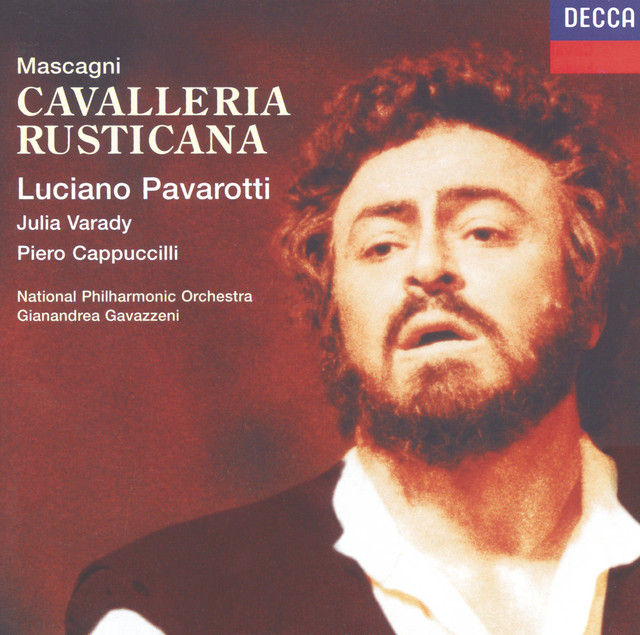
Cavalleria rusticana / Pagliacci
Pietro Mascagni / Ruggiero Leoncavallo
Verismo
Similar artists
4
/5
Luciano Pavarotti
Canzone Napoletana
Classical
Opera
3
/5
Maria Callas
Opera
Verismo
Classical
3
/5
Orchestra Del Teatro Alla Scala, Milano
Verismo
Classical
Grand Opera
3
/5
Mirella Freni
Verismo
Classical
Opera
3
/5
Georges Prêtre
Classical
Opera
Grand Opera
2
/5
Nicolai Ghiaurov
Grand Opera
Classical
Opera
4
/5
Berliner Philharmoniker
Classical
Romantic Classical
Romanticism
4
/5
Wiener Philharmoniker
Classical
Romantic Classical
Romanticism
4
/5
Philharmonia Orchestra
Classical
Opera
Choral
3
/5
Richard Wagner
New German School
Romantische Oper
Classical
Download our mobile app
Get the Melodigging app and start digging for new genres on the go
Download on the App Store
Get it on Google Play
© 2026 Melodigging
Give feedback
Legal
Melodding was created as a tribute to
Every Noise at Once
, which inspired us to help curious minds keep digging into music's ever-evolving genres.