Genres
Artists
Albums
Make Music
Sign in
Sign in
Artists
Ars Subtilior
Artists
Ars Subtilior
Diabolus in Musica
2011
·
1 album
Listen
1
/5
Genres
Renaissance
Renaissance music (c. 1400–1600) marks the shift from medieval sonorities to a clearer, triad-based polyphony in which multiple independent voices are treated with near-equal importance. It favors modal counterpoint, pervasive imitation, smooth voice-leading, and carefully prepared cadences. Text intelligibility and expressive text-setting become central concerns, especially in sacred motets and masses and in secular forms like the Italian madrigal and the French chanson. While much of the repertory is a cappella, instrumental consorts (viol, recorder, sackbut, cornett, organ) play a growing role. A steady tactus underpins rhythms, and tuning systems such as meantone temperament shape its characteristic color. Music printing (from 1501) accelerates stylistic diffusion across Europe.
Discover
Listen
Ars Subtilior
Ars subtilior is a late–14th‑century style of Franco‑Flemish and southern French/Iberian court music noted for its extreme rhythmic, notational, and contrapuntal sophistication. It refines the innovations of the Ars nova into music of dazzling subtlety: complex syncopations, multiple simultaneous meters, proportion signs, coloration (red/black notation) that alters rhythmic values, and isorhythmic devices. Composers often wrote in the French formes fixes (ballade, rondeau, virelai) and in elaborate motets, sometimes presenting pieces in fanciful shapes (hearts, circles) to mirror their poetic conceits. The sound world is courtly and intricate: interlocking lines in three or four parts, refined dissonance control, and virtuosic rhythms that challenge performers while serving refined, often allegorical texts.
Discover
Listen
Classical
Classical music is the notated art-music tradition of Europe and its global descendants, characterized by durable forms, carefully codified harmony and counterpoint, and a literate score-based practice. The term “classical” can refer broadly to the entire Western art-music lineage from the Medieval era to today, not just the Classical period (c. 1750s–1820s). It privileges long-form structures (such as symphonies, sonatas, concertos, masses, and operas), functional or modal harmony, thematic development, and timbral nuance across ensembles ranging from solo instruments to full orchestras and choirs. Across centuries, the style evolved from chant and modal polyphony to tonal harmony, and later to post-tonal idioms, while maintaining a shared emphasis on written notation, performance practice, and craft.
Discover
Listen
Albums
2011
1
/5
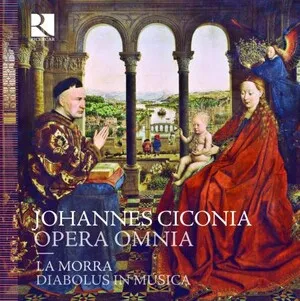
Opera omnia
Johannes Ciconia / La Morra / Diabolus in Musica
Ars Subtilior
Classical
Renaissance
Similar artists
4
/5
Traditional
Gregorian Chant
Spanish Classical Music
Medieval Classical Music
2
/5
Paul Van Nevel
Renaissance
Choral
Franco-Flemish School
2
/5
Huelgas Ensemble
Renaissance
Choral
Franco-Flemish School
2
/5
Graindelavoix
Classical
Franco-Flemish School
Gregorian Chant
2
/5
Björn Schmelzer
Ars Subtilior
Classical
Franco-Flemish School
1
/5
Johannes Ciconia
Ars Subtilior
Medieval
Classical
4
/5
Ryuichi Sakamoto
Drone
Japanese Classical
Ambient
3
/5
Anonymous
Ars Antiqua
Gregorian Chant
Medieval
3
/5
Collegium Vocale Gent
Classical
Baroque
Cantata
3
/5
Jordi Savall
Renaissance
Baroque
Classical
Download our mobile app
Get the Melodigging app and start digging for new genres on the go
Download on the App Store
Get it on Google Play
© 2026 Melodigging
Give feedback
Legal
Melodding was created as a tribute to
Every Noise at Once
, which inspired us to help curious minds keep digging into music's ever-evolving genres.