Genres
Artists
Albums
Make Music
Sign in
Sign in
Artists
New Wave Of Osdm
Artists
New Wave Of Osdm
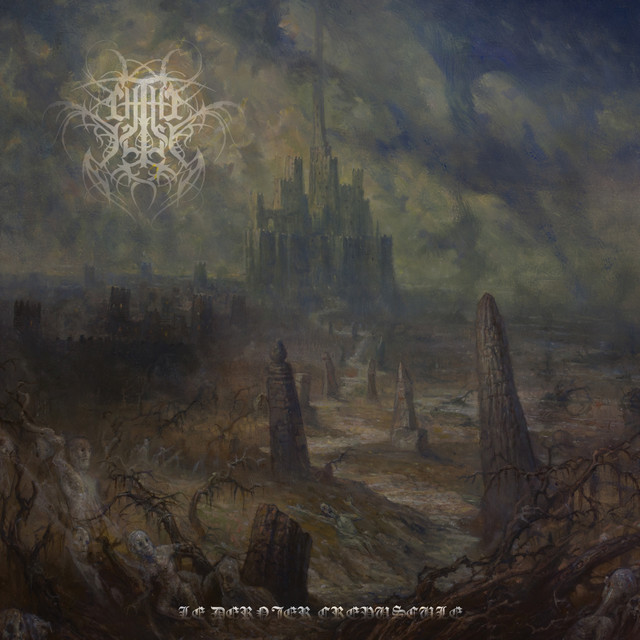
Chthe'ilist
2016
·
1 album
Listen
1
/5
Genres
New Wave Of Osdm
New Wave of OSDM (Old School Death Metal) is a 2010s–present revival movement that resurrects the aesthetics, riffcraft, and production ethos of late-1980s/early-1990s death metal. It favors down‑tuned guitars, chromatic riffing, guttural vocals, and an organic, unpolished sound that feels tactile and oppressive rather than hyper‑edited. Stylistically it triangulates the Floridian school’s technical menace, the Incantation/Autopsy murk and doom-laden crawl, and the Swedish HM‑2 “buzzsaw” bite—often within the same album. Songs pivot between d‑beat churn, mid‑paced stomps, lurching death‑doom passages, and short blasts, with bass prominent in the mix and drums captured with room ambience. Lyrically and visually, the movement leans on cosmic horror, rot, mysticism, war, and underground tape‑trader aesthetics, sustained by DIY labels and a thriving cassette/vinyl culture. Rather than museum‑piece nostalgia, the scene treats classic techniques as living practice: updating arrangement flow, atmosphere, and harmonic color while preserving the genre’s primal heft.
Discover
Listen
Cavernous Death Metal
Cavernous death metal is a murky, reverb-drenched strain of old-school death metal that foregrounds claustrophobic atmosphere over clinical precision. Hallmarks include extremely downtuned guitars, tremolo-picked and chromatic riffing, lurching doom-laden passages, and very deep, often indecipherable guttural vocals. Production aesthetics are central: drums are thunderous yet blurred, guitars and bass form a monolithic wall of low-end, and large-room or plate reverbs smear the mix to evoke the feeling of sound emanating from a subterranean chamber. Rather than bright, high-fidelity tones, the style prefers darkness, distance, and density—suggesting sinister space, decay, and ancient dread. Compositionally it draws on early 1990s death and death-doom blueprints, but the 2010s revival codified the "cavernous" sound as a distinct aesthetic, emphasizing mood, negative space, and oppressive resonance as much as riffcraft.
Discover
Listen
Voidgaze
Voidgaze is a heavy, atmospheric offshoot of shoegaze that fuses dense, down‑tuned guitars with post‑metal weight and blackgaze/atmospheric black metal expansiveness. The sound foregrounds towering walls of fuzz and reverb, but replaces the genre’s classic dreaminess with a cavernous, cosmic darkness—hence the sense of “the void.” Typical tracks pivot between tectonic, slow‑burn passages and explosive peaks: blast‑beat or double‑time surges may erupt beneath layers of smeared guitars, then collapse back into glacial, reverb‑soaked textures. Vocals are usually soft, breathy, or distant in the mix (sometimes screamed as a texture), serving the atmosphere rather than acting as a focal melody. Lyrically, voidgaze tends toward the existential—nature, vastness, decay, memory, and spiritual unease—mirroring the music’s sense of scale and sublimity.
Discover
Listen
Voidgrind
Voidgrind is a modern, subterranean strain of black/death metal that fuses cavernous, reverb-drenched production with grinding tempos, dissonant interval clusters, and an overwhelming sense of spatial dread. The “void” is both a sonic image and an aesthetic: guitars smear into dense, low‑tuned walls; drums pivot from tectonic lurches to blast-driven avalanches; and vocals emerge as abyssal exhalations rather than narrative leads. Musically it draws on blackened death metal’s corrosive timbres and grindcore’s extremity of pace, but bends them into through-composed, texture‑first forms. Harmony favors minor seconds, tritones, and tone clusters over functional progressions; rhythm slips between skank beats, blasts, and slow, ceremonial pulses. Lyrics and imagery revolve around cosmic nihilism, esoteric metaphysics, and anti-cosmic warfare—less storytelling than atmosphere-building.
Discover
Listen
Dissonant Death Metal
Dissonant death metal is a branch of death metal that foregrounds atonality, angular riffing, and tense, unstable harmonies. Instead of traditional power‑chord grooves or neoclassical lead work, it relies on clusters, tritones, seconds, and chromatic voice‑leading to create a nauseating, labyrinthine atmosphere. Rhythmically, the style favors jagged phrasing, polymeters, and sudden tempo shifts, while vocals remain predominantly deep growls that enhance the sense of dread. Production often balances clarity and claustrophobia: drums are articulate yet cavernous, and guitars are dense but deliberately abrasive. The aesthetic draws from modern classical dissonance as much as from early 1990s death metal, channeling existential unease and surreal or cosmic horror rather than gore alone.
Discover
Listen
Death Metal
Death metal is an extreme subgenre of heavy metal defined by heavily distorted, low‑tuned guitars, rapid and complex riffing, blast beat drumming, and harsh guttural vocals. Its harmonic language favors chromaticism, dissonance, and tremolo-picked lines that create an ominous, abrasive atmosphere. Lyrically, death metal often explores dark or transgressive themes—mortality, mythology, anti-religion, psychological horror, and the macabre—sometimes with philosophical or social commentary. Production ranges from raw and cavernous to hyper-precise and technical, reflecting the genre’s many regional scenes and substyles. From the mid‑1980s Florida scene (Tampa) and parallel developments in the US, UK, and Sweden, death metal evolved into numerous branches including brutal death metal, technical death metal, melodic death metal, and death‑doom, each emphasizing different aspects of speed, complexity, melody, or heaviness.
Discover
Listen
Technical Death Metal
Technical death metal (often shortened to tech-death) is a virtuosic, hyper-detailed branch of death metal characterized by complex song structures, rapid-fire tempo changes, and high-performance musicianship. It fuses the extremity and heaviness of death metal with the rhythmic sophistication of progressive metal and the harmonic vocabulary of jazz fusion. Signature elements include odd and shifting time signatures, polyrhythms, dissonant and chromatic harmony, through-composed or non-repeating structures, and intricate contrapuntal interplay between guitars and bass (often fretless). Drumming emphasizes precision blast beats, rapid double-kick patterns, metric modulation, and constant subdivision changes. Vocals are primarily deep growls or harsh screams, while lyrics frequently explore science, philosophy, metaphysics, and cosmology alongside the genre’s traditional dark themes. Production tends to favor clarity and separation to make dense arrangements intelligible, with tight, gated guitars, articulate bass presence, and drum sounds that capture transient detail. The result is aggressive, cerebral, and often breathtakingly technical music that rewards close listening.
Discover
Listen
Show all 7 genres
Albums
2016
Le Dernier crépuscule
Chthe’ilist
New Wave Of Osdm
Similar artists
1
/5
Suffering Hour
Dissonant Death Metal
Cavernous Death Metal
New Wave Of Osdm
2
/5
Gorguts
Dissonant Death Metal
Death Metal
Technical Death Metal
2
/5
Ulcerate
Dissonant Death Metal
Technical Death Metal
Atmospheric Sludge Metal
2
/5
Imperial Triumphant
Dissonant Death Metal
Avant-Garde Metal
Technical Death Metal
2
/5
Artificial Brain
Dissonant Death Metal
Cosmic Death Metal
Death Metal
2
/5
Portal
Dissonant Death Metal
Avant-Garde
Death Metal
1
/5
Cryptic Shift
Progressive Metal
Technical Death Metal
Technical Thrash Metal
1
/5
Demilich
Death Metal
Dissonant Death Metal
Technical Death Metal
1
/5
Replicant
Death Metal
Dissonant Death Metal
Technical Death Metal
1
/5
Pyrrhon
Death Metal
Mathcore
Technical Death Metal
Download our mobile app
Get the Melodigging app and start digging for new genres on the go
Download on the App Store
Get it on Google Play
© 2026 Melodigging
Give feedback
Legal
Melodding was created as a tribute to
Every Noise at Once
, which inspired us to help curious minds keep digging into music's ever-evolving genres.