Genres
Artists
Albums
Make Music
Sign in
Sign in
Artists
Classical
Artists
Classical
Christa Ludwig
1967–1975
·
4 albums
Listen
2
/5
Genres
Verismo
Verismo is a late‑19th‑century Italian operatic movement that champions realism: ordinary people in contemporary or recent settings, intense emotions, and vivid, sometimes violent, conflicts. It favors continuous musical drama with flowing arioso and declamation over display arias, a rich late‑Romantic harmonic palette, and a large, coloristic orchestra that paints psychological and environmental detail (bells, banda, onstage chorus, local dances). Vocally, it spotlights spinto and dramatic voices capable of sudden dynamic surges, urgent parlando, and soaring lyrical lines that erupt at emotional peaks. The result is taut, cinematic storytelling that feels immediate, visceral, and unabashedly human.
Discover
Listen
Orchestral Song
Orchestral song is an art-song tradition in which a solo voice is accompanied by a full orchestra rather than piano or a small chamber ensemble. It preserves the intimate, text-led focus of lieder and mélodie while expanding the expressive palette with orchestral color, timbral contrast, and large-scale dynamic shaping. Unlike opera, it is not staged and typically sets discrete poems or groups of poems, often assembled into cycles. Forms range from strophic to through-composed, and the style spans late-Romantic tonal idioms to early modernist harmonies. Central to the genre is the careful balance between textual clarity and orchestral richness, with the orchestra acting as a commentator and colorist—introducing motives, painting imagery, and framing the vocal line with preludes, interludes, and postludes.
Discover
Listen
Choral Symphony
A choral symphony is a large-scale symphonic work that integrates chorus (and often vocal soloists) into the symphonic fabric, rather than treating the voices as an add-on or separate cantata-like appendix. Pioneered most famously by Beethoven’s Symphony No. 9 (1824), the genre fuses the instrumental architecture of the symphony with texted, choral expression drawn from sacred and secular traditions. Composers use the chorus to broaden timbral range, intensify climaxes, and articulate philosophical or narrative ideas that purely instrumental music cannot directly convey. Across the 19th and 20th centuries, choral symphonies ranged from liturgical meditations (Stravinsky’s Symphony of Psalms) to epic, humanistic statements (Mahler’s Symphonies Nos. 2 and 8; Vaughan Williams’s A Sea Symphony), and politically charged works (Shostakovich’s Symphony No. 13).
Discover
Listen
Art Song
Art song is an intimate, concert-music genre in which a poetic text is set for solo voice with an equally integral piano accompaniment. Unlike popular song, it is composed for attentive listening in the recital hall or salon, and unlike opera, it does not require staging or multiple characters. The genre privileges prosody, word-painting, and subtle harmonic color to illuminate imagery and emotion in the poem. Forms range from strophic and modified strophic to fully through-composed designs, and the piano often supplies prelude, interludes, and a telling postlude that extends or reframes the text’s sentiment. German Lieder, French mélodie, and English-language art song are the best-known national currents within this tradition.
Discover
Listen
Romantic Classical
Romantic classical (Romantic-era) music is the 19th‑century phase of Western art music in which expression, individuality, and imagination came to the fore. Composers expanded the orchestra, embraced chromatic harmony and bold modulations, and favored long‑breathed, emotive melodies. Aligned with the wider Romantic movement in literature and the arts, it prized the subjective—love, nature, the supernatural, nationalism, and the sublime—often through programmatic narratives. New and transformed genres (the symphonic poem, grand opera, the art song/Lied, concert overtures) coexisted with reimagined Classical forms (symphony, sonata, concerto) that grew in scale and harmonic daring. From ca. 1800 through the early 20th century, Romantic music stretched from Beethoven’s heroic style and Schubert’s lyricism to Wagner’s leitmotivic dramas and Tchaikovsky’s symphonic ballet-infused language, culminating in late-Romantic gigantism and post-Romantic continuations.
Discover
Listen
Romanticism
Romanticism in music is a 19th‑century movement that prioritizes individual expression, emotional intensity, and evocative storytelling over the balanced clarity of the Classical era. It expands harmony with richer chromaticism and distant modulations, stretches forms (longer developments, cyclic structures), and favors flexible tempo (rubato) and extreme dynamics. Orchestras grow in size and color (tuba, piccolo, contrabassoon, harp, expanded brass and percussion), while the piano becomes a primary vehicle for intimate expression and virtuoso display. Key genres include the art song (Lied), character piece, symphony and symphonic poem, and grand opera with leitmotifs. Program music—works that narrate scenes, poems, or ideas—stands alongside absolute music, both suffused with heightened subjectivity, nature imagery, nationalism, and the sublime.
Discover
Listen
Symphony
A symphony is a large-scale composition for orchestra, typically cast in multiple movements that contrast in tempo, key, and character. In the Classical era, the most common layout was four movements: a fast opening movement (often in sonata form), a slow movement, a dance-like movement (minuet or later scherzo), and a fast finale. Over time, the symphony evolved from compact works of the mid-18th century into expansive, architecturally ambitious statements in the 19th and 20th centuries. Composers increasingly treated the symphony as a vehicle for thematic development, cyclical unity, and dramatic narrative—sometimes programmatic, sometimes abstract—using the full coloristic range of the modern orchestra. While rooted in Classical balance and clarity, symphonies incorporate a wide spectrum of harmonic languages and orchestral techniques. From Haydn’s wit and structural innovation to Beethoven’s heroic scope, Mahler’s cosmic breadth, and Shostakovich’s modern intensity, the symphony has remained a central pillar of Western concert music.
Discover
Listen
Opera
Opera is a large-scale theatrical genre that combines music, drama, and visual spectacle, in which the story is primarily conveyed through singing accompanied by an orchestra. It unites solo voices, ensembles, and chorus with staging, costumes, and often dance to create a total artwork. Emerging in late Renaissance Italy and flourishing in the Baroque era, opera developed signature forms such as recitative (speech-like singing that advances the plot) and aria (lyrical numbers that explore character and emotion). Over the centuries it evolved diverse national styles—Italian bel canto, French grand opéra, German music drama—while continually experimenting with orchestration, harmony, narrative structure, and stagecraft.
Discover
Listen
Requiem
A requiem is a musical setting of the Roman Catholic Mass for the Dead (Missa pro defunctis). Historically rooted in Latin liturgy, it sets movements such as the Introit, Kyrie, (historically) the Sequence Dies irae, Offertory, Sanctus, Agnus Dei, and Communion, and often includes additional responsories like Libera me and In paradisum. While the earliest requiems were monophonic chants, the genre became a showcase for polyphonic and later symphonic choral writing. Renaissance composers wrote austere, modal settings; Classical and Romantic composers expanded the forces and dramatic scope; and 20th–21st century composers reimagined the form with new languages, from neo-modal and impressionistic harmonies to avant‑garde sonorities. Today, requiems appear both in liturgy and as concert works, symbolizing collective mourning, remembrance, and spiritual reflection.
Discover
Listen
German Music
German music is a broad umbrella for the musical traditions created in the German-speaking lands, spanning from medieval sacred chant and courtly song to world-shaping classical composition, folk idioms, and modern popular and electronic styles. It is central to the Western classical canon (from chorales and counterpoint to symphonies and opera), yet it also encompasses vernacular streams such as Volksmusik and Schlager, as well as innovative modern movements like Krautrock, Neue Deutsche Welle, Berlin techno, Deutschrap, and Neue Deutsche Härte. Across eras, characteristic traits include structural clarity, deep harmonic development, contrapuntal craft, and—especially in vocal genres—German-language texts that range from devotional and philosophical to satirical and everyday themes. Because “German music” names a national tradition rather than one single style, it combines art-music lineages (medieval to contemporary), regional folk practices, and international exchange, with German hubs (Leipzig, Dresden, Berlin, Hamburg, Munich, Düsseldorf, Cologne) acting as engines of musical education, performance, and experimentation.
Discover
Listen
Classical
Classical music is the notated art-music tradition of Europe and its global descendants, characterized by durable forms, carefully codified harmony and counterpoint, and a literate score-based practice. The term “classical” can refer broadly to the entire Western art-music lineage from the Medieval era to today, not just the Classical period (c. 1750s–1820s). It privileges long-form structures (such as symphonies, sonatas, concertos, masses, and operas), functional or modal harmony, thematic development, and timbral nuance across ensembles ranging from solo instruments to full orchestras and choirs. Across centuries, the style evolved from chant and modal polyphony to tonal harmony, and later to post-tonal idioms, while maintaining a shared emphasis on written notation, performance practice, and craft.
Discover
Listen
European Music
“European music” is a broad umbrella covering the historical and regional practices that developed across the European continent, from medieval sacred chant and courtly song to folk traditions, art (classical) music, and later popular and electronic styles. Common threads include the codification of staff notation, the development of modal and later tonal harmony, the use of structured forms (e.g., mass, motet, madrigal; sonata, symphony, opera; verse–chorus song), and a rich palette of instruments culminating in the modern orchestra and various regional folk ensembles. While extremely diverse from region to region, European music is marked by a continuous dialogue between sacred and secular practices, learned written traditions and oral folk idioms, and later between art music and mass-market popular genres.
Discover
Listen
Vocal Music
Vocal music is music in which one or more singers carry the primary musical line, whether accompanied by instruments or sung a cappella (without any non‑vocal instrumental accompaniment). If singing is present but not featured prominently, the piece is typically treated as instrumental music. By contrast, vocal music foregrounds the human voice—its words, melody, timbre, and expressive nuance—across an enormous range of styles from chant and folk song to opera, pop, and hip hop.
Discover
Listen
Show all 13 genres
Albums
1975
1
/5
Symphony No. 2 "Resurrection"
Gustav Mahler
Choral Symphony
Classical
Symphony
1974
3
/5
Madama Butterfly
Giacomo Puccini
Verismo
1971
2
/5
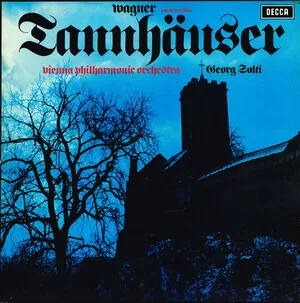
Tannhäuser
Richard Wagner / Wiener Philharmoniker / Georg Solti
German Music
European Music
Romantic Classical
1967
2
/5
Das Lied von der Erde
Gustav Mahler
Art Song
Orchestral Song
Symphony
Similar artists
4
/5
Berliner Philharmoniker
Classical
Romantic Classical
Romanticism
4
/5
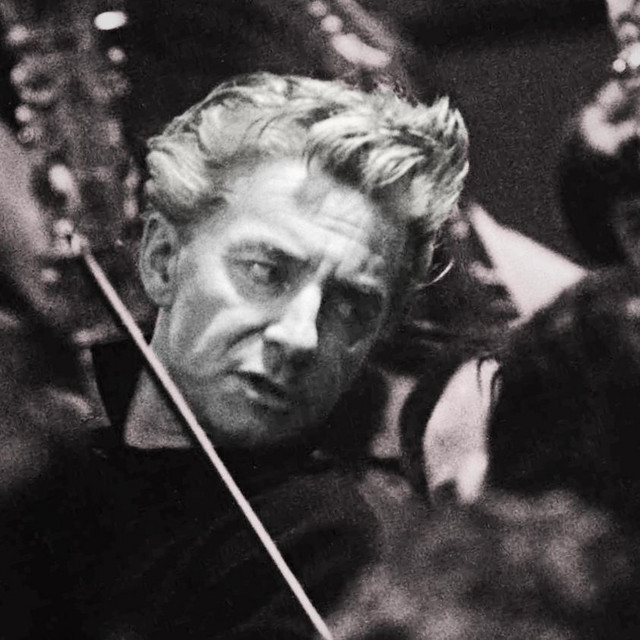
Herbert von Karajan
Classical
Symphonic Poem
Symphony
4
/5
Wiener Philharmoniker
Classical
Romantic Classical
Romanticism
4
/5
Philharmonia Orchestra
Classical
Opera
Choral
2
/5
Otto Klemperer
Choral
Classical
Opera
3
/5
Dietrich Fischer-Dieskau
Art Song
Lied
Classical
4
/5
Wolfgang Amadeus Mozart
Classical
Requiem
Classical Period
2
/5
José van Dam
Classical
Opera
Requiem
4
/5
London Symphony Orchestra
Classical
Ballet
Concerto
3
/5
Karl Böhm
Classical
Classical Period
Opera
Download our mobile app
Get the Melodigging app and start digging for new genres on the go
Download on the App Store
Get it on Google Play
© 2026 Melodigging
Give feedback
Legal
Melodding was created as a tribute to
Every Noise at Once
, which inspired us to help curious minds keep digging into music's ever-evolving genres.