Genres
Artists
Albums
Make Music
Sign in
Sign in
Artists
Deathgrind
Artists
Deathgrind
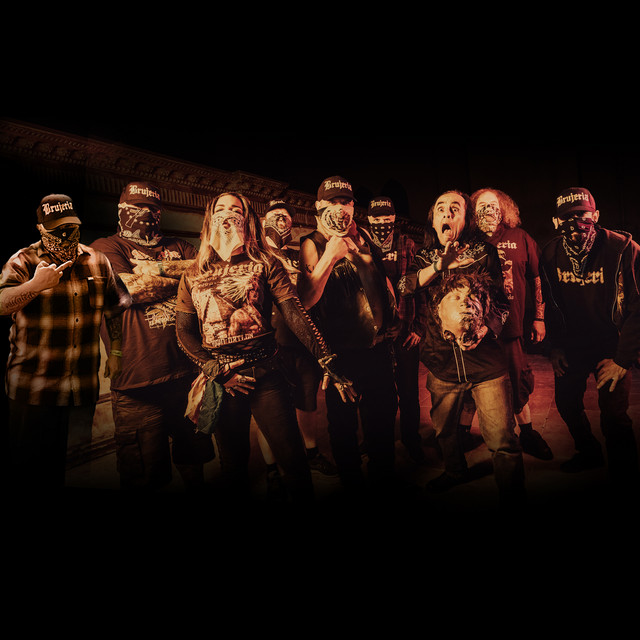
Brujeria
1995–2016
·
2 albums
Listen
3
/5
Genres
Slamming Deathcore
Slamming deathcore is an especially heavy, groove-focused branch of deathcore that fuses the massive, "caveman" slam riffs of brutal/slam death metal with the breakdown-driven structures of metalcore. It emphasizes ultra‑low guitar tunings, tectonic half‑time "slams," rapid alternation with blasts, and extremely guttural vocals (pig squeals, tunnel growls, and inhales/exhales). Modern productions often add sub‑bass drops, tightly edited drums, and layered vocal effects for maximum impact. Lyrical themes tend toward horror, cosmic or apocalyptic imagery, and exaggerated brutality, though some bands bring sci‑fi or mythological concepts into the mix. The resulting sound is relentlessly percussive, groove‑centric, and built for mosh‑inducing impact.
Discover
Listen
Dolewave
Dolewave is a strand of Australian indie rock known for jangly, clean guitars, laconic and conversational vocals, and lyrics that linger on the small details of everyday suburban life. The songs often feel unhurried and unvarnished, balancing bittersweet nostalgia with wry humor. Production tends toward the DIY and lo‑fi: room sounds, modest mic techniques, and minimal studio polish underscore the music’s unpretentious character. Harmonies are simple but catchy—major keys, suspended chords, and ringing arpeggios—while tempos hover at a relaxed mid‑pace. The term "dolewave" began as a tongue‑in‑cheek label referencing Australia’s social welfare (“the dole”) and the music’s slacker, home‑recorded ethos. Despite the loaded nickname, the style has come to signify a specific Melbourne‑centred guitar pop sensibility steeped in jangle‑pop, the Dunedin sound, and slacker rock.
Discover
Listen
Groove Metal
Groove metal is a heavy metal subgenre defined by mid‑tempo, syncopated, and riff‑centric songwriting that prioritizes head‑nodding "groove" over sheer speed. Guitars are typically down‑tuned and palm‑muted, locking tightly to a punchy, backbeat‑driven drum feel and muscular bass lines. Vocals are usually aggressive shouts or barks with occasional melodic or anthemic passages, while lead guitars favor pinched harmonics, blues‑tinged bends, and compact, percussive phrases rather than long neo‑classical runs. Production tends to be tight and weighty, emphasizing a thick, modern rhythm‑guitar tone and precise drum transients. Stylistically, groove metal grew out of late‑’80s thrash and hardcore but slowed and widened the rhythms, borrowing the feel of funk metal’s syncopation and, in some cases, southern rock’s swagger.
Discover
Listen
Deathgrind
Deathgrind is a fusion of death metal and grindcore that combines the former’s low‑tuned, heavy riffing and guttural vocals with the latter’s ultra‑fast tempos, blast‑beat drumming, and short, abrupt song structures. Typical tracks run one to three minutes, feature rapid chromatic tremolo picking, sudden tempo shifts, and a relentless rhythmic attack. Vocals alternate between deep death‑metal growls and high‑pitched screams, while lyrics range from socio‑political critique to graphic, gore‑themed narratives depending on the band. Production tends to be tight and cutting, often with triggered kicks, aggressive guitar tones, and clear articulation so that riffs remain intelligible at extreme speed.
Discover
Listen
Grindcore
Grindcore is an extremely fast, abrasive fusion of hardcore punk and extreme metal characterized by blast-beat drumming, highly distorted down-tuned guitars, and a mix of guttural growls and high-pitched screams. Songs are typically very short—often under two minutes and sometimes just seconds—favoring intensity over traditional verse–chorus structures. Lyrically, grindcore spans politically charged and socially conscious themes (war, capitalism, animal rights) as well as gore and body horror (particularly in goregrind). Production ranges from raw, live-in-the-room ferocity to tight, modern clarity. The style is defined by relentless speed, dissonant or chromatic riffing, and sudden start–stop shifts that create a feeling of controlled chaos.
Discover
Listen
Death Metal
Death metal is an extreme subgenre of heavy metal defined by heavily distorted, low‑tuned guitars, rapid and complex riffing, blast beat drumming, and harsh guttural vocals. Its harmonic language favors chromaticism, dissonance, and tremolo-picked lines that create an ominous, abrasive atmosphere. Lyrically, death metal often explores dark or transgressive themes—mortality, mythology, anti-religion, psychological horror, and the macabre—sometimes with philosophical or social commentary. Production ranges from raw and cavernous to hyper-precise and technical, reflecting the genre’s many regional scenes and substyles. From the mid‑1980s Florida scene (Tampa) and parallel developments in the US, UK, and Sweden, death metal evolved into numerous branches including brutal death metal, technical death metal, melodic death metal, and death‑doom, each emphasizing different aspects of speed, complexity, melody, or heaviness.
Discover
Listen
Latin Metal
Latin metal is a form of heavy metal that incorporates Latin American musical identity into metal’s riffs, heaviness, and performance style. It commonly features Spanish (and sometimes Portuguese) vocals, grooves derived from Latin dance and folk traditions, and rhythmic layers such as clave-based patterns or percussion inspired by salsa, cumbia, Afro-Caribbean, and regional folkloric styles. In some scenes—especially in the Americas—it can also draw from Indigenous and other world/ethnic traditions (for example, traditional percussion, chant-like vocal phrasing, or modal/melodic ideas), while still keeping a metal foundation (distorted guitars, powerful drums, and aggressive vocal delivery).
Discover
Listen
Metal
Metal (often used to mean heavy metal in its broad, umbrella sense) is a loud, guitar-driven style of rock defined by high-gain distortion, emphatic and often martial rhythms, and a dense, powerful low end. It foregrounds riff-based songwriting, dramatic dynamics, virtuosic guitar solos, and commanding vocals that range from melodic wails to aggressive snarls and growls. Harmonically, metal favors minor modes, modal color (Aeolian, Phrygian), chromaticism, and tritone-inflected tension, while thematically it explores power, mythology, the occult, social critique, fantasy, and existential subjects. While adjacent to hard rock, metal typically pushes amplification, distortion, precision, and thematic intensity further, forming a foundation for many specialized subgenres.
Discover
Listen
Show all 8 genres
Albums
2016
2
/5
Viva Presidente Trump!
Brujeria
Deathgrind
Latin Metal
Death Metal
1995
3
/5
Raza Odiada
Brujeria
Deathgrind
Grindcore
Groove Metal
Similar artists
3
/5
Bolt Thrower
Death Metal
Deathgrind
Brutal Death Metal
3
/5
Dying Fetus
Brutal Death Metal
Deathgrind
Death Metal
3
/5
Napalm Death
Grindcore
Deathgrind
Death Metal
3
/5
Aborted
Goregrind
Death Metal
Deathgrind
3
/5
Morbid Angel
Florida Death Metal
Death Metal
Metal
3
/5
Necrophagist
Death Metal
Deathgrind
Technical Death Metal
3
/5
Bloodbath
Deathgrind
Death Metal
Brutal Death Metal
3
/5
Cattle Decapitation
Death Metal
Grindcore
Deathcore
2
/5
Benighted
French Death Metal
Death Metal
Grindcore
3
/5
Six Feet Under
Death Metal
Grindcore
Groove Metal
Download our mobile app
Get the Melodigging app and start digging for new genres on the go
Download on the App Store
Get it on Google Play
© 2026 Melodigging
Give feedback
Legal
Melodding was created as a tribute to
Every Noise at Once
, which inspired us to help curious minds keep digging into music's ever-evolving genres.