Your digging level

For this genre
0/8
🏆
Sign in, then listen to this genre to level up

Description

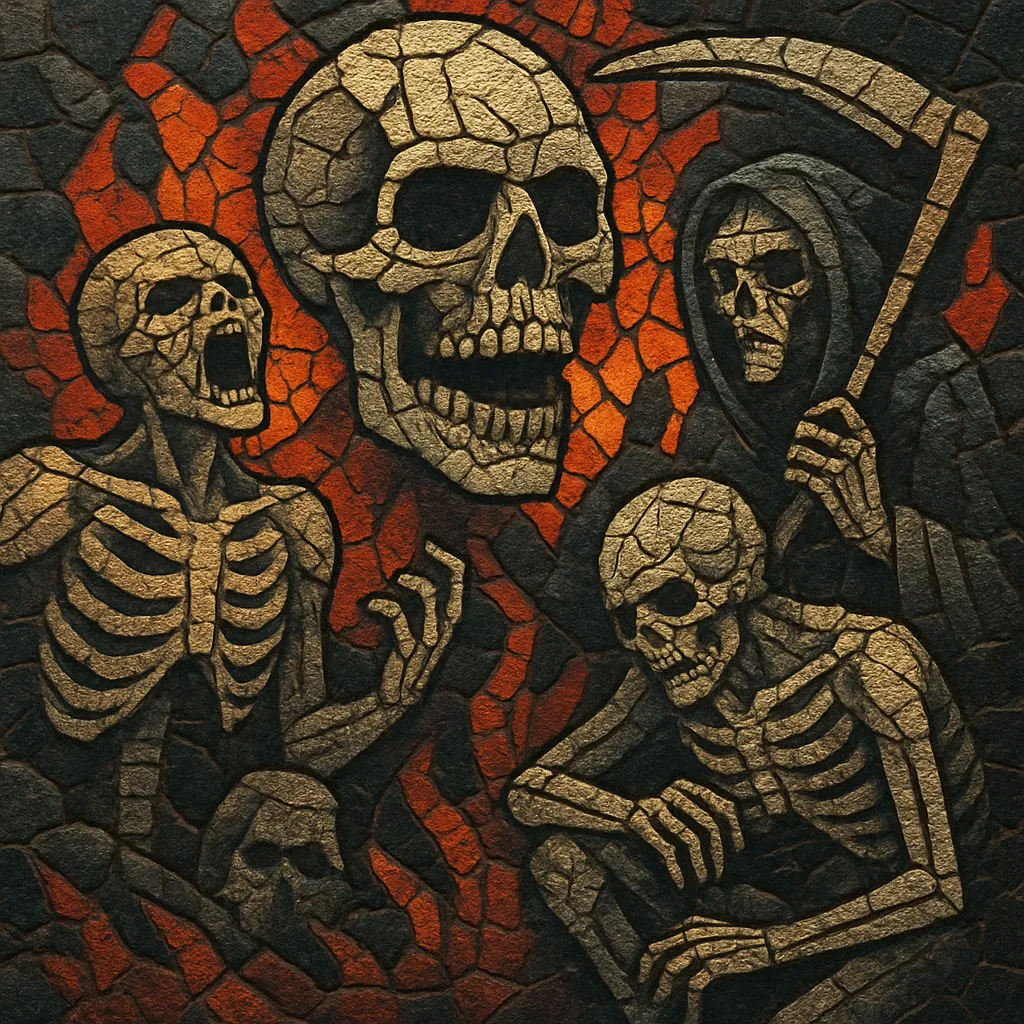
Deathcore is an extreme metal style that fuses the down-tuned brutality and blast-beat intensity of death metal with the breakdown-heavy grooves and rhythmic phrasing of metalcore and hardcore.

Hallmarks include tremolo‑picked and palm‑muted riffing on low-tuned 6–8 string guitars, double‑kick and blast‑beat‑focused drumming (including gravity blasts and china‑accented patterns), and a vocal approach centered on guttural growls, tunnel throats, highs, and occasional pig‑squeals. Songs commonly pivot around massive, syncopated breakdowns that contrast with faster death‑metal passages.

The style crystallized in the early 2000s and rose to prominence in the mid‑2000s, propelled by DIY touring circuits and social media platforms that amplified heavy music scenes.


Sources: Spotify, Wikipedia, Discogs, RYM, MB, user feedback and other online sources

History

Roots in the 1990s

Experiments at the edges of metal and hardcore in the 1990s—particularly death metal’s extremity and metalcore/hardcore’s breakdown-centric structures—set the stage for deathcore. Bands in deathgrind and brutal death metal demonstrated the necessary speed and vocal depth, while metalcore refined the art of the groove-laden breakdown.

Early 2000s Emergence

In the early 2000s, a distinct fusion coalesced: death-metal riffing and blast beats collided with metalcore’s half‑time, syncopated drops. Online platforms (message boards, early social media), local all‑ages venues, and DIY labels rapidly circulated demos and EPs, helping the sound spread across the United States (with parallel activity in Canada and later Australia and Europe).

Mid-to-Late 2000s Rise

By the mid‑2000s, deathcore had a clear identity: low tunings, relentless blasts, and landmark breakdowns. Touring packages and festival slots exposed wider metal and hardcore audiences to the style, while producers in heavy music refined a tight, modern mix aesthetic—sample‑reinforced drums, reamped guitars, and aggressive limiting—to emphasize impact.

2010s Diversification

The 2010s saw substyle branching: progressive/technical deathcore introduced odd meters and intricate harmony; blackened deathcore layered tremolo and dissonance with dark atmospherics; symphonic deathcore integrated orchestral textures and cinematic grandeur; and downtempo deathcore slowed tempos to emphasize crushing, low‑end breakdowns.

2020s and Beyond

Deathcore remains a global, internet-native heavy style. Viral performance clips, playthroughs, and short‑form content continue to fuel discovery, while modern releases blend extreme metal vocabulary with contemporary production and occasional electronic, cinematic, or djent-adjacent elements.

How to make a track in this genre

Tuning, Harmony, and Riffing
•   Use very low tunings (e.g., Drop B/A/G on 6–7–8 strings). Favor chromaticism, minor seconds, tritones, and dissonant clusters. •   Alternate tremolo‑picked death‑metal lines with palm‑muted, syncopated chugs. Incorporate slides, scrapes, and artificial harmonics for extra bite. •   Outline chords via stacked fourths or power‑chord movement; reserve brief modal or diminished runs for transitions.
Rhythm and Groove
•   Drums: combine sustained blast beats (traditional, bomb, and gravity blasts) with double‑kick bursts. Use the china cymbal to telegraph breakdowns. •   Breakdowns: write half‑time, syncopated figures (often 70–100 BPM feel). Design memorable accents and rests; let bass and kick drum lock tightly with guitar chugs.
Vocals and Lyrics
•   Employ layered extreme vocals: low gutturals, mid growls, and high screams; tasteful pig‑squeals where appropriate. •   Lyric themes often explore existential dread, social decay, personal struggle, or horror motifs—keep imagery evocative but purposeful.
Structure and Arrangement
•   Common flow: Intro (tease motif) → fast death‑metal section → pre‑breakdown build (drum fills, pick‑scrapes, dissonant stabs) → centerpiece breakdown → secondary blast/run → final, slower “cataclysm” breakdown or outro. •   Add contrast with brief cleans or atmospheric interludes (pads, choirs) if aiming for symphonic/modern variants.
Sound Design and Production
•   Tighten guitars with high‑gain amps/amp sims, mids carefully managed; quad‑tracking for width. Gate chugs precisely. •   Drum production often uses sample augmentation for consistency and punch; parallel compression on the kit and a clipped master bus for density. •   Bass: distorted midrange to articulate chugs under the low‑end weight.
Performance and Practice
•   Tight down‑picking endurance and right‑hand muting are crucial. Rehearse click‑locked transitions into breakdowns. •   Drummers should practice blast endurance, ankle‑up double‑kick technique, and consistent cymbal articulation to frame grooves. •   Vocalists should prioritize safe extreme‑vocal technique and hydration; layer takes for power without sacrificing clarity.

Main artists

Top tracks

Locked
Share your favorite track to unlock other users’ top tracks

Upcoming concerts

in this genre
Influenced by
Has influenced

Download our mobile app

Get the Melodigging app and start digging for new genres on the go
© 2026 Melodigging
Melodding was created as a tribute to Every Noise at Once, which inspired us to help curious minds keep digging into music's ever-evolving genres.
Buy me a coffee for Melodigging