Genres
Artists
Albums
Make Music
Sign in
Sign in
Artists
Fort Thunder Scene
Artists
Fort Thunder Scene
Black Dice
2002–2005
·
3 albums
Listen
1
/5
Genres
New Weird America
New Weird America (NWA) is a loosely defined early‑2000s U.S. movement that revived and mutated psychedelic and folk traditions through a DIY, experimental lens. It blends psych folk, free folk, drone, and outsider Americana with lo‑fi recording aesthetics, extended improvisation, and a surreal, pastoral sensibility. Rather than a strict genre, NWA describes a network of artists, collectives, and small labels who favored open tunings and acoustic timbres alongside noise, field recordings, tape hiss, and communal performance practices. The results range from intimate, childlike songs to sprawling trance‑drone ritual, all united by a fascination with the “old, weird” folk imaginary filtered through contemporary indie and experimental cultures.
Discover
Listen
Fort Thunder Scene
The Fort Thunder scene refers to a mid/late‑1990s DIY art‑and‑noise community centered around the Fort Thunder warehouse in Providence, Rhode Island. It fused blistering noise rock, no wave abrasion, hardcore punk energy, and comic‑book/screen‑print visual culture into immersive floor‑level performances. Musically, it favored maximal volume, distorted bass guitar (often the only stringed instrument), hyperactive polyrhythmic drumming, clattering electronics, contact‑miked objects, and improvised/through‑composed structures that prized texture and momentum over conventional harmony. Aesthetically, shows were carnivalesque: masks and costumes, hand‑silkscreened posters, projections, and sculptural set pieces turned concerts into total environments. Although place‑specific, the Fort Thunder scene became a shorthand for a raw, ecstatic, visual‑arts‑driven strain of American noise/experimental rock that spread via touring, zines, tapes, and labels like Load Records.
Discover
Listen
Noise Rock
Noise rock is a subgenre of rock that deliberately embraces distortion, feedback, dissonance, and abrasive textures as primary musical materials rather than mere effects. It prioritizes timbre, volume, and sonic density over conventional melody and harmony, often using nonstandard tunings, prepared or detuned guitars, and extended techniques to generate harsh overtones and sheets of sound. Rhythm sections tend to be driving and repetitive, anchoring the chaos with motorik pulses, lurching grooves, or pummeling, minimal patterns. Vocals range from spoken and murmured to shouted and cathartic, with lyrics that skew cryptic, confrontational, or surreal. Aesthetically, noise rock traces a line from punk’s anti-virtuosity and DIY ethos through no wave’s iconoclasm and the avant-garde’s interest in sound-as-sound, yielding music that can be physically intense, psychologically unsettling, and artistically exploratory.
Discover
Listen
Neo-Psychedelia
Neo-psychedelia is a late-20th-century revival and reinvention of 1960s psychedelic music aesthetics, filtered through post-punk, indie, and experimental sensibilities. It emphasizes hypnotic textures, droning guitars, heavy use of effects (reverb, delay, phasing), analogue organs/synths, and dreamlike or surreal lyricism. Rhythms may draw from motorik and other steady, trance-inducing grooves, while harmony often favors modal colors and repetitive vamps. The style ranges from jangly, melodic songs to dense, feedback-laden soundscapes, and has been highly influential on dream pop, shoegaze, Britpop-adjacent scenes, and modern psych rock.
Discover
Listen
Drone
Drone is a minimalist music genre defined by sustained tones, long durations, and extremely gradual change. Harmony is often static or centered on a single fundamental with subtle overtone shifts, while rhythm tends toward stasis or very slow pulses. Sound sources range from acoustic instruments (e.g., strings, organ, bagpipes, shruti box, tambura) to electronics (sine waves, oscillators, feedback, tape loops, and later digital synthesis and processing). Many composers favor just intonation or other alternative tuning systems to emphasize beating patterns, psychoacoustic effects, and the internal life of sound. Although drone as a sonic principle is ancient and global, the modern experimental genre cohered in the 1960s through the New York minimalists and related avant‑garde circles, then spread into ambient, experimental, and heavy music scenes. The focus is less on melody and more on timbre, resonance, and the phenomenology of listening.
Discover
Listen
Experimental
Experimental music is an umbrella term for practices that prioritize exploration, process, and discovery over adherence to established genre norms. It embraces new sound sources, nonstandard tuning systems, indeterminacy and chance operations, graphic and open-form scores, extended techniques, and technology-led sound design (tape, electronics, computers, and live processing). Rather than a single style, it is a methodology and ethos: testing hypotheses about sound, structure, and performance, often blurring boundaries between composition, improvisation, sound art, and performance art. Listeners can expect unfamiliar timbres, unusual forms, and an emphasis on how music is made as much as the resulting sound.
Discover
Listen
Experimental Electronic
Experimental electronic is an umbrella term for electronic music that foregrounds exploration and innovation over convention. It treats the studio, computer, and synthesizer as laboratories, using techniques such as tape manipulation, modular and software synthesis, feedback systems, granular and spectral processing, algorithmic/generative composition, circuit-bending, and field recording. Rather than regular song forms or dancefloor functionality, it prioritizes timbre, texture, space, and process. Structures may be nonlinear or open-form; harmony is often non-functional or drone-based; rhythm can be free, irregular, or machine-deconstructed. The style overlaps with electroacoustic music, sound art, industrial, ambient, and noise while continually interfacing with club culture and contemporary art contexts.
Discover
Listen
Avant-Garde
Avant-garde music is an umbrella term for boundary-pushing practices that challenge prevailing norms of harmony, rhythm, timbre, form, and performance. It privileges experimentation, conceptual rigor, and a willingness to reframe what counts as music at all. Historically tied to early 20th‑century artistic modernism, avant-garde music introduced atonality, the emancipation of noise, and new forms of notation and process. It embraces indeterminacy, extended techniques, electronics, spatialization, and multimedia performance, treating sound as material to be sculpted, questioned, and reinvented.
Discover
Listen
Electronic
Electronic is a broad umbrella genre defined by the primary use of electronically generated or electronically processed sound. It encompasses music made with synthesizers, drum machines, samplers, computers, and studio/tape techniques, as well as electroacoustic manipulation of recorded or synthetic sources. The genre ranges from academic and experimental traditions to popular and dance-oriented forms. While its sonic palette is rooted in electricity and circuitry, its aesthetics span minimal and textural explorations, structured song forms, and beat-driven club permutations. Electronic emphasizes sound design, timbre, and studio-as-instrument practices as much as melody and harmony.
Discover
Listen
Show all 9 genres
Albums
2005
1
/5
Broken Ear Record
Black Dice
Fort Thunder Scene
2004
1
/5
Creature Comforts
Black Dice
Fort Thunder Scene
2002
1
/5
Beaches and Canyons
Black Dice
Fort Thunder Scene
Similar artists
2
/5
Prurient
Industrial
Noise
Fort Thunder Scene
3
/5
Swans
Experimental Rock
Post-Rock
No Wave
2
/5
Merzbow
Japanoise
Noise
Electronic
2
/5
Ramleh
Experimental
Industrial
Noise
1
/5
Glenn Branca
Totalism
Avant-Garde
Experimental
1
/5
Keiji Haino
Japanoise
Noise
Avant-Garde
1
/5
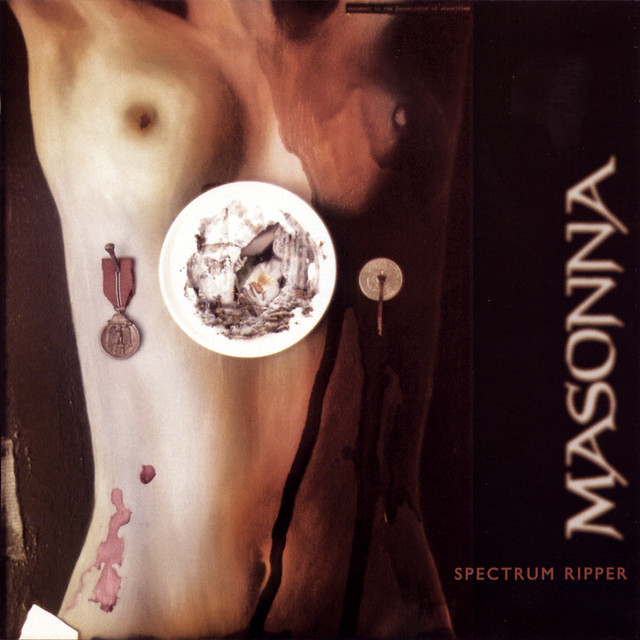
Masonna
Noise
Japanoise
Harsh Noise
1
/5
Wolf Eyes
Avant-Garde
Drone
Experimental
1
/5
Rhys Chatham
Totalism
Avant-Garde
Drone
1
/5
Daniel Menche
Avant-Garde
Dark Ambient
Drone
Download our mobile app
Get the Melodigging app and start digging for new genres on the go
Download on the App Store
Get it on Google Play
© 2026 Melodigging
Give feedback
Legal
Melodding was created as a tribute to
Every Noise at Once
, which inspired us to help curious minds keep digging into music's ever-evolving genres.