Genres
Artists
Albums
Make Music
Sign in
Sign in
Artists
Ambient
Artists
Ambient
Ancestral Voices
2025
·
1 album
Listen
1
/5
Genres
Drumstep
Drumstep is a hybrid of drum and bass and dubstep that keeps the high energy and bass design of dubstep while adopting the tempo and rhythmic vocabulary of drum and bass. Typically written around 170–176 BPM but felt in halftime, drumstep places the snare on beat 3, creating a loping, head-nodding feel while preserving the pace and tension of fast DnB. Sound design favors aggressive midrange basses (reese variations, growls, wubs), heavy sub-bass, crisp snares, and densely syncopated hi-hats and percussion. In DJ contexts, drumstep bridges 140 BPM dubstep and 174 BPM drum and bass, allowing seamless genre-switching within high-energy sets. It’s punchy, festival-ready, and often minimal melodically, focusing on impact, groove, and sound design fireworks.
Discover
Listen
Halftime
Halftime is a bass‑music subgenre built around drum and bass’ 170 BPM engine but written with a hip‑hop/trap‑like half‑time groove. Producers either write at 160–174 BPM with the snare landing on beat 3, or at 80–90 BPM and double-time the sound design and phrasing. The style emphasizes subweight, sparse but heavy drums, and intricate, neuro‑influenced sound design. It borrows the swing, swagger, and negative space of hip hop while retaining the sound-design complexity of drum and bass and dubstep. The result is a head‑nod, low‑slung feel that still translates powerfully on big systems.
Discover
Listen
Focus Trance
Focus trance is a modern, low‑drama branch of trance tailored for concentration, study, coding, and deep work. It borrows trance’s hypnotic pulse and long-form structure, but softens the edges: fewer big drops, restrained builds, minimal vocals, and a narrow dynamic range that lets listeners sink into a steady flow state. Sonically, it tends to sit between ambient trance and progressive trance: warm pads, subtly modulated arps, muted kicks and basslines that groove without dominating, and gently evolving textures. Most tracks avoid abrupt transitions, extreme high‑frequency content, or dense mid‑range clutter, making them ideal as a musical backdrop that sustains attention over long sessions.
Discover
Listen
New Isolationism
New isolationism is a contemporary strain of isolationist ambient and post-industrial minimalism that emerged in the 2010s, particularly around Scandinavian experimental labels and studios. It foregrounds intimate, close-mic’d sound, negative space, and a quiet-but-present noise floor; its pieces feel both internal and architectural, like rooms built from reverb tails, tape hiss, and soft electronics. Sonically, the style blends glacial drones, fragile chamber timbres (strings, organ, piano), lo‑fi electronics, and field recordings into stark, slow-evolving tableaux. Melodic information is sparse—often only a few tones or gestures—while rhythm is either absent or reduced to distant pulses, heartbeats, or mechanical cycles. Vocals, when they appear, are murmured, diaristic, or abstracted by pitch and time manipulation. Aesthetically, new isolationism is post‑internet and diaristic: it captures solitude, memory, and dislocation with a palette that feels personal yet estranged, drawing as much from contemporary gallery sound practice as from classic dark ambient.
Discover
Listen
Autonomic
Autonomic is a late‑2000s strand of drum and bass built around sparse, machine‑like rhythms at 170 BPM that feel cool, glassy, and restrained rather than maximalist. Emerging from the UK, it pares back breakbeats and bass pressure to highlight negative space, sleek sound design, and emotive pads—often borrowing the cold, minimal sensibilities of mid‑2000s UK dubstep, ambient, techno, and IDM. The result is a cinematic, nocturnal mood: dance‑floor compatible in pulse, but introspective in tone, prioritizing atmosphere, texture, and futurist melancholy over aggression.
Discover
Listen
Jungle
Jungle is a UK-born electronic music style defined by rapid, chopped breakbeats, heavy sub‑bass, and a deep dialogue with Jamaican sound‑system culture. Typical tempos sit around 155–170 BPM, with intensely syncopated drum programming that flips funk and jazz breaks (especially the Amen, Think, and Apache breaks) into kinetic, polyrhythmic mosaics. Its sound palette blends dub’s bass weight and echo, reggae and dancehall vocal toasting, hip‑hop sampling aesthetics, and the rave/hardcore continuum’s rave stabs and euphoria. In contemporary usage, jungle is often grouped under the broader umbrella of drum and bass; historically it directly preceded and seeded mid‑1990s drum and bass and is frequently treated as an early substyle of DnB.
Discover
Listen
Neurofunk
Neurofunk is a dark, technically intricate subgenre of drum and bass known for its surgically designed basslines, tense atmospheres, and highly engineered rhythm sections. Sitting around 170–175 BPM, it blends the relentless drive of techstep with futuristic sound design and a funk-influenced sense of groove. Producers sculpt evolving "neuro" basses using heavy resampling, modulation, distortion, and filtering, then weave them through precision-cut breakbeats and cinematic FX. The result is a high-pressure, sci‑fi aesthetic that feels both mechanical and organic—aggressive yet danceable, clinical yet funk-rooted.
Discover
Listen
Dark Ambient
Dark ambient is a post‑industrial subgenre that coalesced in the mid‑1980s, drawing primarily on ambient music but shifting its focus toward ominous, subterranean space and timbre. It is characterized by long, low‑frequency drones; dissonant or microtonal overtones; and an enveloping, gloomy or catacomb‑like atmosphere. While largely electronic (synthesizers, samplers, tape and digital processing), artists frequently incorporate field recordings, contact‑mic textures, bowed metal, gongs, and fragments of traditional instruments captured with semi‑acoustic techniques and then heavily processed. Melody and pulse are minimized; instead the music emphasizes immersive sound design, psychoacoustic detail, and slowly evolving textures that evoke dread, awe, and isolation.
Discover
Listen
Ambient
Ambient is a form of electronic and electroacoustic music that prioritizes tone, atmosphere, and texture over conventional song structures and rhythmic drive. It typically features slow-moving harmonies, sustained drones, gentle timbral shifts, and extensive use of space and silence. Rather than drawing attention to itself through hooks or beats, ambient is designed to be as ignorable as it is interesting, rewarding both background listening and focused immersion. Artists often employ synthesizers, samplers, tape loops, field recordings, and subtle acoustic instruments, with reverb and delay creating a sense of place. Substyles range from luminous, consonant soundscapes to darker, more dissonant atmospheres.
Discover
Listen
Drone
Drone is a minimalist music genre defined by sustained tones, long durations, and extremely gradual change. Harmony is often static or centered on a single fundamental with subtle overtone shifts, while rhythm tends toward stasis or very slow pulses. Sound sources range from acoustic instruments (e.g., strings, organ, bagpipes, shruti box, tambura) to electronics (sine waves, oscillators, feedback, tape loops, and later digital synthesis and processing). Many composers favor just intonation or other alternative tuning systems to emphasize beating patterns, psychoacoustic effects, and the internal life of sound. Although drone as a sonic principle is ancient and global, the modern experimental genre cohered in the 1960s through the New York minimalists and related avant‑garde circles, then spread into ambient, experimental, and heavy music scenes. The focus is less on melody and more on timbre, resonance, and the phenomenology of listening.
Discover
Listen
Experimental
Experimental music is an umbrella term for practices that prioritize exploration, process, and discovery over adherence to established genre norms. It embraces new sound sources, nonstandard tuning systems, indeterminacy and chance operations, graphic and open-form scores, extended techniques, and technology-led sound design (tape, electronics, computers, and live processing). Rather than a single style, it is a methodology and ethos: testing hypotheses about sound, structure, and performance, often blurring boundaries between composition, improvisation, sound art, and performance art. Listeners can expect unfamiliar timbres, unusual forms, and an emphasis on how music is made as much as the resulting sound.
Discover
Listen
Experimental Electronic
Experimental electronic is an umbrella term for electronic music that foregrounds exploration and innovation over convention. It treats the studio, computer, and synthesizer as laboratories, using techniques such as tape manipulation, modular and software synthesis, feedback systems, granular and spectral processing, algorithmic/generative composition, circuit-bending, and field recording. Rather than regular song forms or dancefloor functionality, it prioritizes timbre, texture, space, and process. Structures may be nonlinear or open-form; harmony is often non-functional or drone-based; rhythm can be free, irregular, or machine-deconstructed. The style overlaps with electroacoustic music, sound art, industrial, ambient, and noise while continually interfacing with club culture and contemporary art contexts.
Discover
Listen
Show all 12 genres
Albums
2025
1
/5
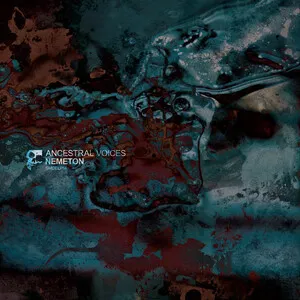
Nemeton
Ancestral Voices
Autonomic
Similar artists
2
/5
ASC
Ambient
Drum And Bass
Minimal Drum And Bass
3
/5
Alva Noto
Experimental
Glitch
Ambient
3
/5
Tim Hecker
Ambient
Drone
Experimental
3
/5
William Basinski
Tape Music
Ambient
Sound Art
2
/5
Steve Roach
Ambient
Electronic
Space Ambient
2
/5
Kali Malone
Drone
Minimalism
Holy Minimalism
2
/5
Caterina Barbieri
Ambient
Dark Ambient
Drone
2
/5
Alessandro Cortini
Ambient
Dark Ambient
Drone
2
/5
Abul Mogard
Ambient
Drone
Dark Ambient
2
/5
Lawrence English
Field Recording
Ambient
Drone
Download our mobile app
Get the Melodigging app and start digging for new genres on the go
Download on the App Store
Get it on Google Play
© 2026 Melodigging
Give feedback
Legal
Melodding was created as a tribute to
Every Noise at Once
, which inspired us to help curious minds keep digging into music's ever-evolving genres.