Genres
Artists
Albums
Make Music
Sign in
Sign in
Artists
Ambient
Artists
Ambient
輕描淡寫
2017–2020
·
2 albums
Listen
2
/5
Genres
Barber Beats
Barber beats is a vaporwave-adjacent microgenre characterized by slowed, loop-based instrumentals built from lounge, smooth jazz, and easy-listening samples. Producers emphasize a soft, cushiony drum groove, heavy time-stretching, subtle pitch shifting, and warm, dusty textures that evoke waiting rooms, lobbies, and late‑night cable atmospheres. Typical tracks sit around 85–105 BPM, lean on mellow chords, brushed snares or gentle drum-machine kits, and favor tasteful filtering, vinyl crackle, and roomy reverb. The result is hypnotic, low-stakes background music that feels both nostalgic and liminal—less overtly ironic than classic vaporwave, yet still rooted in sample-based moodcraft and retro corporate aesthetics.
Discover
Listen
Broken Transmission
Broken transmission is a vaporwave-adjacent microgenre built from fragmented, channel-surfing collages of analog broadcast ephemera. Producers splice together tiny shards of TV idents, news stingers, commercials, interstitial music, and dead air, emphasizing tape hiss, static, dropouts, and tuning noise as musical material. Often beatless or only loosely pulsed, tracks unfold like late-night flipping through channels: abrupt cuts, fleeting jingles, station sign‑offs, and half-heard voiceovers that dissolve into snow. The result is a liminal, hauntological mood—nostalgia filtered through the mechanical errors and material decay of VHS, cable boxes, and broadcast tape. Where classic vaporwave slows and loops pop smoothness, broken transmission foregrounds the texture of the medium itself. It treats errors, transitions, and broadcast artifacts as hooks, creating an uncanny documentary of mediated memory.
Discover
Listen
Vapor
Vapor is an internet-born microgenre of atmospheric, half-time electronic trap that emphasizes space, texture, and emotive melody over aggression or technical flash. Its sonic palette leans on airy pads, crystalline bell and pluck leads, misty reverb tails, and round, subby 808s. Drums typically follow a modern trap grid at halftime, with sparse, syncopated hats and gentle percussion instead of hard-edged snares. Vocals, if present at all, are usually textural—chopped phrases, distant calls, or heavily processed one-shots—serving ambience rather than lyrical narrative. The result is a dreamy, nocturnal mood that sits between cloud rap, vaporwave aesthetics, and the UK-led "wave" scene: cinematic yet minimal, melancholic yet weightless, and designed as much for headphones as for late-night club systems.
Discover
Listen
Dreampunk
Dreampunk is a vaporwave-adjacent strain of ambient music that evokes rain-slicked, neon-lit cityscapes and late-night solitude. It favors widescreen pads, lingering reverb, and soft-focus textures that feel cinematic yet intimate, as if overheard from an apartment window above an endless metropolis. The style often incorporates field recordings—rain, traffic, station announcements—alongside subdued downtempo rhythms or entirely beatless passages. Harmonies tend to be lush but restrained, leaning on suspended tones and minor 7th colorings that drift rather than resolve. The result is a dreamlike, nocturnal mood that sits between ambient, vaporwave, and cyberpunk film score aesthetics.
Discover
Listen
Slushwave
Slushwave is a vaporwave-derived microgenre that stretches samples and synth textures into foggy, glacial soundscapes. Tracks are typically very slow, drenched in reverb and delay, and layered with tape hiss, vinyl crackle, and other lo‑fi artifacts to create an enveloping, dreamlike ambience. Rather than the chopped, ironic collage associated with early vaporwave, slushwave favors long pads, smeared chords, and minimal or absent percussion. When drums appear, they are subdued and distant. The genre often draws from new age, city pop, smooth jazz, and soft adult‑contemporary sources, pitching them down and elongating them into warm, melancholic drones that evoke late‑night memory, urban solitude, and liminal spaces.
Discover
Listen
Vaporwave
Vaporwave is an internet-born microgenre and visual aesthetic that repurposes late‑20th‑century commercial sound—mu zak, smooth jazz, soft rock, synth‑pop, city pop, and corporate training tapes—into hazy, slowed, and looped collages. Its sound foregrounds pitched‑down samples, heavy reverb, tape hiss, vinyl crackle, and dreamy pads to evoke a mood between satire and sincere nostalgia. Beyond music, vaporwave is inseparable from its graphic language: Greco‑Roman busts, Japanese text, retro operating systems, chrome logos, palm trees, neon gradients, and “mall culture” architecture. The result feels like a haunted shopping mall: part critique of consumer capitalism, part wistful memory of media and retail spaces from the 1980s–2000s. Tempos are typically slow (roughly 60–90 BPM), harmonies tend toward lush seventh and extended chords, and rhythms range from barely perceptible loops to minimal, gated drum programming. Many tracks are short, vignette‑like studies in texture and mood.
Discover
Listen
Warm Drone
Warm drone is a microstyle of ambient/drone music that emphasizes soft, consonant, and enveloping sustained tones with a distinctly warm timbral character. Instead of the bleak or industrial textures often associated with classic drone, warm drone favors analog synth pads, bowed or layered guitars, organs and harmoniums, tape saturation, gentle hiss, and low‑noise field recordings. Harmonic movement is sparse and slow; micro-modulations, overtones, and gradual filtering provide the sense of motion rather than rhythm or melody. The result is an intimate, comforting soundfield that feels close, humane, and tactile—ideal for rest, reading, reflection, or late-night listening. It overlaps with modern sleep/meditation ambient but remains compositionally attentive to tone color, acoustic space, and long-form development.
Discover
Listen
Future Ambient
Future ambient is a contemporary strain of ambient music that blends classic beatless atmospheres with modern sound design and post-dubstep, IDM, and minimal techno sensibilities. It typically emphasizes wide, cinematic pads; granular and spectral processing; subtly evolving textures; and low-end sculpting borrowed from modern electronic production. Rhythms, when present, are usually subliminal—pulses, shuffled ghost-kicks, or distant, hazy percussion—so the music retains an essentially immersive, contemplative character while feeling unmistakably current. Compared with 1990s ambient techno and early drone, future ambient tends to be cleaner in its spatial imaging, more detailed in micro-sound events, and more influenced by contemporary mixing and mastering aesthetics developed for headphones and streaming.
Discover
Listen
New Isolationism
New isolationism is a contemporary strain of isolationist ambient and post-industrial minimalism that emerged in the 2010s, particularly around Scandinavian experimental labels and studios. It foregrounds intimate, close-mic’d sound, negative space, and a quiet-but-present noise floor; its pieces feel both internal and architectural, like rooms built from reverb tails, tape hiss, and soft electronics. Sonically, the style blends glacial drones, fragile chamber timbres (strings, organ, piano), lo‑fi electronics, and field recordings into stark, slow-evolving tableaux. Melodic information is sparse—often only a few tones or gestures—while rhythm is either absent or reduced to distant pulses, heartbeats, or mechanical cycles. Vocals, when they appear, are murmured, diaristic, or abstracted by pitch and time manipulation. Aesthetically, new isolationism is post‑internet and diaristic: it captures solitude, memory, and dislocation with a palette that feels personal yet estranged, drawing as much from contemporary gallery sound practice as from classic dark ambient.
Discover
Listen
Liminal Space
Liminal space is an internet-borne microgenre/aesthetic of ambient and vaporwave-adjacent music that aims to evoke the uncanny feeling of being in empty transitional places—deserted school corridors, unlit parking structures, late-night office lobbies, or closed shopping malls. Sonically, it blends hushed drones, diffuse synth pads, tape hiss, and faraway environmental noises with fragments of public-address announcements or detuned muzak. The harmonic language is static, unresolved, and memory-like, with slow fades, extreme reverberation, and time-stretching that flatten the sense of motion. The result is a dreamlike, nostalgic, and often eerie atmosphere that feels suspended between past and present, presence and absence.
Discover
Listen
Breakcore
Breakcore is a high-intensity electronic music genre built around hyper-edited breakbeats, extreme dynamics, and a deliberately transgressive, collage-like approach to sampling. It prioritizes rhythmic complexity, abrupt structural shifts, and heavy sound design over smooth continuity. Typical tempos range from 160 to 220 BPM (and beyond), with the Amen break, Think break, and other classic breakbeats chopped into micro-fragments, re-sequenced, and processed with distortion, compression, and glitch edits. The palette freely fuses elements from jungle and drum and bass with gabber kicks, industrial noise, classical or choral snippets, ragga vocals, metal guitar samples, and odd-meter patterns. More than a single “sound,” breakcore is a methodology: confrontational energy, maximalist editing, and anti-formalist structures that often subvert dance-music expectations. It thrives in DIY scenes, warehouse parties, and netlabel cultures, where forward-pushing experimentation and boundary-blurring sampling are central values.
Discover
Listen
Dark Ambient
Dark ambient is a post‑industrial subgenre that coalesced in the mid‑1980s, drawing primarily on ambient music but shifting its focus toward ominous, subterranean space and timbre. It is characterized by long, low‑frequency drones; dissonant or microtonal overtones; and an enveloping, gloomy or catacomb‑like atmosphere. While largely electronic (synthesizers, samplers, tape and digital processing), artists frequently incorporate field recordings, contact‑mic textures, bowed metal, gongs, and fragments of traditional instruments captured with semi‑acoustic techniques and then heavily processed. Melody and pulse are minimized; instead the music emphasizes immersive sound design, psychoacoustic detail, and slowly evolving textures that evoke dread, awe, and isolation.
Discover
Listen
Lo-Fi
Lo-fi is a music aesthetic and genre defined by an embrace of audible imperfections—tape hiss, clipping, room noise, distorted transients, and uneven performance—that would be treated as errors in high-fidelity recording. Emerging from the DIY ethos of American indie and punk scenes, lo-fi turns budget constraints and home-recording limitations into a signature sound. Songs are often intimate, direct, and unvarnished, prioritizing immediacy and personality over polish. Typical lo-fi recordings use 4-track cassette or similarly modest setups, simple chord progressions, and understated vocals, spanning rock, folk, pop, and experimental approaches while retaining a homemade warmth and nostalgic patina.
Discover
Listen
Ambient
Ambient is a form of electronic and electroacoustic music that prioritizes tone, atmosphere, and texture over conventional song structures and rhythmic drive. It typically features slow-moving harmonies, sustained drones, gentle timbral shifts, and extensive use of space and silence. Rather than drawing attention to itself through hooks or beats, ambient is designed to be as ignorable as it is interesting, rewarding both background listening and focused immersion. Artists often employ synthesizers, samplers, tape loops, field recordings, and subtle acoustic instruments, with reverb and delay creating a sense of place. Substyles range from luminous, consonant soundscapes to darker, more dissonant atmospheres.
Discover
Listen
Drone
Drone is a minimalist music genre defined by sustained tones, long durations, and extremely gradual change. Harmony is often static or centered on a single fundamental with subtle overtone shifts, while rhythm tends toward stasis or very slow pulses. Sound sources range from acoustic instruments (e.g., strings, organ, bagpipes, shruti box, tambura) to electronics (sine waves, oscillators, feedback, tape loops, and later digital synthesis and processing). Many composers favor just intonation or other alternative tuning systems to emphasize beating patterns, psychoacoustic effects, and the internal life of sound. Although drone as a sonic principle is ancient and global, the modern experimental genre cohered in the 1960s through the New York minimalists and related avant‑garde circles, then spread into ambient, experimental, and heavy music scenes. The focus is less on melody and more on timbre, resonance, and the phenomenology of listening.
Discover
Listen
Experimental
Experimental music is an umbrella term for practices that prioritize exploration, process, and discovery over adherence to established genre norms. It embraces new sound sources, nonstandard tuning systems, indeterminacy and chance operations, graphic and open-form scores, extended techniques, and technology-led sound design (tape, electronics, computers, and live processing). Rather than a single style, it is a methodology and ethos: testing hypotheses about sound, structure, and performance, often blurring boundaries between composition, improvisation, sound art, and performance art. Listeners can expect unfamiliar timbres, unusual forms, and an emphasis on how music is made as much as the resulting sound.
Discover
Listen
Electronic
Electronic is a broad umbrella genre defined by the primary use of electronically generated or electronically processed sound. It encompasses music made with synthesizers, drum machines, samplers, computers, and studio/tape techniques, as well as electroacoustic manipulation of recorded or synthetic sources. The genre ranges from academic and experimental traditions to popular and dance-oriented forms. While its sonic palette is rooted in electricity and circuitry, its aesthetics span minimal and textural explorations, structured song forms, and beat-driven club permutations. Electronic emphasizes sound design, timbre, and studio-as-instrument practices as much as melody and harmony.
Discover
Listen
Show all 17 genres
Albums
2020
2
/5
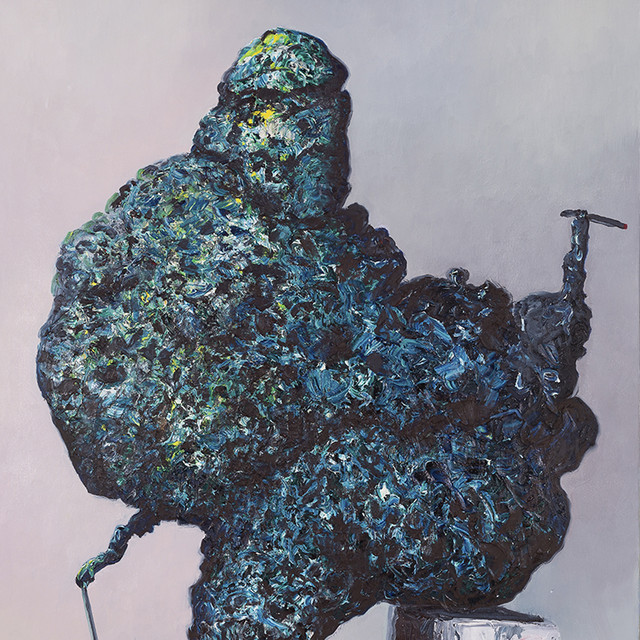
Yǎnlèi hán lèi 眼泪含泪
Understatement 輕描淡寫 & Kuroi Ame
Dreampunk
Ambient
Electronic
2017
3
/5
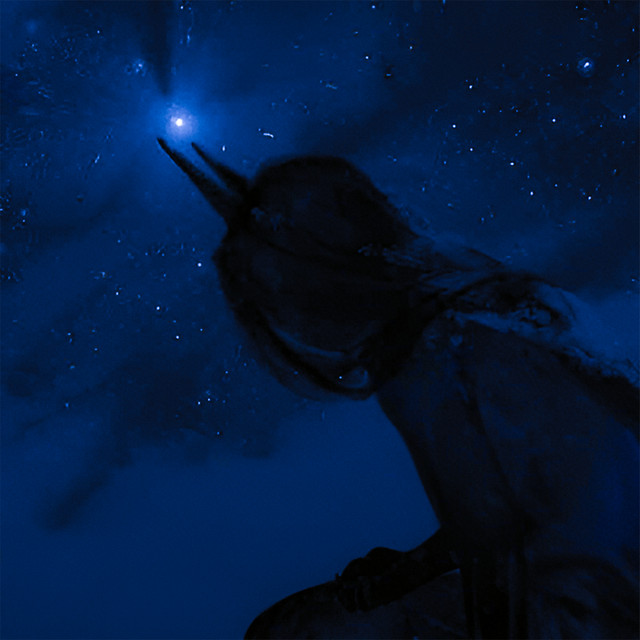
Small Circle 小圈子
Understatement 輕描淡寫
Dreampunk
Broken Transmission
Vapor
Similar artists
3
/5
t e l e p a t h テレパシー能力者
Slushwave
Vaporwave
Vapor
3
/5
c152
Synthwave
Ambient
Breakcore
3
/5
Oneohtrix Point Never
Hauntology
Plunderphonics
Ambient
3
/5
2814
Ambient
Slushwave
Vaporwave
4
/5
Øneheart
Hardwave
Ambient
Dark Ambient
4
/5
.diedlonely
Ambient
Dark Ambient
Ambient Lo-Fi
4
/5
Antent
Hardwave
Ambient
Dark Ambient
4
/5
my head is empty
Ambient
Dark Ambient
Ambient Lo-Fi
3
/5
The Caretaker
Hauntology
Electronic
Ambient
3
/5
a vow
Dark Ambient
Ambient
Ambient Lo-Fi
Download our mobile app
Get the Melodigging app and start digging for new genres on the go
Download on the App Store
Get it on Google Play
© 2026 Melodigging
Give feedback
Legal
Melodding was created as a tribute to
Every Noise at Once
, which inspired us to help curious minds keep digging into music's ever-evolving genres.