

Your digging level
Description
Vintage gospel refers to the earliest recorded forms of gospel music—roughly from the late 1920s through the 1960s—rooted in African American sacred traditions.
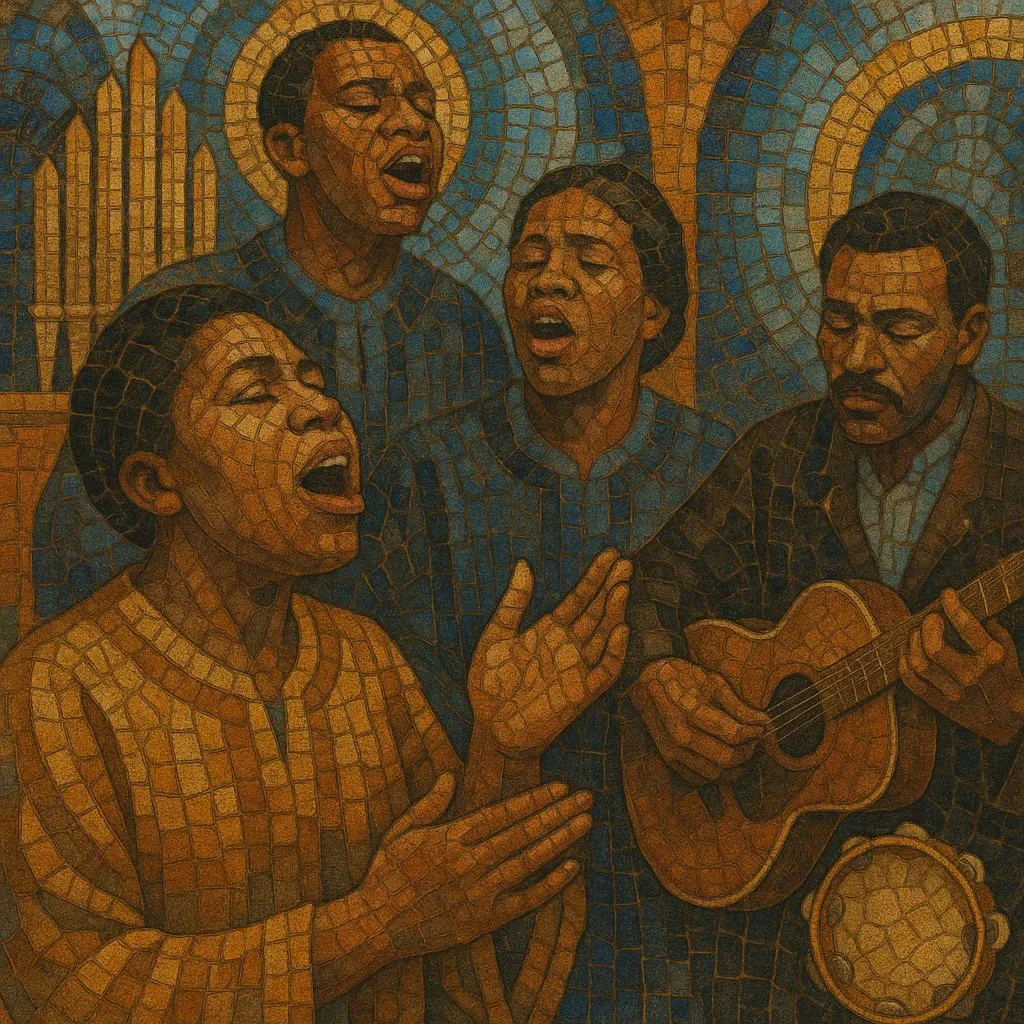
It is characterized by fervent, testifying vocals; call‑and‑response between lead and choir or quartet; handclaps and tambourine; and accompaniment on piano, pipe organ, or early electric guitar. Harmonies draw on hymns, spirituals, and blues inflections (blue notes, pentatonic figures, dominant‑7th sonorities), often culminating in ecstatic “shout” sections and key changes designed to lift the congregation.
Compared to later contemporary gospel, vintage gospel is rawer and more devotional in tone, with live‑in‑the‑room mono recordings, modest arrangements, and lyrical focus on praise, deliverance, endurance, and hope.
History
Gospel emerges from the convergence of spirituals, work songs, lined‑out hymns, and Holiness/Pentecostal worship. In the 1920s–30s, the Chicago church scene—especially under the influence of Thomas A. Dorsey—codifies a new, blues‑tinged sacred song tradition. Jubilee quartets that had sung spiritual repertory adapt to the new style, while storefront sanctified churches popularize tambourine‑and‑organ accompaniment.
Labels such as Okeh, Decca, Specialty, Savoy, and Peacock record a wave of quartets and soloists. Groups like The Soul Stirrers, The Dixie Hummingbirds, and The Golden Gate Quartet refine the tight, four‑part “lead‑tenor‑baritone‑bass” sound, featuring a virtuosic lead who testifies above rolling harmonies. Powerful soloists—Mahalia Jackson, Sister Rosetta Tharpe, Clara Ward—bring the style to national radio, concert halls, and 78‑rpm records.
By the late 1950s, gospel’s melismas, call‑and‑response, and ecstatic drive directly inform secular rhythm & blues, soul, and early rock & roll (e.g., Sam Cooke’s transition from The Soul Stirrers to pop stardom). Gospel concerts and artists play roles in the U.S. Civil Rights era, with repertoire that doubles as spiritual encouragement and social hope.
Although production aesthetics modernized after the 1960s, the vocal language, harmonic turns (e.g., gospel “walk‑ups”), and performance practice of vintage gospel remain foundational. Its DNA is audible in soul, southern soul, doo‑wop, rock and roll, and contemporary Christian styles, and continues to shape choir leading, quartet singing, and church musicianship today.



