Your digging level
Description
Thai folk rock blends Western rock instrumentation and song forms with Thai folk idioms, especially the regional styles luk thung and mor lam.
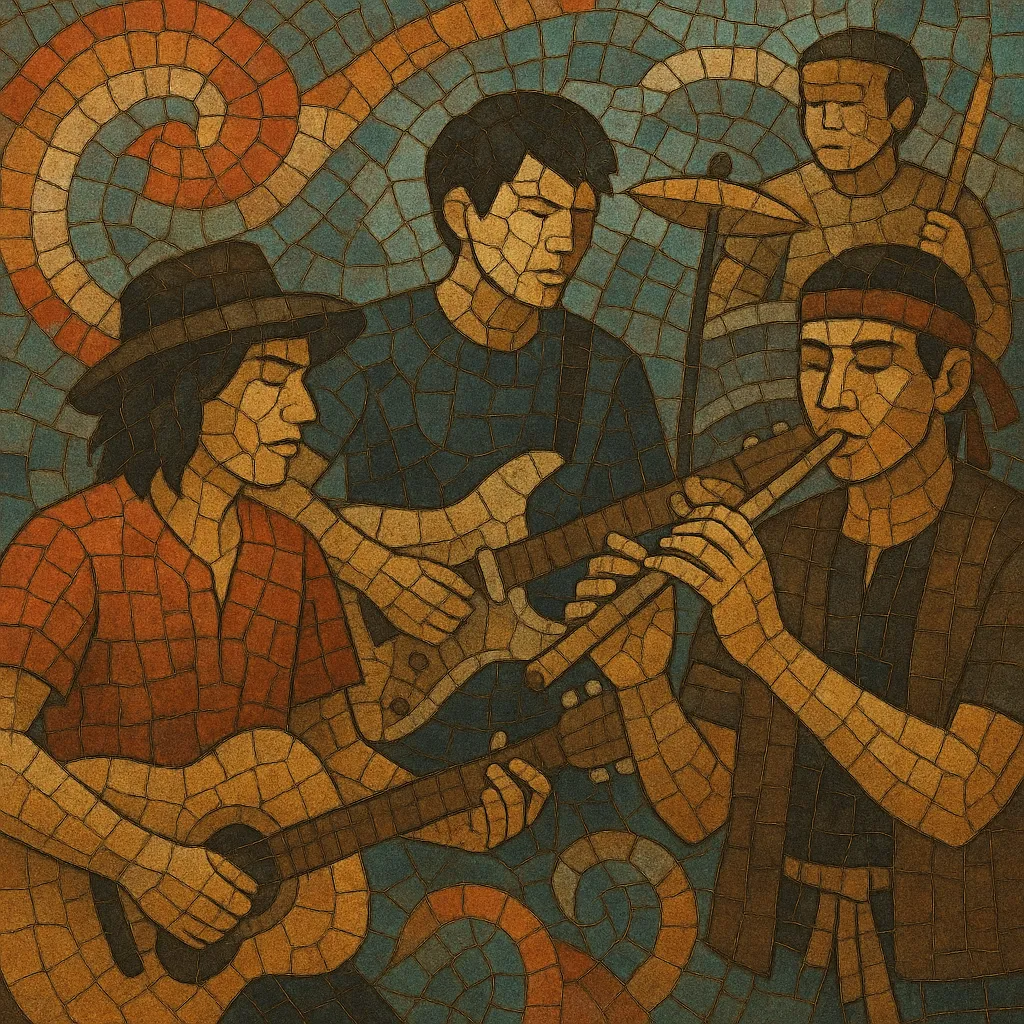
It is closely associated with the Songs for Life (phleng phuea chiwit) movement, whose socially engaged lyrics and acoustic-to-electric arrangements defined the genre’s voice. Typical tracks mix strummed acoustic guitar and harmonica with electric guitar, bass, and drum kit, while Thai instruments like khaen (mouth organ), phin (lute), and khlui (bamboo flute) color the texture. Vocal lines often follow Thai folk melodic contours and ornamentation, and lyrics emphasize everyday life, rural experience, and political consciousness.
History
US rock and folk arriving via radio, records, and GI circuits intersected with Thailand’s rich folk traditions in the late 1960s. By the early 1970s, student movements and protest culture catalyzed a Thai-specific folk-rock voice. The Songs for Life (phleng phuea chiwit) current—drawing on Bob Dylan–style folk, rock backbeats, and Thai storytelling—coalesced around artists such as Caravan (formed 1973), who fused acoustic guitars and harmonica with Thai modes and social themes.
The 1980s saw the sound amplified and electrified. Carabao carried the ethos to a mass audience, integrating mor lam rhythms, luk thung melodicism, and rock guitar leads. Bands like Hammer and singer-songwriters such as Pongsit Kamphee and Pongthep Kradonchamnan broadened the palette, keeping politically aware, narrative lyrics central while embracing stadium-ready arrangements.
As alternative and indie rock rose, Thai folk rock diversified. Some acts leaned rootsy and acoustic; others folded in reggae, blues, and psych influences. Legacy figures (e.g., members of Caravan and Carabao) continued to perform and record, while regional scenes—especially in Isan—sustained the blend of rock rhythm sections with khaen, phin, and local vocal styles.
Modern artists revisit the template with updated production, festival-ready dynamics, and renewed social commentary. The genre remains a touchstone for Thai popular music, informing indie scenes and live protest music while preserving the narrative, community-facing spirit that defined its beginnings.