

Your digging level
Description
Lao music refers to the traditional and popular musical practices of Laos and Lao-speaking regions. Traditional Lao music can be divided into classical and folk forms.
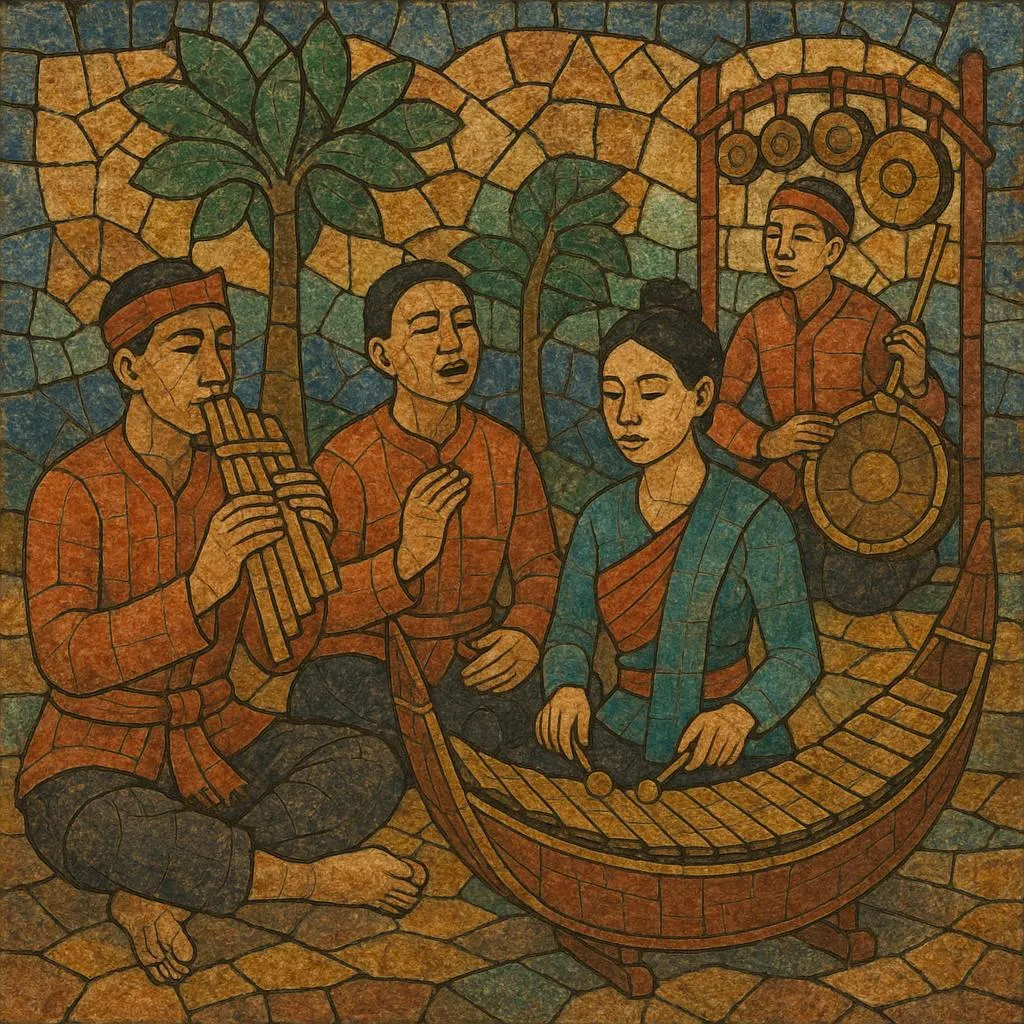
The classical stream coalesced in the royal courts of Lan Xang and later centers, where large "sep nyai" (loud) and smaller "sep noi" (soft) ensembles developed. These ensembles use gong circles, xylophones, oboes, drums, cymbals, and fiddles in tightly interlocking, cyclical textures related to neighboring Southeast Asian court traditions.
The folk stream is epitomized by lam/khap singing accompanied by the khene (a bamboo mouth organ). Lam ranges from narrative and improvised poetic dialogue to modern dance-band fusions; it features heterophonic textures, pentatonic-based melodies, flexible rhythm, and call-and-response. The khene’s continuous drone and rhythmic ostinati underpin melismatic vocals and vibrant community dance.
History
Lao musical identity formed within the Lan Xang kingdom (14th–18th centuries), where courtly ensembles and Buddhist ritual soundscapes took shape alongside village practices. Court ensembles—later known as sep nyai (loud, outdoors-ceremonial) and sep noi (soft, chamber)—share instrument families and colotomic cycles with Thai piphat and Khmer court traditions, while retaining local repertories and performance styles.
Parallel to courtly genres, rural and town life sustained lam/khap vocal traditions accompanied by the khene. Lam encompasses extemporized poetic dialogue (often between male and female singers), ballad storytelling, and ceremonial pieces. The khene’s drone-based, pentatonic patterns and hocket-like figuration create a hypnotic bed for ornamented singing. Over centuries, stylistic variants proliferated across Laos and into the Lao Isan region (northeast Thailand), where mor lam became a mass-popular form.
In the 19th–20th centuries, palace music continued in changed political contexts, while lam adapted to radio, cassettes, and stage performance. Urban dance bands added Western instruments (guitar, bass, drum set) to khene-led textures. In the Lao diaspora (especially Thailand, France, and the United States), ensembles preserved court repertories and refreshed lam with cosmopolitan influences.
Today, Lao music ranges from heritage ensembles in conservatories and festivals to pop fusions. Mor lam’s energetic offshoots (e.g., molam sing) and electric phin/khene bands demonstrate Lao musical DNA in regional and global scenes. Cultural institutions, community troupes, and recording artists continue to document and revitalize classical sep nyai/noi repertoires and living lam traditions.

