Your digging level

For this genre
0/8
🏆
Sign in, then listen to this genre to level up

Description

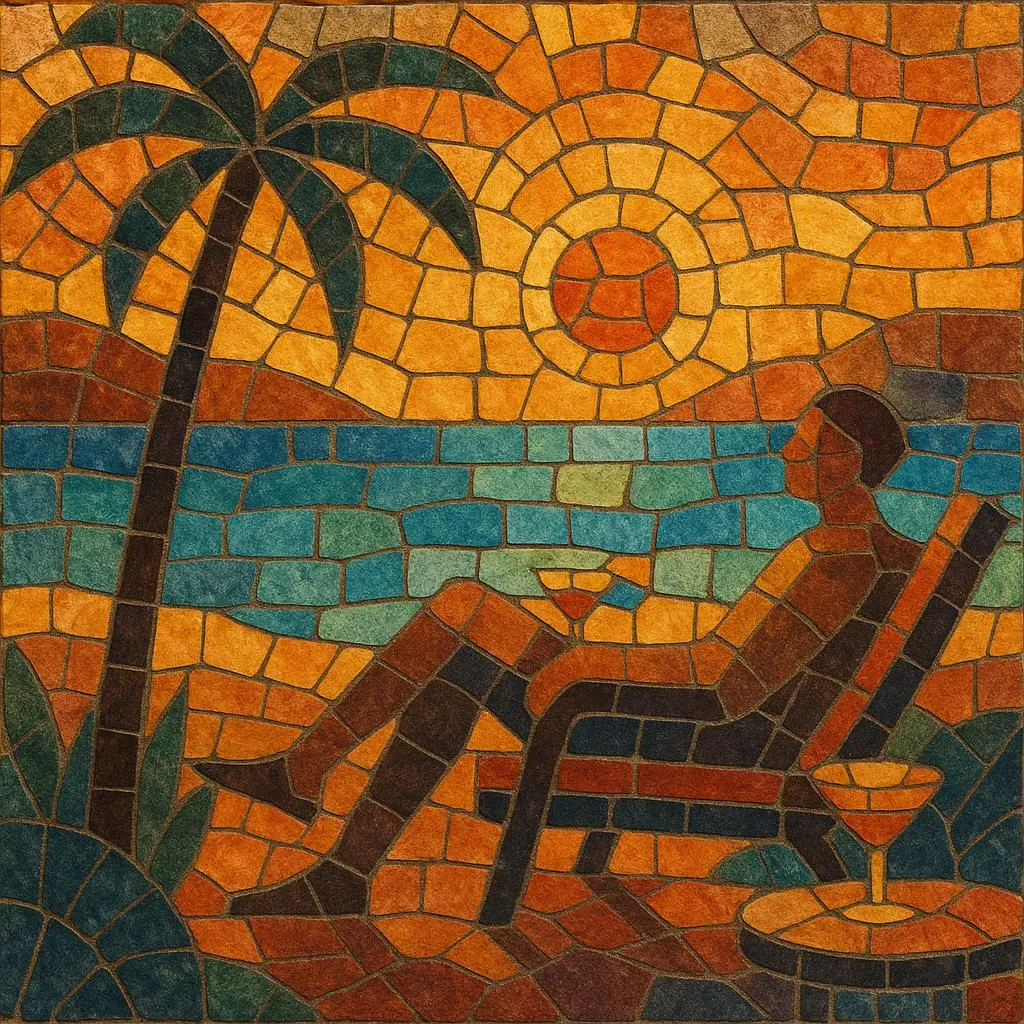
Sunset lounge is a laid‑back, polished blend of downtempo electronic music and modern lounge aesthetics that is designed for early‑evening listening.

It typically features slow-to-mid tempos, soft grooves, warm pads, gentle melodic hooks, and a “golden hour” sonic palette that sits between chillout, downtempo, balearic, and easy listening.

Compared to club‑forward dance genres, it prioritizes atmosphere, space, and a smooth, unobtrusive flow suitable for lounges, terraces, beach bars, and curated sunset sets.


Sources: Spotify, Wikipedia, Discogs, Rate Your Music, MusicBrainz, and other online sources

History

Roots and context (late 1980s–1990s)

“Sunset lounge” aesthetics grew out of the balearic / Ibiza listening culture, where DJs and selectors paired downtempo and mellow house-adjacent tracks with sunset hours rather than peak-time club energy.

Consolidation (late 1990s–2000s)

As chillout compilations, lounge sets, and downtempo production styles became widely distributed, the sound stabilized into a recognizable template: steady but relaxed beats, warm harmony, subtle jazz/soul touches, and cinematic ambience.

Modern usage (2010s–present)

In contemporary streaming and DJ culture, “sunset lounge” functions as a descriptive micro-genre/tag for music that balances electronic sophistication with a soothing, upscale mood—often crossing into nu jazz, ambient house, and boutique downtempo.

How to make a track in this genre

Tempo & groove
•   Aim for ~85–110 BPM for downtempo lean, or ~110–120 BPM if you want a gentle “chill house” pulse. •   Use relaxed, steady drum programming: soft kick, brushed/snappy snares, understated claps, and tasteful shakers. •   Add micro‑swing lightly; avoid aggressive syncopation or heavy drop structures.
Sound palette & instrumentation
•   Core layers: warm pads, mellow electric piano, soft plucks, restrained bass, and airy textures. •   Add color with light guitar licks, muted brass stabs, vibraphone/kalimba-like mallets, or subtle strings. •   Keep transients soft: choose rounded drum samples, gentle saturation, and minimal harshness above ~8–10 kHz.
Harmony & melody
•   Favor lush but simple progressions (e.g., extended minor7/major7 chords) with slow harmonic rhythm. •   Use melodic motifs that feel “floating”: stepwise motion, limited range, and long note values. •   If using jazz harmony, keep it elegant and uncluttered—extensions should decorate, not dominate.
Arrangement
•   Build in long arcs rather than big moments: intro texture → groove enters → melodic theme → variation → smooth outro. •   Use gradual automation (filters, reverb sends, pad movement) to imply the passing of time. •   Avoid sudden edits; use transitions like risers made from noise, reverse tails, or evolving ambience.
Vocals & lyrics (optional)
•   If vocals are present, they are usually sparse: short phrases, breathy toplines, or soulful ad‑libs. •   Lyrics tend to be impressionistic and mood-based (evening, distance, memory, calm) rather than narrative.
Mix & master approach
•   Prioritize warmth and depth: gentle compression, tape-like saturation, and wide but stable stereo imaging. •   Keep the low end controlled and smooth; avoid sub-heavy club emphasis. •   Use reverbs that suggest open air (plates/rooms with short-to-medium tails) and delays that fade into ambience.

Top tracks

Locked
Share your favorite track to unlock other users’ top tracks
Influenced by
Challenges
Digger Battle
Let's see who can find the best track in this genre

Download our mobile app

Get the Melodigging app and start digging for new genres on the go
© 2026 Melodigging
Melodding was created as a tribute to Every Noise at Once, which inspired us to help curious minds keep digging into music's ever-evolving genres.
Buy me a coffee for Melodigging