Your digging level
Description
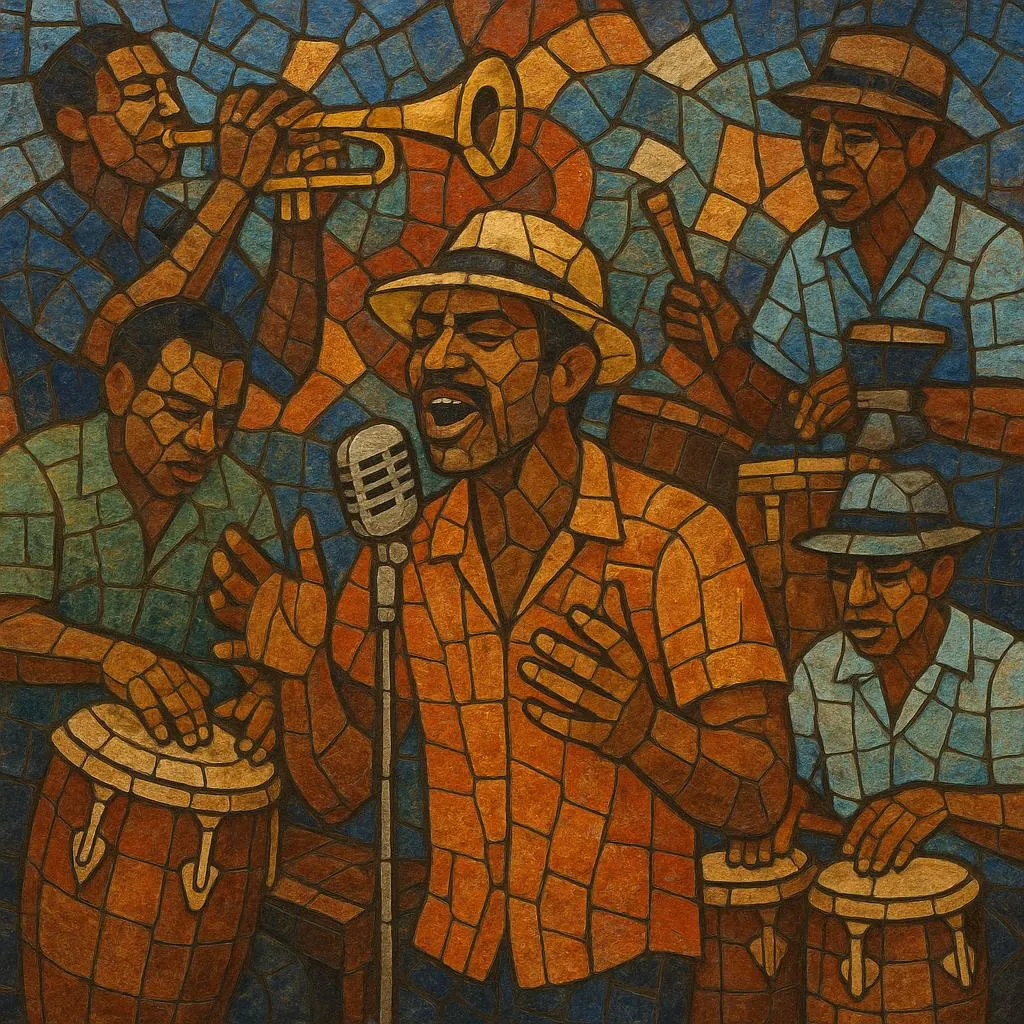
Sonero music centers on the art of the sonero: a lead singer who improvises witty, rhythmically agile call-and-response verses (soneos) over the coro–montuno section of Afro-Cuban dance forms such as son cubano and its salsa descendants.
A sonero works over the 3-2 or 2-3 clave, riding a layered groove of bass tumbao, piano (or tres) montunos, hand percussion (bongó moving to campana/cowbell, congas, timbales), and punchy horn mambos/moñas. Lyrically, soneos often riff on street life, romance, place, and crowd interaction, drawing on pregón (street hawker) and décima traditions. The effect is a high-energy, communal performance where the voice becomes another percussion instrument, steering dynamics and engaging dancers.
History
Sonero practice arises from the coro–montuno segments of son cubano, a style that urbanized in eastern and then western Cuba in the early 20th century. As son ensembles expanded (sextetos/septetos to conjuntos), the montuno vamp became a longer, improvisation-friendly canvas. Bandleaders like Arsenio Rodríguez (though a tresero, his arrangements) extended horn riffs, bass tumbaos, and piano montunos, giving the lead vocalist room to improvise soneos. Early Cuban greats such as Benny Moré and Abelardo Barroso embodied the improvising singer’s role that would later be called “sonero.”
Cuban innovations met Puerto Rican, Panamanian, Dominican, and Nuyorican scenes. In New York, the Fania era crystallized the modern sonero image: a charismatic, quick-witted vocalist sparring with coro and rhythm section. Ismael Rivera (Puerto Rico) was crowned “El Sonero Mayor” and strongly influenced Héctor Lavoe and contemporaries. Celia Cruz brought a towering Cuban sonera presence to salsa. The sonero’s verbal dexterity, timing against the clave, and crowd call-outs became defining markers of live salsa.
As salsa romántica softened harmonies and emphasized balladry, many singers retained sonero skills for live shows, extended montunos, and improvisatory finales. Meanwhile, Venezuela (Oscar D’León), Colombia, Peru, and Europe developed local salsa traditions that valued soneo as a sign of authenticity and mastery. Competitions, extended live descargas, and “mano a mano” soneo exchanges spread the craft.
Today, sonero music thrives on stages and recordings across the Americas, Europe, and Asia. Bands balance modern production with traditional clave-based arranging. Younger soneros study the rhythmic phrasing, rhyme, and crowd work of past masters while fusing timbres from timba, jazz, and hip hop—yet still pivot around the coro–montuno, the clave, and the social exchange between singer, band, and dancers.