Your digging level
Description
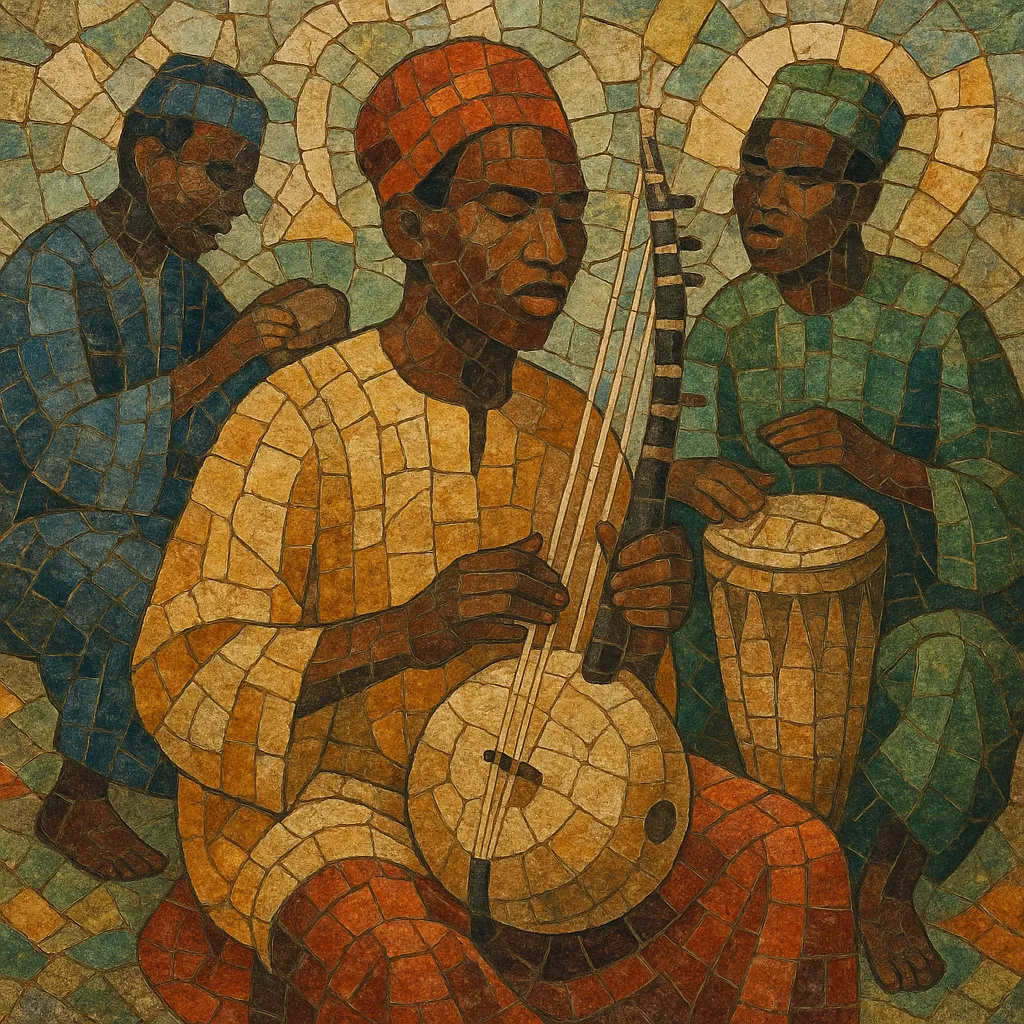
Senegalese traditional music encompasses the ceremonial, communal, and courtly musical practices of Senegal’s many peoples (Wolof, Serer, Pulaar/Fula, Jola/Diola, Mandinka, and others). It is anchored by griot (gewel) lineages who preserve history and praise-singing, and by powerful drum ensembles centered on sabar and tama (talking drum), as well as string traditions like the xalam (khalam/ngoni), kora, and riti.
Performed at life-cycle rituals, wrestling events (laamb), community festivals, and religious gatherings, the music is intensely rhythmic and participatory, featuring polyrhythms, call-and-response vocals, praise poetry (tassu), and dance-led forms such as ndawrabine and farwu. Melodically it favors modal and pentatonic frameworks, with expressive ornamentation informed by local languages and Islamic recitation aesthetics.
History
Griot (gewel) castes took shape in the medieval Senegambian polities, consolidating a hereditary role as historians, mediators, and musicians. By the 13th–16th centuries, praise-singing and genealogical repertories were established, accompanied by xalam, riti, and later kora and balafon in Mandinka-influenced areas, while drum ensembles articulated social dances and royal ceremonies.
From the early modern period through the 19th century, Wolof-Serer drum traditions matured around the sabar family (with the n’der lead drum) and the tama talking drum. These ensembles became integral to communal festivities, initiation rites, laamb (wrestling), and dance forms like ndawrabine. Call-and-response singing and tassu (spoken praise/poetry) reinforced the social function of performance.
Islam spread deeply across Senegal, and Sufi brotherhoods influenced vocal style, phrasing, and devotional repertoires. In the late 19th–20th centuries, urbanization and colonial-era media broadened audiences. Radio and recording helped codify regional styles and brought traditional sounds into new public spheres, without displacing their ritual and social roles.
After independence (1960), national festivals, ballets, and cultural policy elevated traditional arts. Master drummers like Doudou N’Diaye Rose became global ambassadors, while griot singers preserved classical forms. Traditional idioms then fed into hybrid popular styles—most famously mbalax—while the griot ethos also informed spoken-word flows in hip hop Galsen. Today, Senegalese traditional music remains active locally and recognized worldwide as a foundation of West African musical heritage.