Your digging level

For this genre
0/8
🏆
Sign in, then listen to this genre to level up

Description

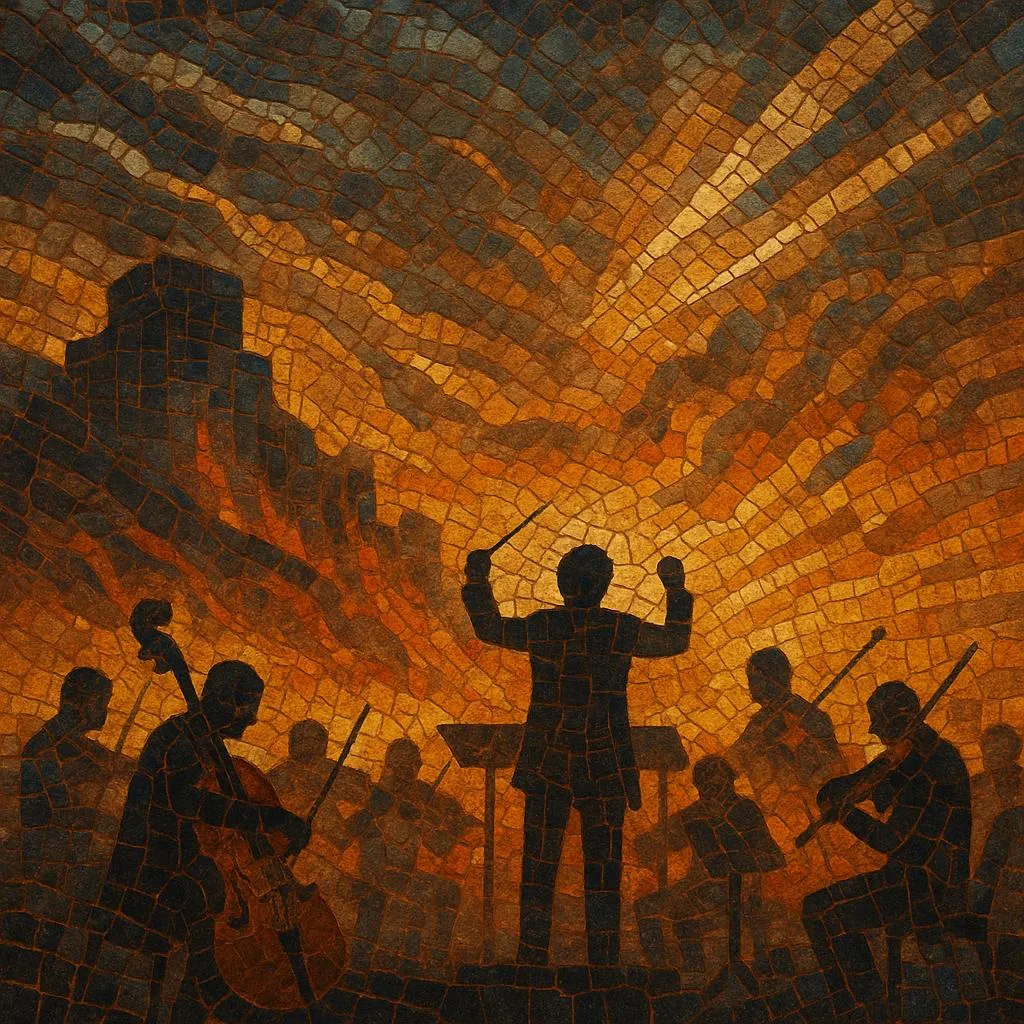
Scorecore is a contemporary, playlist-driven microgenre that packages the language of modern film, TV, and game scoring into self-contained tracks designed for standalone listening.

It blends hybrid orchestral writing (strings, brass, choir) with cinematic sound design (sub-booms, braaams, risers, whooshes) and pulsing electronics. Cues typically emphasize clear dramatic arcs, ostinato-based momentum, and maximal dynamic builds aimed at evoking spectacle, tension, or catharsis—without being tied to a specific screen narrative.

Harmonically, scorecore favors modal minor, neo-Romantic progressions, pedal points, and tension-release devices. Rhythmically, it relies on motoric string figures, heavy percussion layers, and synth pulses that scale from intimate “underscore” textures to full-ensemble climaxes.


Sources: Spotify, Wikipedia, Discogs, RYM, MB, user feedback and other online sources

History

Roots (late 1990s–2000s)

The roots of scorecore lie in the Hollywood soundtrack ecosystem and the rise of trailer-music libraries. As studios outsourced promotional cues, specialist companies refined a high-impact, modular orchestral style—short forms, fast arcs, and instantly legible emotion. In parallel, blockbuster film scoring embraced hybrid palettes (orchestra + synths + processed percussion), creating a common cinematic vocabulary.

Codification and Streaming Era (2010s)

With the growth of streaming platforms and curated playlists, listeners began consuming cinematic cues outside their audiovisual context. Labels and composers released standalone tracks that abstracted the “feel” of a score—epic builds, moody textures, and thematic swells—into 2–5 minute self-contained forms. The term “scorecore” emerged online to describe this concentrated, playlist-ready version of soundtrack aesthetics.

Aesthetic Traits

Scorecore crystallized core techniques of contemporary scoring: ostinato-driven strings, colossal low brass and hits, choir pads for lift, and sound-design gestures (rises, drops, reverses). The genre often follows a two- or three-act arc: intimate intro, kinetic middle build, and a climactic “final hit,” optimizing the cinematic payoff in a short runtime.

Today

Scorecore functions both as a listening genre and a production niche. It overlaps with trailer music, epic orchestral, and game-score adjacent releases, and it feeds into hybrid substyles across EDM, post-rock, and hip hop that borrow its dramatic pacing and symphonic heft.

How to make a track in this genre

Palette and Instrumentation
•   Build a hybrid orchestral template: strings (close and room mics), brass (with low brass emphasis), woodwinds for color, choir pads (real or sampled), plus synths, pulses, and sound-design elements (braaams, sub-booms, whooshes, risers, stingers). •   Percussion is layered: organic (taikos, gran casas, toms) + processed hits and impacts. Keep a dedicated low-end bus for sub cohesion.
Harmony and Melody
•   Favor modal minor (Aeolian/Dorian) and cinematic progressions (e.g., i–VI–III–VII or i–bVI–bVII) with pedal drones for inevitability. •   Use simple, memorizable themes (4–8 bars) that can survive heavy textural development. Employ planing chords and cluster swells for tension.
Rhythm and Form
•   Establish motion with string ostinatos at 90–140 BPM (eighth/sixteenth-note patterns with syncopated accents). Add synth pulses to lock the grid. •   Shape a clear arc in 2–4 minutes: 1) intimate intro; 2) additive build (layers + register + density); 3) apex with full brass/choir/percussion; 4) button ending or tail.
Orchestration and Texture
•   Orchestrate vertically (register stacking) and horizontally (layer introduction per section). Reserve brass and choir for structural milestones to maximize impact. •   Use call-and-response between sections (strings vs. horns; pulses vs. drums) to maintain clarity as density rises.
Sound Design and Mix
•   Program rise-and-hit transitions (reverse FX, uplifters) before sectional impacts. Sidechain pads/choir slightly to percussion to retain punch. •   Multiband control on low end (sub hits, low brass, drums) and judicious saturation on ostinatos to add presence without masking.
Production Workflow
•   Work with high-quality libraries (e.g., detailed legato, tight shorts) and consistent room signatures; glue with convolution/reverbs and bus compression. •   Print stems (strings, brass, choir, percussion, synths, FX) and check translation at low volume to ensure the arc reads even when quiet.

Top tracks

Locked
Share your favorite track to unlock other users’ top tracks

Upcoming concerts

in this genre
Influenced by
Has influenced

Download our mobile app

Get the Melodigging app and start digging for new genres on the go
© 2026 Melodigging
Melodding was created as a tribute to Every Noise at Once, which inspired us to help curious minds keep digging into music's ever-evolving genres.
Buy me a coffee for Melodigging