Your digging level
Description
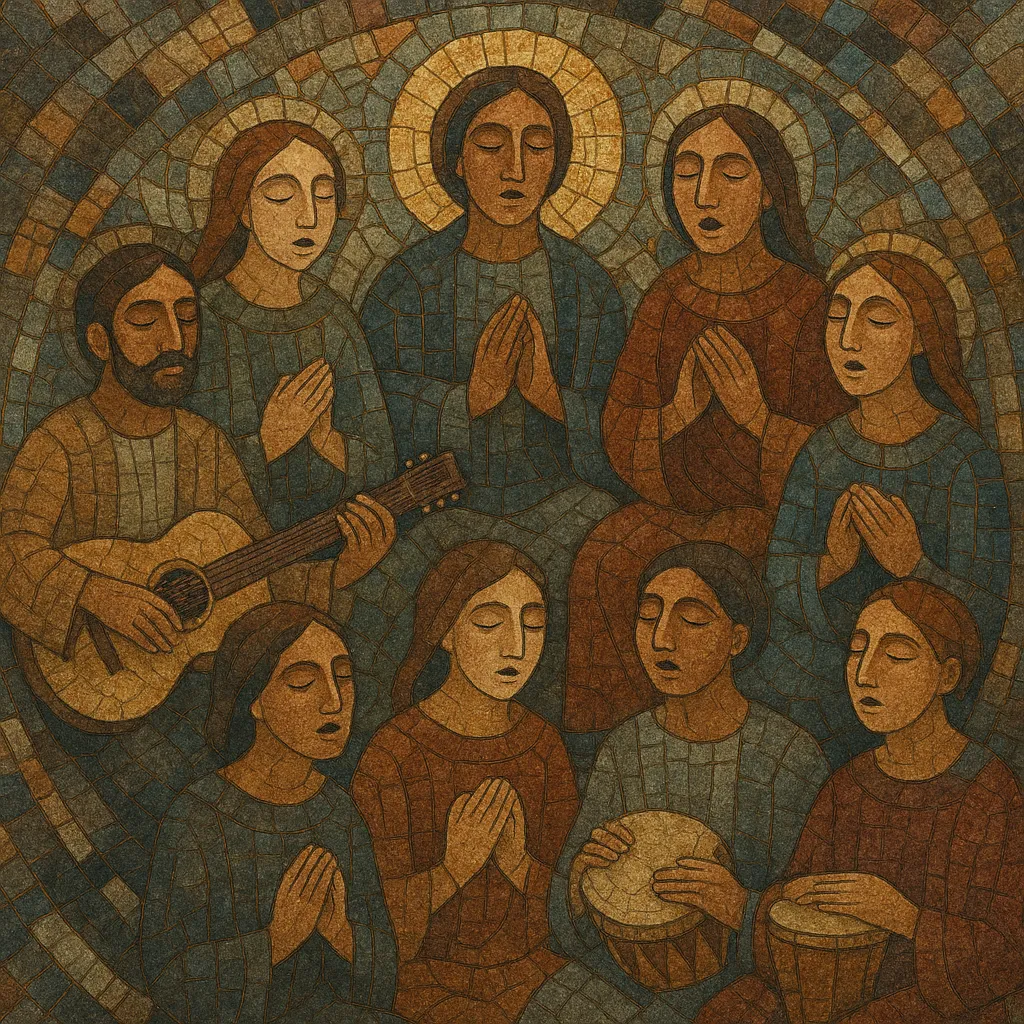
Sacred singing circle is a participatory, communal song tradition that arose within counter‑culture gatherings in the 1970s, especially at Rainbow Gatherings in the United States. People form a circle and share simple, repetitive songs, chants, and mantras, often learned orally and passed from person to person.
Performances are loosely structured: anyone may start a song, invite call‑and‑response, add harmonies, or support with hand percussion and acoustic instruments. The emphasis is on shared presence, spiritual intention, and collective sound rather than on virtuosity or fixed repertoires.
Musically it draws from folk strum patterns, modal drones, and global devotional practices (e.g., mantras and call‑and‑response chanting). Lyrical themes commonly honor nature, interconnection, healing, peace, and gratitude.
History
Sacred singing circle emerged in the 1970s United States within hippie and back‑to‑the‑land communities. At Rainbow Gatherings and similar campfire settings, participants improvised and shared easy-to-sing chants that anyone could join. These circles valued openness, consensus, and spiritual intention, blending folk revival songcraft with global chant practices.
Through traveling communities, intentional villages, yoga centers, and festivals, the practice spread across North America and beyond. New songs mixed English lyrics with short mantra phrases, simple diatonic progressions, and hand‑drum grooves. Influences from kirtan, New Age, meditation music, and community choir work further shaped the sound, while acoustic guitars, frame drums, rattles, and harmoniums became common.
Today sacred singing circles happen in living rooms, retreat centers, yoga studios, and outdoor gatherings worldwide. Song leaders curate shared repertoires, facilitate call‑and‑response, and encourage harmony layering and drones. The culture remains non‑hierarchical and participatory, prioritizing group resonance, inclusivity, and the healing experience of communal voice over performance or commerce.
Use easily shared, portable instruments: acoustic guitar (or ukulele), hand drums (frame drum, djembe), shakers/rattles, harmonium or shruti box, and simple flutes. Keep textures light so voices remain central.
Favor steady, trance‑friendly grooves (4/4 or 6/8) at relaxed to mid tempos. Percussion should support call‑and‑response rather than dominate. Harmonies are diatonic and modal (Ionian, Mixolydian, Dorian, Aeolian); drones on the tonic or dominant help non‑trained singers lock in.
Compose short, memorable motifs within a comfortable vocal range. Write lyrics that are brief, affirmative, and repeatable—often nature‑honoring or prayerful lines, or mantra phrases. Repetition is a feature: let verses cycle while the group layers harmonies and countermelodies.
Begin with a drone or soft percussion, then teach the refrain by call‑and‑response. Invite parts: lead line, echo, low drone, and a simple harmony. Build gradually, vary dynamics, and cue a gentle ending (unison sustain or a final soft cadence). Encourage consent‑based sharing and cultural respect when borrowing from global traditions.
If documenting, capture circle ambience with minimal miking and natural reverb. Avoid heavy editing; the goal is to preserve the communal pulse and spaciousness.