Your digging level
Description
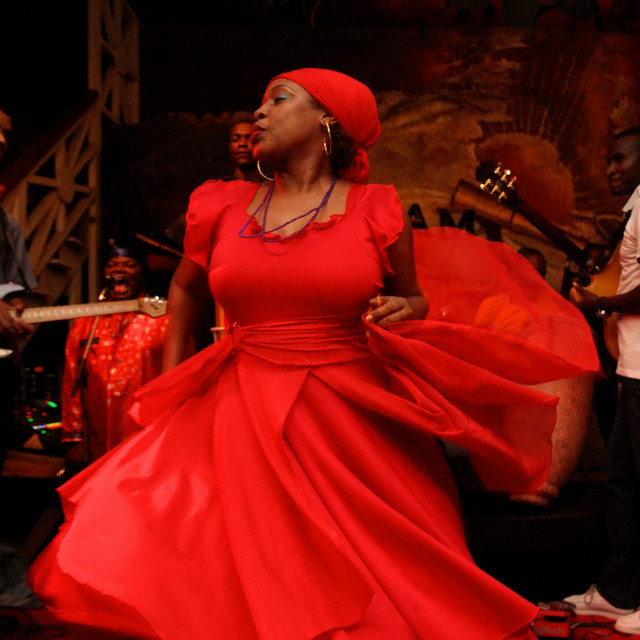
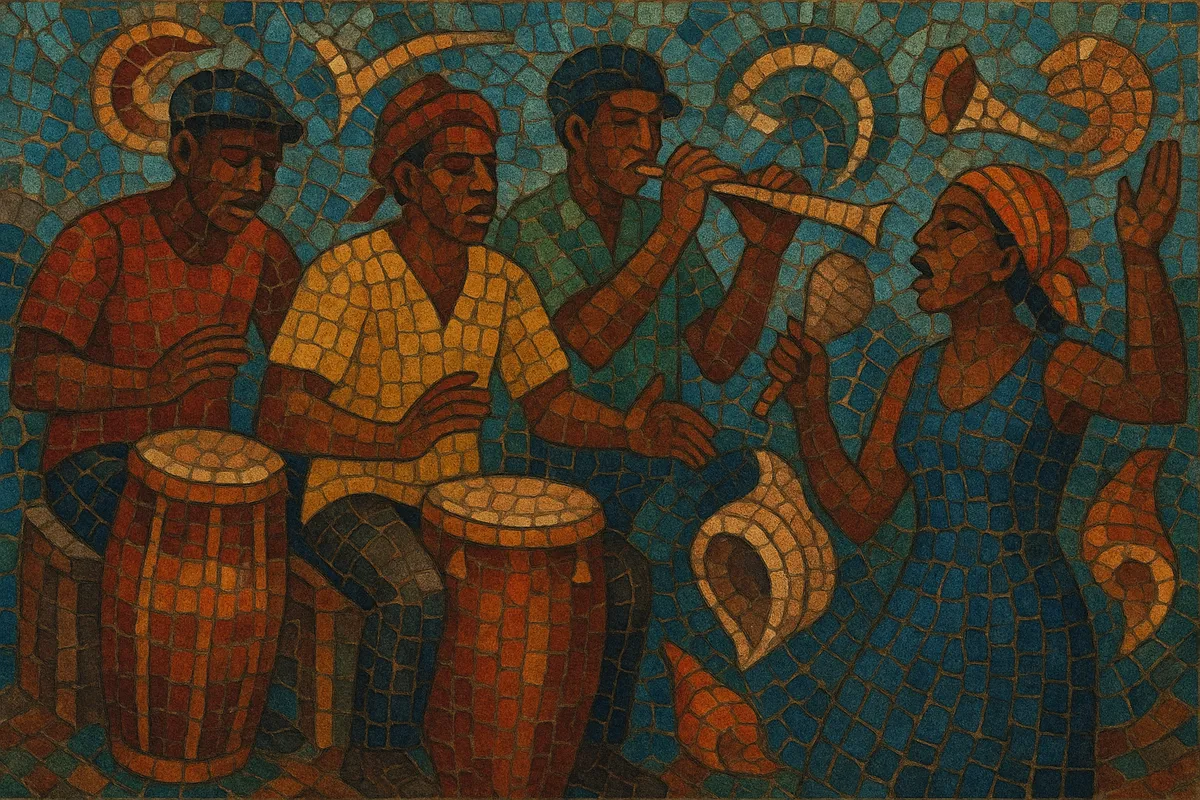
Rasin (mizik rasin in Haitian Creole), often called Haitian roots music, fuses traditional Vodou ceremonial and folkloric rhythms with modern popular styles. It places hand drums, vaksin bamboo/metal trumpets, ogan bells, and call‑and‑response Kreyòl vocals at the center, while electric bass, rock guitars, keyboards, and drum set reinforce the groove.
Musically, rasin draws on sacred rhythms (Rada, Petwo, Nago, Kongo, Yanvalou), rara street-procession patterns, and the danceable lilt of compas, then filters them through reggae backbeats, funk syncopation, and rock energy. Lyrically it is grounded in Haitian spirituality, history, and social critique—songs may invoke lwa (spirits) such as Ogou or Ezili, celebrate lakou (community), and address contemporary politics and identity.
The result is a vibrant, percussive, and communal sound that works both as ritual-rooted music and as amplified stage music for carnivals, concerts, and international festivals.

History
Rasin emerged in Haiti in the 1970s as musicians began consciously reconnecting popular performance with Vodou ceremonial and rural folkloric practices. Artists and cultural activists experimented with bringing tanbou (hand drums), ogan bells, and call‑and‑response chants onto amplified stages, seeding a movement that would foreground Kreyòl language, Afro‑Haitian spirituality, and traditional rhythms in a modern band format.
The movement gained force in the 1980s, as Carnival street ensembles and concert groups fused rara processional grooves and Vodou rhythms with rock, reggae, funk, and compas. After the fall of the Duvalier regime (1986), rasin became a powerful vehicle for social commentary and cultural pride. The 1990s are widely seen as a golden era: large ensembles with batteries of percussion, vaksin trumpets, bass, guitars, and keyboards brought mizik rasin to national prominence and onto international stages, aligning with the broader world‑music wave while remaining resolutely Haitian.
Rasin’s texts often invoke lwa (e.g., Ogou, Gede, Ezili), reference lakou communal life, and address social justice, environmental concerns, and national history. Musically it sustains a polyrhythmic core—interlocking hand drums and bells—layered with electric instruments that supply harmonic grounding and global stylistic colors.
Into the 2000s and 2010s, a new generation blended rasin with contemporary production and diaspora influences, while veteran bands continued to tour. The movement’s percussive DNA also fed newer Haitian styles—club‑oriented forms that repurpose rara/rasin grooves—yet rasin bands still maintain live, communal performance as their anchor. Today, rasin stands as both a living tradition and a modern platform for spiritual expression and civic voice, present at Carnival, in concert halls, and across international festivals.