Your digging level
Description
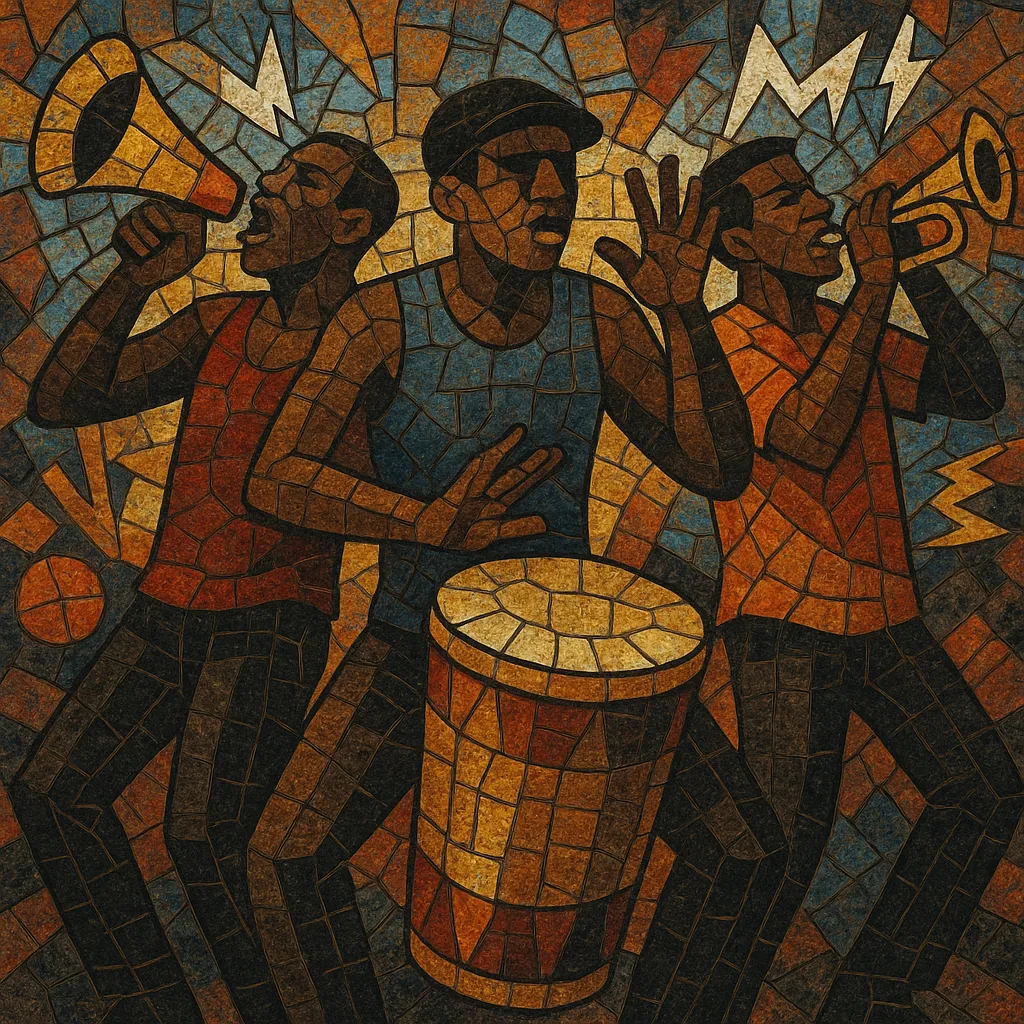
Rabòday is a high-energy Haitian dance style that converts traditional street-procession rhythms into an electronic, club-ready format. It is fast-paced, built on incessant drums and tanbou patterns, and typically arranged with synths, samples, sirens and heavy kicks.
Shaped by rara/rasin grooves and urban party culture, rabòday pairs call‑and‑response chants in Haitian Kreyòl with humorous double entendres, sexual bravado, and pointed political jabs. The result is music designed for mass movement—equally at home at Kanaval and late‑night block parties—where the beat drives crowd choreography and slogans.
History
Rabòday emerged in Haiti in the mid‑2000s as DJs and bandleaders began recasting rara/rasin street rhythms for sound systems and club contexts. The core idea was simple: keep the visceral, participatory drum feel but arrange it with modern electronic production and MC‑style chants.
After the 2010 earthquake, the style surged on Kanaval routes and in Port‑au‑Prince party circuits. Producers and hype men fused tanbou patterns with pounding 4/4 kicks, synth stabs, whistles and crowd‑cue breaks, while lyrics mixed bawdy humor with sharp social and political commentary. Tracks from Fresh La (Vwadèzil) and DJ‑led street anthems helped cement rabòday as the sound of a new urban generation.
Musically, rabòday favors minimal harmony and maximal rhythm: layered hand drums over EDM‑style drops, vaksen‑like riffs or sampled horns, and chant‑like hooks designed for synchronized dances. Lyrically, it embraces wordplay and provocation—often sexual, satirical, or openly political—continuing rara’s role as a vehicle for mass commentary.
Rabòday now circulates across the Haitian diaspora, intersecting with dancehall, hip‑hop and house. It has also spawned adjacent fusions such as rara tech and inspired cross‑island dialogues with Dominican dembow and broader Caribbean club sounds.