Your digging level
Description
Haitian music is a rich, syncretic tradition shaped by West African polyrhythms, Afro‑diasporic religious practice (Vodou), and European colonial dance forms that took root in Saint‑Domingue (colonial Haiti).
Across the 19th and 20th centuries, these foundations blossomed into distinctive popular and ritual styles: rural twoubadou (acoustic, bolero‑tinged song), rara (street processional music with vaksin bamboo trumpets), and urban dance musics such as méringue and, later, konpa/kadans and the electric "mini‑jazz" bands. In the late 20th century, mizik rasin (“roots music”) fused Vodou ceremonial rhythms with rock and reggae, while the diaspora nourished connections to jazz, hip hop, and global pop.
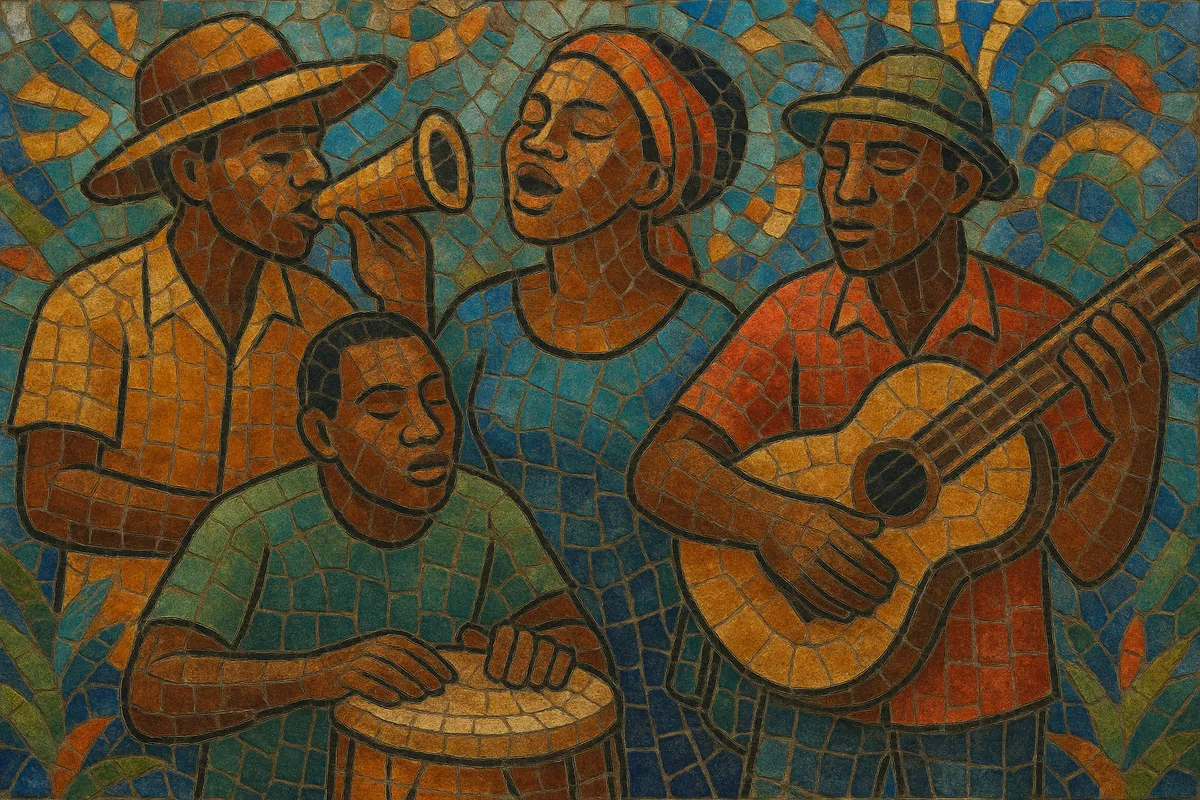
Core sounds include interlocking tanbou drum patterns, call‑and‑response vocals in Haitian Creole, syncopated bass ostinatos, and catchy horn/guitar lines. Haitian music is at once communal and dance‑forward, yet capable of lyrical intimacy, spiritual intensity, and political commentary.
History
Haitian music emerged in the 18th century as enslaved Africans from diverse West and Central African cultures brought their drum languages, polyrhythms, and call‑and‑response singing. These practices interacted with French and Iberian ballroom dances (contredanse, quadrille) and the Caribbean habanera/cinquillo patterns to form the earliest Haitian urban and rural styles, alongside sacred Vodou music (Rada, Petwo, Nago rhythms).
Following independence in 1804, a distinct Haitian musical identity coalesced. Méringue crystallized as a national dance music, while rural troubadour traditions (twoubadou) absorbed Cuban bolero and son aesthetics via maritime exchange. Processional rara, linked to Lent and community celebration, continued to feature vaksin bamboo trumpets, drums, and choral chants.
Port‑au‑Prince orchestras professionalized dance music, embracing jazz harmony and Afro‑Caribbean dance idioms (mambo, son). This period laid the groundwork for modern Haitian popular music’s horn‑driven arrangements and tight rhythm sections.
In 1955, Nemours Jean‑Baptiste codified konpa direk (often called kompa/compas), a sleek, dance‑floor style built on steady 2/4 or 4/4 pulse, syncopated bass ostinatos, and interlocking guitar/horn riffs. Weber Sicot popularized a parallel cadence (cadence rampa). By the late 1960s, smaller "mini‑jazz" guitar bands electrified the sound, expanding konpa/kadans across the Caribbean and into the diaspora.
After the Duvalier era, mizik rasin (“roots music”) fused Vodou ceremonial rhythms and instruments (tanbou, ogan, ason) with rock and reggae, becoming a vehicle for cultural pride and social critique. Bands such as Boukman Eksperyans and RAM reached global audiences. Meanwhile, diaspora artists connected Haitian music with hip hop and R&B, amplifying its reach.
Konpa remains Haiti’s core dance music, alongside romantic variants and festival‑scale band cultures. Electronic street styles like rabòday brought new production aesthetics while retaining Haitian rhythmic DNA. Cross‑Caribbean circulation continues, with Haitian music both influencing and dialoguing with zouk, kizomba (indirectly via zouk), and other island traditions.