Your digging level
Description
Música tradicional dominicana is the umbrella for the Dominican Republic’s folk and roots styles shaped by Iberian (Spanish/Canarian), West and Central African, and Afro-Haitian influences. It gathers the rural dance musics and religious/ceremonial repertoires that predate or coexist with modern commercial genres.
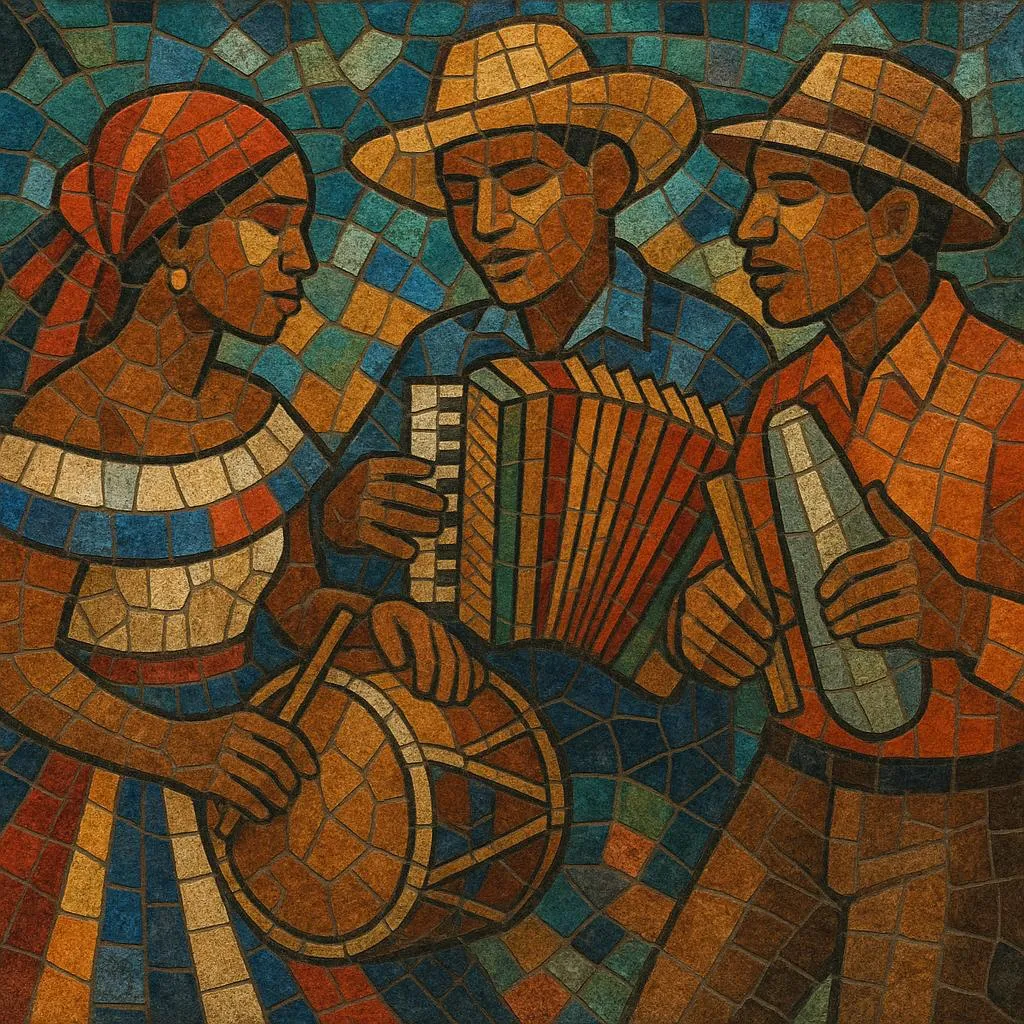
Core strands include merengue típico (also called perico ripiao) with its diatonic accordion–güira–tambora trio; related dances such as pri-prí, pambiche, carabiné and mangulina; and Afro-Dominican ceremonial musics like palos/atabales and salve (often tied to cofradías and Catholic feast days). The Sarandunga of Baní and the Congos of Villa Mella represent distinct drumming and chant traditions, while Gagá (Ra-Ra) parading bands showcase vibrant Haitian–Dominican exchanges. A more lyrical branch survives in rural bolero and décima-based song forms.
Across these traditions you’ll hear brisk 2/4 merengue grooves, call-and-response vocal textures, layered hand drumming, bright accordion melodies, and the metallic rasp of the güira—hallmarks of a living, communal music culture used for dancing, devotion, and storytelling.
History
The roots of música tradicional dominicana crystallized from the 16th–19th centuries as Iberian song-and-dance practices encountered African drumming, ritual, and call-and-response aesthetics brought by enslaved peoples. Catholic confraternities (cofradías) and popular devotion seeded palos/atabales and salve, blending Spanish texts and saints’ feasts with African-derived rhythms and instruments.
By the mid-1800s, merengue in 2/4 time had taken recognizable shape in rural Cibao valleys, performed on accordion (a later-19th-century arrival), güira, and tambora. European couple dances (contradanza, polka, mazurka) informed step patterns and phrasing, while Afro-Dominican pulse and syncopation defined feel. Parallel ceremonial styles (Congos of Villa Mella, Sarandunga of Baní) maintained distinctive drum ensembles and responsorial song.
In the early–mid 20th century, rural merengue típico flourished alongside priestly and community-led palos/salve practices. As migration to cities increased, dance bands adapted merengue to larger orchestras, while accordion-based típico retained its fast, virtuosic identity in the countryside. Rural bolero singing and décima poetics continued to circulate via radio, records, and patronal fiestas. Afro-Haitian Gagá/Ra-Ra processions in border and sugar-mill zones underscored a long-standing trans-insular cultural dialogue.
The Congos of Villa Mella were proclaimed a Masterpiece of the Oral and Intangible Heritage of Humanity (2001), spotlighting Afro-Dominican ceremonial music. In 2016, Dominican merengue was inscribed on UNESCO’s Representative List of the Intangible Cultural Heritage of Humanity, further catalyzing pedagogy and community festivals that preserve drums, dances, and repertoires.
Traditional ensembles remain central to community life, pilgrimages, and national celebrations. Accordionists and drumming cofradías transmit repertories to new generations, while contemporary artists and researchers document and revive pri-prí, carabiné, salve, sarandunga, and Congos performance, ensuring a dynamic continuum between past and present.