Your digging level
Description
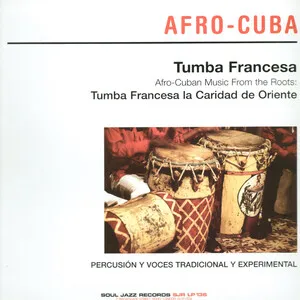
Tumba francesa is a secular Afro‑Cuban tradition of dance, singing, and drumming that arose in the Oriente region of eastern Cuba after the arrival of enslaved people and free people of color from the French colony of Saint‑Domingue (present‑day Haiti) during the Haitian Revolution.
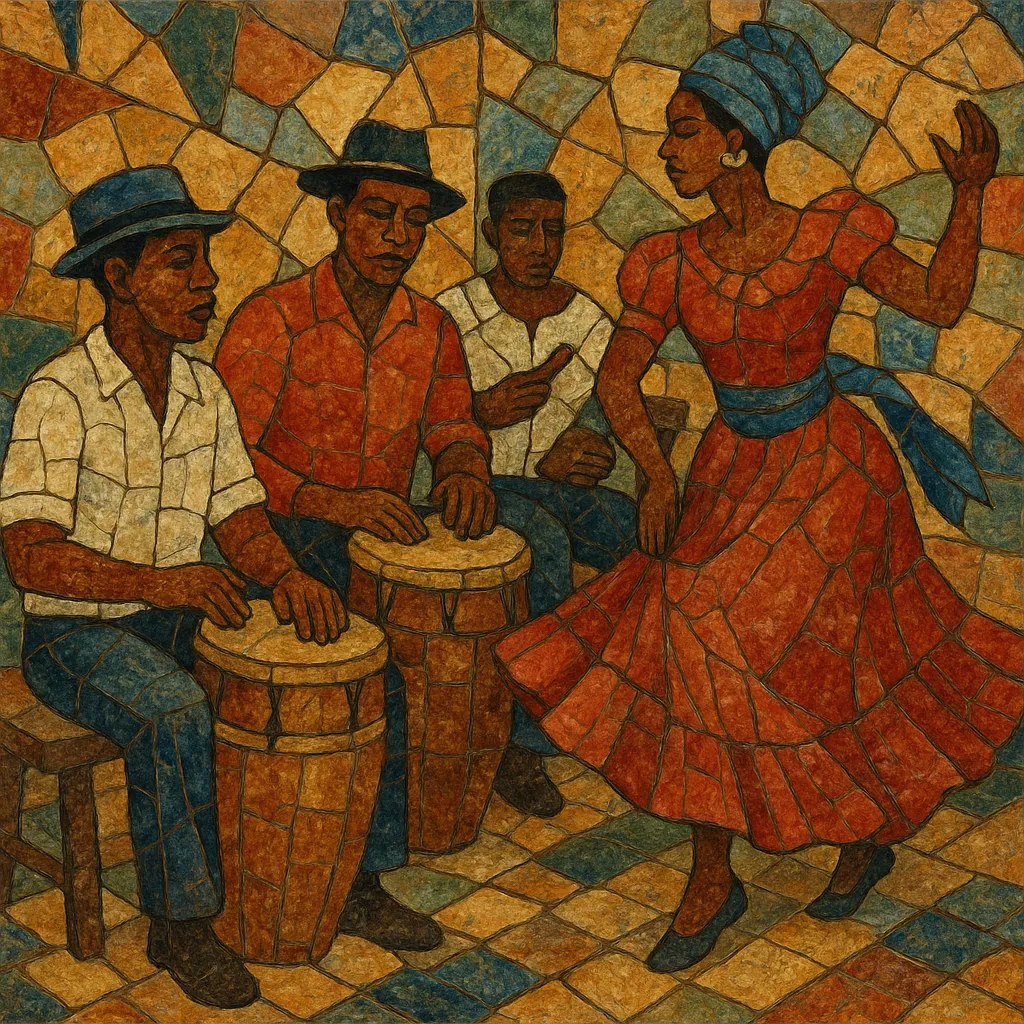
It blends West African (especially Benin/Fon and broader Dahomean) drumming and call‑and‑response singing with figures and etiquette from French ballroom contredanses and quadrilles. Ensembles center on a family of barrel drums, a wooden timeline (catá), and shakers, supporting songs in Haitian Kreyòl, French patois, and Spanish, and choreographies that alternate between elegant couple figures and intensely polyrhythmic solo dances.
In the late 19th century, tumba francesa flourished in formal mutual‑aid and cultural societies (sociedades de tumba francesa). Only three historic societies remain active today, preserving the repertoire, dance suites (such as masón and yubá), costuming, and ceremonial roles that define the style.
History
After the 1790s uprisings in Saint‑Domingue, planters and thousands of Afro‑descendant people resettled in Cuba’s east (Santiago de Cuba, Guantánamo, Baracoa). They brought Haitian Creole song traditions and Dahomey‑derived drum practices, which soon intermingled with French ballroom etiquette and figures practiced in colonial salons. This synthesis became known locally as tumba francesa (“French drum”).
By the late 19th century, dedicated sociedades de tumba francesa had formed—community institutions that preserved the dances, songs, instruments, and ceremonial roles (such as the lead singer and dance captains). The style’s repertoire often unfolds as a suite, opening with more courtly couple figures (e.g., masón) before shifting to more African‑derived, solo‑improvisatory sections (e.g., yubá).
Urbanization, changing popular tastes, and the rise of commercial genres (son, danzón, later salsa) threatened the transmission of tumba francesa. Folkloric ensembles and cultural policy in Cuba supported documentation and staged presentations, while the surviving sociedades continued grassroots transmission.
Only three historic societies survive and perform: La Caridad de Oriente (Santiago de Cuba), Pompadour Santa Catalina de Ricci (Guantánamo), and Bejuco (Sagua de Tánamo). Their work—recognized nationally and internationally—safeguards the living practice: the language mix (Kreyòl/French/Spanish), the distinct drum ensemble, and the dual identity of courtly choreography with deeply African rhythmic drive.