Your digging level
Description
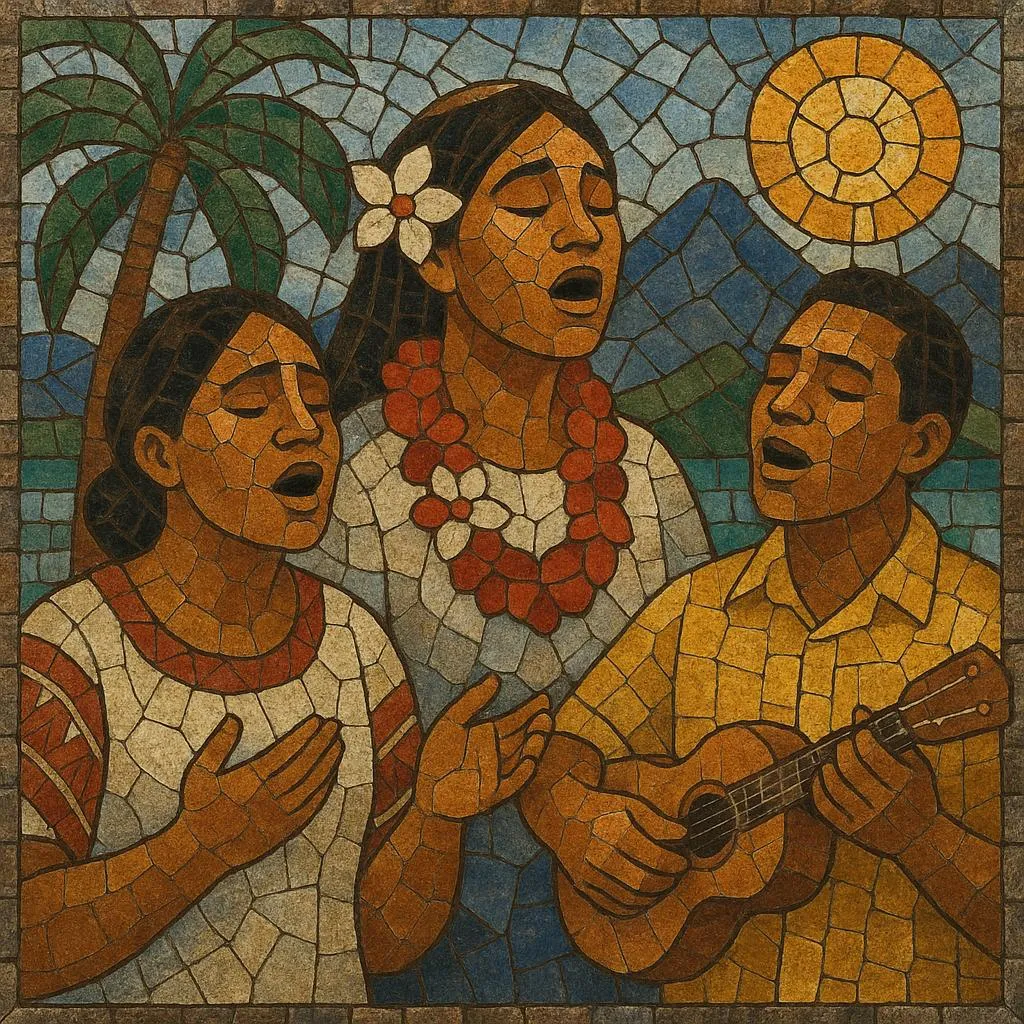
Pacific Islands gospel is a family of Christian devotional styles found across Polynesia, Melanesia, and Micronesia, distinguished by warm four‑part choral harmony, congregational call‑and‑response, and lyrics in local languages alongside English.
Rooted in 19th‑century missionary hymnody, it blends Western hymn structures (strophic verses, simple diatonic harmony) with indigenous vocal timbres, antiphony, and island rhythm practices such as handclaps, log drums (e.g., lali, pate), and gentle ukulele or guitar strums. Modern recordings range from intimate a cappella choirs to band‑led praise with keyboard pads and light drum kits, but the music remains centered on testimonies of faith, gratitude, and communal worship.
In the diaspora (especially New Zealand, Australia, and the United States), Pacific Islands gospel often intersects with contemporary Christian pop, island reggae, and urban Pasifika aesthetics, yet retains its hallmark choral blend and devotional focus.
History
Christian missions (Methodist/Wesleyan, London Missionary Society, Catholic and others) reached Samoa, Tonga, Fiji, Tahiti and beyond in the 19th century. Missionaries taught European hymnody, tonic‑solfa, and SATB part‑singing, which local communities embraced and localized. Hymns were translated into vernaculars (e.g., Fijian, Samoan, Tongan, Tok Pisin, Bislama), and village choirs quickly became central to worship and social life.
Following WWII, radios, reel‑to‑reel, and later cassettes enabled regional choirs and church groups to be recorded and shared. The sound retained strophic hymn forms and diatonic harmony but folded in island colors: antiphonal entries, octave‑doubled melodies, and indigenous percussive accents (handclaps, lali/pate). As urban centers grew (Suva, Apia, Nukuʻalofa, Port Moresby, Honiara), faith‑based ensembles traveled, competed, and exchanged repertoire, building a recognizable Pacific gospel idiom.
Migration to New Zealand, Australia, and the U.S. created vigorous church music scenes where youth ministries fused Pacific choral blend with contemporary Christian pop, soft rock, and island reggae backbeats. Low‑cost studios and digital platforms (CDs, then YouTube/streaming) broadened access, while mega‑choirs and family groups popularized bilingual worship. Today, Pacific Islands gospel thrives both at home and abroad, from intimate a cappella devotionals to full band praise, sustaining cultural identity and faith through communal singing.