Your digging level
Description
Muziek voor kinderen is Dutch-language children's music that blends catchy pop songwriting with age-appropriate themes, clear diction, and easy-to-sing melodies. It spans music for toddlers, primary school children, and tweens, ranging from lullabies and sing-alongs to upbeat dance-pop and educational songs.
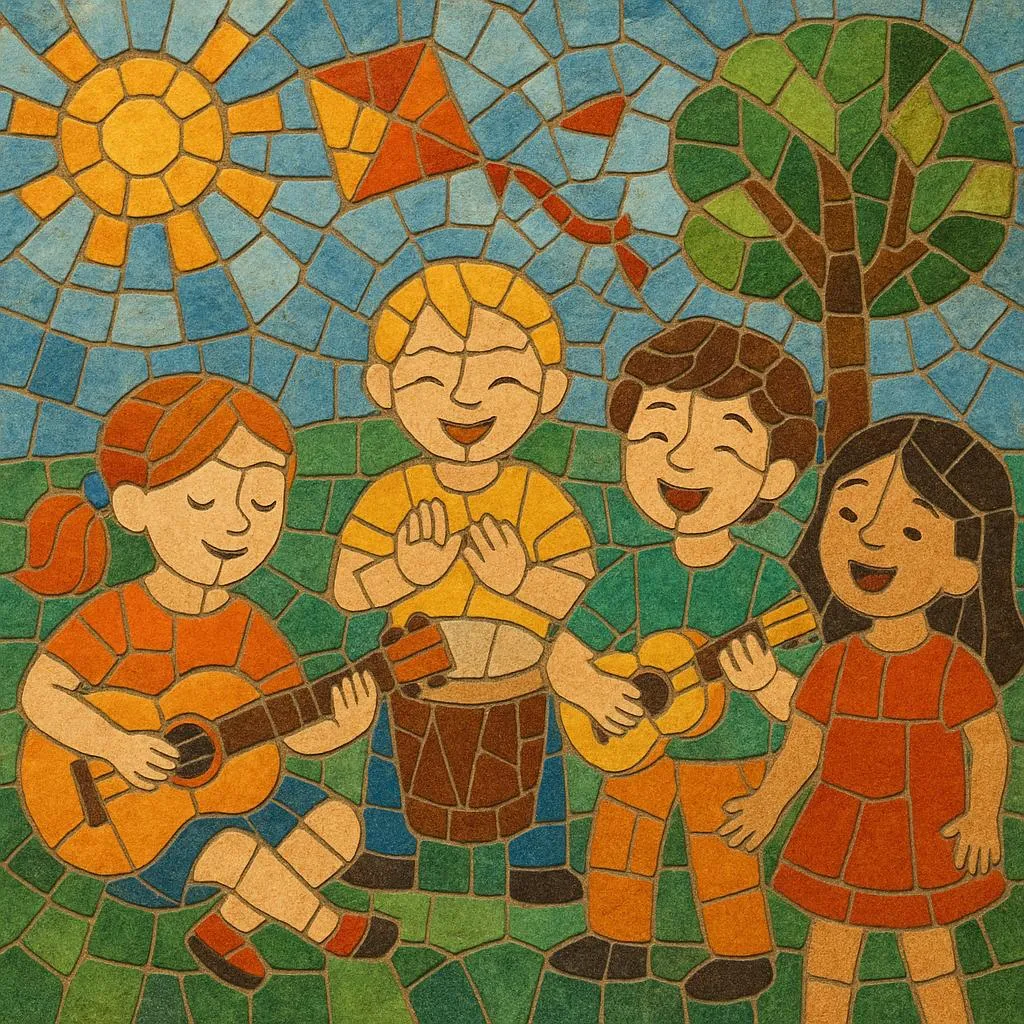
Arrangements typically favor bright timbres (acoustic guitar, ukulele, piano, handclaps, glockenspiel, light synths) and concise structures with repetitive, memorable choruses. Lyrics emphasize play, friendship, everyday experiences, school and family life, seasonal festivities, and basic social-emotional learning—all expressed in accessible Dutch and often supported by movement or call-and-response.
While rooted in traditional nursery and folk song practices, the modern form is a broadcast- and stage-ready pop idiom shaped by TV, school choirs, and theater, with projects like Kinderen voor Kinderen setting a national template for annual albums and televised performances.
History
Dutch-language children's repertoire draws on centuries of nursery rhymes and folk songs sung at home and school. These songs emphasized simple, pentatonic or major-key melodies, predictable phrasing for group singing, and didactic or seasonal texts (e.g., Sinterklaas songs).
With the growth of a modern record and broadcasting industry, children's music increasingly adopted contemporary pop production. A key catalyst in the Low Countries was the success of novelty and character-driven songs—most famously the Smurf phenomenon—which demonstrated that kid-oriented releases could top charts and cross borders.
The Dutch public-broadcast project Kinderen voor Kinderen (launched in 1980) professionalized the format: an annual album, a children’s choir, and televised galas introduced new songs with clear pedagogical and social themes. In parallel, Flemish/Dutch studio projects (later Studio 100 franchises like Kabouter Plop) and girl groups (K3) expanded the Benelux children's pop ecosystem, fusing theater, TV, and music into family entertainment brands.
Children’s music diversified into sub-styles (party-pop, educational tracks, lullaby collections, seasonal albums), and independent creators emerged alongside large media brands. YouTube and streaming platforms amplified visual storytelling, choreography, and lyric videos, while classroom and daycare contexts sustained the sing-along tradition.
Today, muziek voor kinderen incorporates modern production (EDM-pop lifts, trap-lite drums, polished vocal stacks) while retaining age-appropriate lyrics and participation cues. Crossovers with kids’ hip hop, dance challenges, and interactive live shows keep the genre socially engaging, and legacy institutions (e.g., Kinderen voor Kinderen) continue to commission new repertoire that mirrors children’s lived experiences.