Your digging level
Description
Marimba de Guatemala refers to the Guatemalan tradition of marimba ensemble music centered on the chromatic marimba doble, an instrument perfected in the late 19th century in the western highland city of Quetzaltenango. Built from resonant rosewood (hormigo) bars with wooden or gourd resonators, the marimba became a national symbol and the core of dance, salon, civic, and concert repertoires across Guatemala.
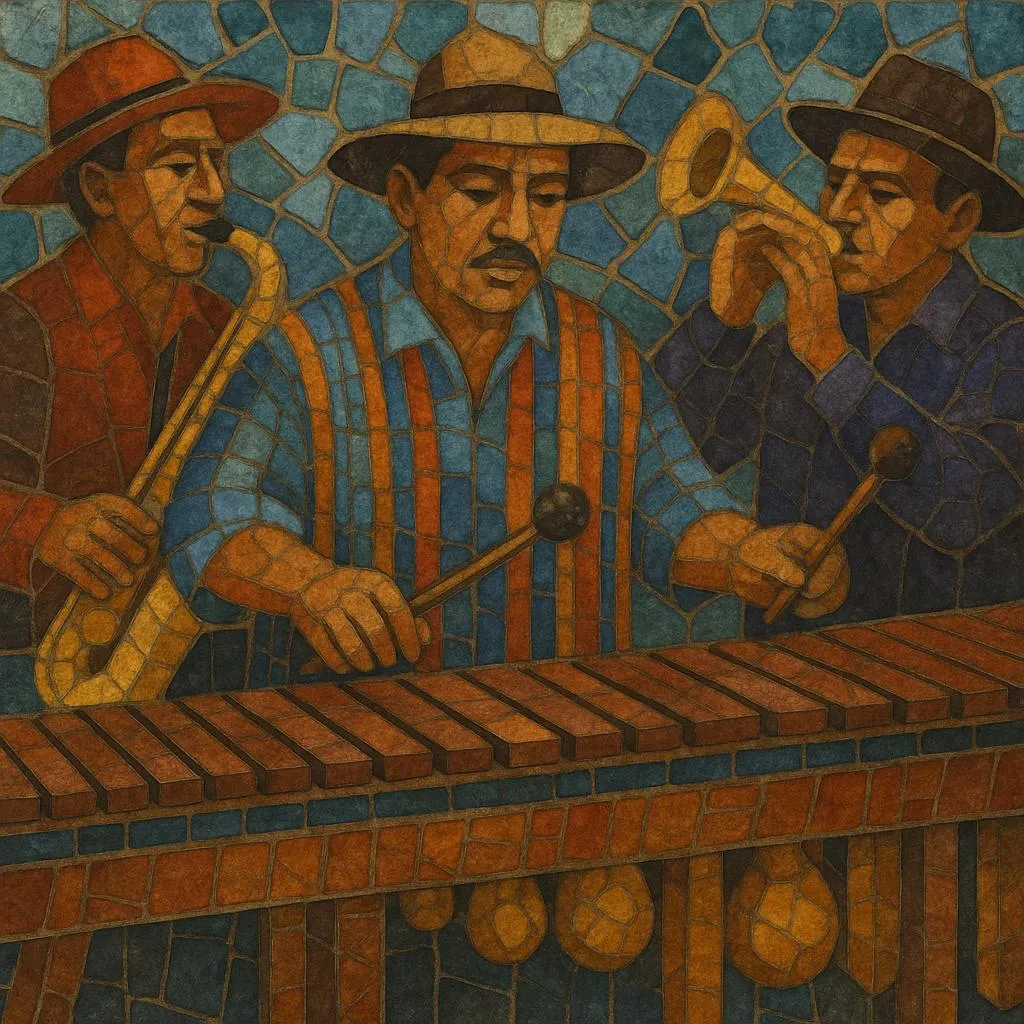
Two principal ensemble aesthetics emerged: all‑marimba concert groups (marimba de concierto) that render waltzes, sones chapines, pasodobles, foxtrots, boleros, marches, and patriotic airs with rich chordal voicings and continuous tremolo rolls; and marimba orquesta outfits that augment marimba(s) with saxophones, trumpets, bass, and percussion to play popular tropical genres. Hallmark features include sesquialtera/hemiola cross‑rhythm (3:2), melodically ornate right‑hand figures over steady bass ostinatos, and chorused tremolo textures that give the marimba its sustained, singing quality.
History
Accounts trace marimba-type instruments in Guatemala to Indigenous (Maya) and Afro-diasporic practices documented from the colonial period. Early instruments (such as marimba de tecomates with gourd resonators) were diatonic and used in regional sones, ritual and social dance contexts.
In the 1890s artisans and performers in Quetzaltenango developed the chromatic “marimba doble,” adding a second row of bars (like black keys on a piano) to enable full chromaticism. This leap allowed ensembles to adopt European salon dances (waltz, polka, pasodoble, foxtrot) and harmonically richer arrangements. The new instrument rapidly spread through municipal bands, civic events, theaters, and salons, entwining with national identity during the liberal nation‑building era.
From the 1910s to the 1950s, marimba ensembles became Guatemala’s signature sound. Concert marimba groups refined a distinct voicing practice: lead melody marimba, inner‑voice arpeggiation, and a bass marimba providing walking or oom‑pah patterns—often under shimmering tremolo. Composers and bandleaders produced extensive repertoires of sones chapines, waltzes, and ceremonial pieces performed at national festivals, radio, and state occasions.
Parallel to concert styles, the marimba orquesta format arose by adding saxophones, brass, bass, drum set, and Latin percussion. This hybrid carried marimba timbres into dance floors, interpreting bolero, cumbia, merengue, pachanga, and later tropical fusions. The marimba thus negotiated both folkloric prestige and urban modernity.
Today, state-sponsored concert ensembles, municipal groups, military marimbas, and independent bands sustain the tradition. Conservatories teach advanced mallet technique and arranging, while luthiers continue to craft hormigo marimbas. Repertoires now span traditional sones, patriotic airs, arrangements of popular songs, and new compositions—maintaining marimba de Guatemala as a living emblem of the nation.
Use a chromatic marimba doble (often several):
•Lead/melody marimba (soprano/alto range) plays the tune and ornamental passages.
•Harmony marimba supplies chordal arpeggios, inner voices, and running fills.
•Bass marimba outlines roots and fifths, walking bass, or oom‑pah figures.
•In marimba orquesta, add 1–3 saxophones, trumpets, bass (upright or electric), drum set, congas/bongos, güiro, and sometimes trombone.