Your digging level
Description
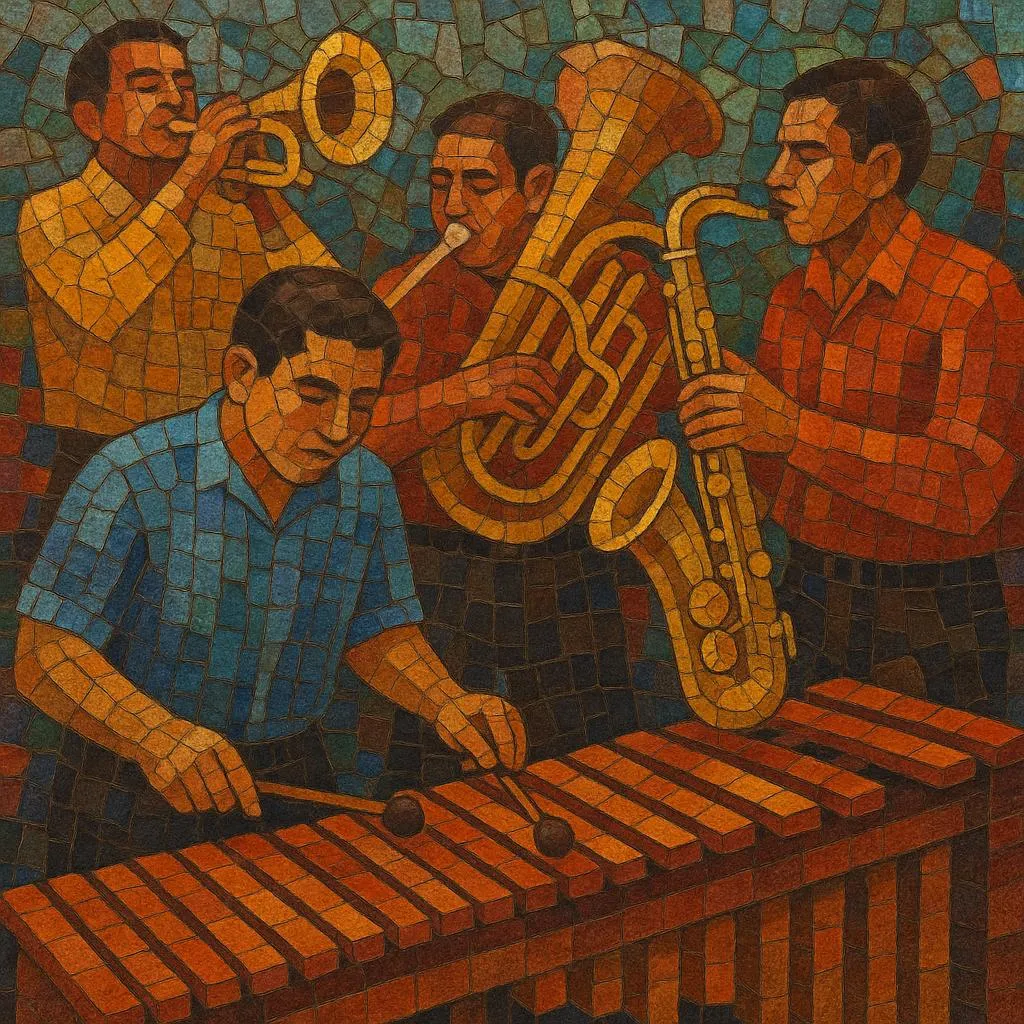
Marimba orquesta is a dance‑band format from Guatemala (and neighboring Chiapas, Mexico) that augments the traditional chromatic wooden marimba with a full rhythm section and horns. The marimba carries the melodies—often with shimmering tremolo rolls and agile runs—while trumpets, trombones, and saxophones add riffs, countermelodies, and shout choruses.
The repertoire is wide and festive: cumbias, boleros, merengues, mambos, sones, danzones, and popular songs are arranged for a marimba‑led ensemble. At town fairs, weddings, and patron‑saint festivities, the group delivers long medleys tailored for continuous dancing, punctuated by breaks (mambos), coro call‑and‑response, and bright horn stabs. The feel is proudly regional and communal—both nostalgic and celebratory—placing the marimba at the center of a Latin big‑band sound.
History
The roots lie in the evolution of the Guatemalan chromatic "marimba doble" and the growing popularity of public dance music. By the 1930s, marimba groups began expanding beyond all‑marimba lineups, adding bass, drum kit, and eventually horns and reeds. This created a regional counterpart to the urban Latin big band, but with the marimba as the melodic heart.
Radio, municipal dances, and traveling orquestas helped standardize the instrumentation and style. Arrangers adapted cumbia, bolero, danzón, mambo, merengue, and son cubano to the marimba’s idiom—using tremolo rolls to sustain tones, split‑keyboard techniques for melody and accompaniment, and horn sections for climactic "mambo" passages. The format became a cultural emblem in Guatemala and Chiapas, soundtracking town fairs and social life.
While influenced by pan‑Latin dance idioms, marimba orquesta arrangements retained local flavor: toponym songs honoring towns, medleys of beloved standards, and bilingual or Spanish‑only coros. Ensembles often featured multiple marimbistas trading melodies and montuno‑like ostinatos, with percussion (timbales, bongos/congas, güiro, cowbell) anchoring a steady dance pulse.
Amplification and modern rhythm‑section tools (electric bass, keyboards, effects) widened the sonic palette. Groups continue to tour fiestas patronales and record popular medleys, mixing classic repertoire with contemporary Latin hits in marimba‑forward arrangements. The genre remains a living tradition—festive, communal, and dance‑driven—centered on the national instrument of Guatemala.
Choose a dance idiom and lock the percussion to its signature pattern:
•Cumbia: 2/4 with a steady bass drum, güiro pattern, and off‑beat cowbell; bass plays a simple two‑beat tumbao.
•Bolero: 4/4 or slow 2/2 with gentle brush kit, cascara on rim/timbales, and lyrical bass.
•Merengue: brisk 2/4 with driving tambora feel (rendered on kit/timbales), energetic cowbell, and walking bass figures.
•Mambo/Son/Salsa: clave‑aware phrasing (2‑3 or 3‑2), cascara on timbales, and bass tumbao synced with conga marcha.